Understanding the Sale of Abandoned and Unclaimed Goods
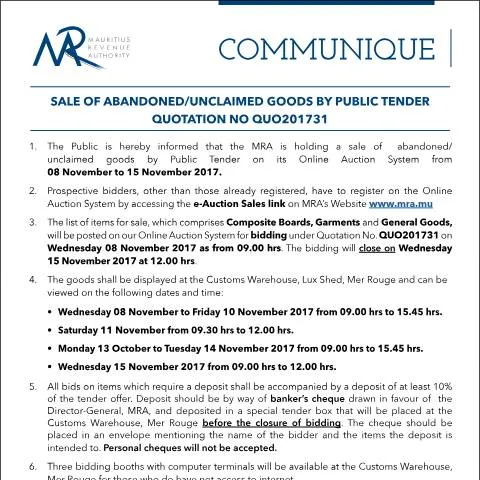
The sale of abandoned or unclaimed goods through public tender represents a unique opportunity for prospective bidders to acquire various items at potentially reduced prices. This initiative, administered by the Mauritius Revenue Authority (MRA), is designed to clear out goods that have been left unclaimed for a specific duration. The CommuniqueQ31of2017 sheds light on this process, highlighting the importance of transparency and accessibility in the bidding process.
Historical Context and Regulatory Framework
The practice of selling unclaimed goods can be traced back through various legal frameworks, aimed at promoting fair trade and ensuring that abandoned assets are put to productive use. The Public Tender process is governed by regulations set forth by the MRA, ensuring compliance with both French civil law and English common law procedural rules as established by the Constitution of 1968 and the PSC Act 1955. This hybrid legal system provides a structured approach to the management and disposal of unclaimed assets, ensuring that the process is both legal and efficient.
Legislation Supporting Public Tenders
The legislative framework governing the sale of abandoned goods enables the MRA to conduct these auctions in a manner that protects both the interests of the state and the bidders. The Public Tender Regulations are pivotal in outlining the procedures for conducting these sales and ensuring that they are open to public scrutiny. This legal background is essential for understanding why and how the MRA organizes these sales, and it helps maintain a level of trust among participants.
Features of the Form: Insights and Key Sections
Delving into the CommuniqueQ31of2017, it becomes evident that the form itself is structured to facilitate a smooth bidding experience. Each section of the form has been carefully designed to capture essential information from prospective bidders.
Registration Requirements
- All prospective bidders who are not already registered must sign up on the MRA's Online Auction System.
- Access to registration is provided through the e-Auction Sales link available on the MRA’s website.
Bid Submission and Deposit Details
One of the critical components in the bidding process is the requirement for a deposit, which underscores the seriousness of the bids. Here’s what you need to know:
| Bid Component | Details |
|---|---|
| Deposit Amount | At least 10% of the tender offer |
| Deposit Method | Banker’s cheque drawn in favour of the Director-General, MRA |
| Submission of Deposit | In a special tender box at Customs Warehouse before bidding closes |
| Cheque Requirements | Envelope with bidder's name and the item description |
Channels for Bidding: Online vs. In-Person
The MRA offers multiple channels for participating in the bidding process, which accommodates bidders with varying levels of access to technology. Understanding these options is vital for prospective bidders:
- Online Bidding: Bidders can engage in auctions through the MRA’s Online Auction System, allowing for remote participation.
- In-Person Bidding: For those without internet access, physical bidding booths equipped with computers are provided at the Customs Warehouse.
Advantages of Online Bidding
Participating in the auction online offers several advantages:
- Convenience of bidding from any location.
- Real-time updates on bidding statuses.
- Access to a broader selection of items without the need to travel.
Disadvantages of In-Person Bidding
Despite the personal touch, in-person bidding has limitations:
- Potential queues and waiting times at the bidding booths.
- Limited hours of operation compared to 24/7 online access.
Common Pitfalls When Completing the Form
Completing the Sale of Abandoned Goods form can be straightforward if bidders pay attention to the details. Here are some common pitfalls to avoid:
Incomplete Registration
Omitting essential personal information during registration can delay your ability to bid. Ensure that all fields are filled accurately, including:
- Full name
- Contact details
- National ID Number
Deposits Not Accompanied by Required Information
As highlighted earlier, it’s crucial to ensure that your deposit cheque includes the necessary information. Failure to do this could result in disqualification from the bidding process.
Submitting Late Bids
All bids must be submitted before the advertised closing time. Late submissions, regardless of reasoning, will not be considered. Ensure that your bids are finalized well before the auction closes.
Viewing the Goods: What to Expect
Before placing bids, it is highly recommended to view the items available for auction. The MRA provides specific days and times for potential bidders to inspect items. Here’s what to keep in mind:
Inspection Schedule
Items will be available for viewing on the following dates:
- Wednesday 08 November to Friday 10 November 2017 from 09:00 hrs to 15:45 hrs
- Saturday 11 November from 09:30 hrs to 12:00 hrs
- Monday 13 November to Tuesday 14 November 2017 from 09:00 hrs to 15:45 hrs
- Wednesday 15 November 2017 from 09:00 hrs to 12:00 hrs
Location of the Viewing
Items will be displayed at the Customs Warehouse, Lux Shed, Mer Rouge, which is easily accessible for those wishing to inspect the goods before bidding.
After the Tender: What Happens Next?
Once the bidding process concludes, participants eagerly await the results. Understanding the subsequent steps is crucial for bidders:
Notification of Winners
Successful bidders will be notified promptly after the close of bidding. Notifications will detail the next steps regarding payment and item collection.
Payment Process
Winners must adhere to the payment instructions given in their notification. Ensure to complete all required payments promptly to avoid forfeiting the purchased items.
Collecting Purchased Goods
After completing payment, buyers will receive guidance on how and when to collect their newly acquired items from the Customs Warehouse. Collecting your goods promptly is key to ensuring a smooth transaction.
Final Remarks for Prospective Bidders
The process of participating in the sale of abandoned or unclaimed goods by public tender is designed to be transparent and accessible. By understanding the intricacies of the CommuniqueQ31of2017 and adhering to the outlined procedures, you can enhance your chances of securing coveted items. Remember to register early, pay attention to details in your bid submissions, and take full advantage of the viewing opportunities provided.
Understanding the Process of Public Tender for Abandoned Goods
The sale of abandoned or unclaimed goods by public tender in Mauritius involves a clear and structured process governed by local regulations. Abandoned goods are defined under the relevant laws, typically governed by the Disposal of Unclaimed Goods Act. The primary aim of this process is to ensure that unclaimed items find a new home while also generating revenue for the government. It is vital for participants in this tender process to grasp the underlying procedures, requirements for participation, and the documentation needed for a successful bid.
Firstly, potential bidders should familiarize themselves with the official announcements regarding public tenders. These tenders are usually published in the Government Gazette and might also be available on the official government portals. Bidders must register online using their National ID Card through the MauPass system, which is linked to the Central Population Database. This registration ensures that all potential bidders are verified and traceable, which is crucial for transparency in the tendering process.
Upon registering, bidders should prepare a comprehensive list of necessary documents to support their tender application. The documentation typically includes:
- Proof of identity (National ID or equivalent).
- Proof of residence.
- A completed tender application form (for example, PSC Form 12 or its equivalent).
- Financial capability proof, demonstrating the ability to purchase the goods.
Once the bids have been submitted, they are reviewed by the relevant authorities, and announcements regarding successful bidders are made publicly. Understanding how to navigate this process effectively can significantly enhance one's chances of securing valuable items in the public tender sales.
Legal Framework Governing the Sale of Unclaimed Goods
The legal framework governing the sale of unclaimed goods is pivotal in ensuring the process is fair and transparent. The Disposal of Unclaimed Goods Act provides the foundation for all actions related to abandoned items. Under this act, specific guidelines determine how long goods can remain unclaimed before they are considered for public sale. Typically, the period is set at three months from the date of finding the goods, after which the authorities may initiate the tender process.
In addition to the Disposal of Unclaimed Goods Act, other relevant statutes may come into play, including the Public Procurement Act, which mandates transparency and accountability in the procurement process. The combination of these laws creates a framework that not only governs the sale of unclaimed goods but also protects the rights of potential bidders and ensures that the government is acting in the public interest.
Moreover, it is essential for bidders to be aware of their rights and responsibilities under the law. For instance, once a bid is accepted, the successful bidder is legally bound to finalize the transaction within a specified timeframe, usually outlined in the tender notice. Failure to comply may result in forfeiture of the bid deposit, which underscores the importance of understanding the legal obligations that come with participating in such tenders.
Post-Tender Procedures and Duties of Successful Bidders
After the successful completion of the tender process, several essential post-tender procedures must be followed. First and foremost, successful bidders are required to pay the bid amount within the stipulated time, as indicated in the tender notice. Payment methods are usually specified, ranging from direct bank transfers to payments through designated government payment portals.
Once payment is confirmed, the next step involves the collection of the purchased items. Successful bidders will receive a notification detailing the time and location for collection. It is imperative that bidders adhere to the specified collection times to avoid incurring storage fees or potentially losing the purchased items. Identification must be presented during the collection process, and any discrepancies in documentation may lead to complications.
In some cases, it is advisable for successful bidders to inspect the items before finalizing their acquisition. While goods are usually sold "as is," conducting a thorough inspection might help identify any discrepancies in the condition of the items as represented in the tender. This process further underscores the necessity of due diligence and awareness during the entire public tender cycle.
Finally, successful bidders should also be prepared to fulfill any post-transaction duties that may arise, such as tax obligations. The Mauritius Revenue Authority (MRA) may require reporting of the transaction, and depending on the nature of the goods, additional taxes could apply. Familiarity with these responsibilities is crucial for avoiding unexpected liabilities after the tender process has concluded.