Understanding the Framework for Unclaimed Goods Sale
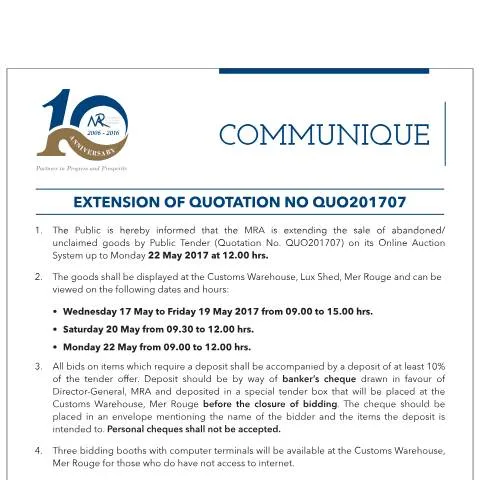
The Extension on Sale of Abandoned / Unclaimed Goods by Public Tender (Reference: ExtensionQuo07of2017) is a critical document for the Mauritius Revenue Authority (MRA) that regulates the process of selling unclaimed or abandoned goods through public tender. The mechanism not only facilitates the auction process but also ensures transparency and compliance with local laws.
This document is essential for both the MRA and prospective bidders. It lays down the rules governing how abandoned goods can be auctioned off, thereby creating a legal framework for transactions while safeguarding the rights of both the public and the government.
Who Needs to Submit the Form?
Individuals or entities who are interested in bidding for abandoned or unclaimed goods must submit this form. It applies to a wide range of profiles:
- Local Bidders: Residents of Mauritius who want to participate in the auction.
- Foreign Bidders: Non-residents who meet specific legal requirements for participation.
- Businesses: Companies looking to acquire items for resale or other commercial purposes.
It is noteworthy that individuals under the age of 18 must have parental or guardian consent to participate in the bidding process.
Decoding the Sections of the Form
Completing the ExtensionQuo07of2017 form requires careful attention to detail. Each section serves a specific purpose, and errors can lead to disqualification from the bidding process.
1. Bidder Information
The initial segment asks for basic information about the bidder, including:
- Name
- Contact Number
- Email Address
- Proof of Identity
Ensure that all details are accurate. Discrepancies in contact information may lead to difficulties in communication regarding the auction.
2. Details of Goods
Here, you will indicate the specific items you wish to bid on. This section must be filled out with precision, as any inaccuracies can result in a valid bid being rejected.
- Item Description
- Estimated Value
It is advisable to research the types of goods available to make informed bids. The MRA provides a list of items for auction, usually accessible via their official website.
3. Deposit Information
For items requiring a deposit, bidders must specify the amount they intend to deposit. The MRA mandates a minimum deposit of 10% of the bid offer. The deposit must be in the form of a banker’s cheque, which is a critical detail to observe to avoid pitfalls.
Timelines and Important Dates
Understanding the timeline associated with this form is crucial for prospective bidders. The original auction dates and any extensions for submission will be communicated through the MRA's official channels. Here is a typical timeline based on the ExtensionQuo07of2017:
| Date | Event |
|---|---|
| 17 May 2017 | Display of Goods Begins |
| 19 May 2017 | Display of Goods Ends |
| 20 May 2017 | Last Viewing Day |
| 22 May 2017, 12:00 hrs | Bid Submission Deadline |
After Submission: What Happens Next?
Once the ExtensionQuo07of2017 form is submitted, the MRA will review all bids. The evaluation process includes:
- Verification of deposit payments
- Assessment of compliance with bid requirements
- Notification of bid outcomes
Bidders will receive notifications on whether they have won the bid, along with further instructions for making payment and collecting their items.
Handling Refusals and Rectifying Mistakes
It is critical to be prepared for scenarios where a bid may not be accepted. Common reasons for refusal include:
- Incomplete forms
- Insufficient deposit
- Failure to meet eligibility criteria
If a bid is rejected, bidders may appeal the decision or rectify the mistakes in their application and resubmit, depending on the guidelines set by the MRA.
Prioritizing Accessibility: Facilities for Bidders
To ensure all interested parties can participate, the MRA has established facilities at the Customs Warehouse in Mer Rouge. These include:
- Bidding Booths: Provided with computer terminals for those without internet access.
- In-Person Viewing: Schedule periods for physically inspecting the goods prior to bidding.
Additionally, visitors need to present their Identity Cards for access at the Port Main Gate, ensuring a secure environment during the bidding process.
Special Considerations: Foreign Bidders and Minors
Foreign bidders must navigate additional complexities when participating in the auction. These include:
- Providing appropriate documentation to confirm their legal status in Mauritius.
- Ensuring compliance with the laws regarding the acquisition of goods by non-residents.
Minors wishing to participate should ensure they have the consent of a parent or guardian and may need to provide additional documentation to validate this permission.
Conclusion: The Importance of Diligence in Bidding
Engaging in the bid for abandoned or unclaimed goods through the ExtensionQuo07of2017 is a significant yet rewarding endeavor. Understanding the complete process, from filling out the form to the final bidding, is crucial for success. Adhering to timelines, ensuring accuracy in submissions, and preparing for possible outcomes can make the difference between securing a valuable purchase and facing disappointment. For any queries or further clarification, potential bidders should refer directly to the MRA’s official communication channels.
Understanding the Legal Framework for Abandoned Goods in Mauritius
The sale of abandoned or unclaimed goods by public tender in Mauritius operates under a nuanced legal framework that underscores both the responsibilities of the authorities and the rights of potential buyers. The legal basis for the sale derives from a combination of the Public Procurement Act and other statutory regulations that establish the procedures and protocols for handling unclaimed properties. It is critical for stakeholders, especially potential bidders, to comprehend the intricacies of these laws to ensure compliance and understand their rights during the tender process.
When dealing with abandoned goods, it is essential to recognize the classification of property under Mauritian law. For instance, goods can be categorized as 'abandoned' when the owner has relinquished all claims and such ownership is evident. In cases where goods remain unclaimed, it is typically after a designated period of time, as defined by applicable regulations, that they may be subjected to public sale. This ensures that abandoned properties do not remain in a state of limbo and can be transferred to new ownership, benefiting the community and the economy at large.
Fill in your form directly online
No printing: type your details into the boxes of the official form, tick, then download the PDF ready to send.
- 1Type into the form boxes
- 2Tick in one click
- 3Save and download the PDF
The legal procedures for the sale of such goods include mandates for public notification, often through local newspapers or government websites, to inform potential bidders about the upcoming tender. This aspect of transparency is vital in fostering public trust and ensuring a fair competitive bidding environment. Additionally, the Ministry of Finance and Economic Development plays a key role in overseeing these sales, ensuring adherence to legal standards and ethical practices throughout the process.
Key Steps in the Public Tender Process for Abandoned Goods
Participating in a public tender for abandoned goods involves several critical steps that every prospective bidder must be aware of to navigate the process successfully. Firstly, potential bidders should keep abreast of notices published by relevant authorities, including the Public Service Commission (PSC) and local government entities, which often provide detailed information about upcoming sales.
Once a sale is announced, potential bidders must carefully review the tender documents, which are usually available for download on official government portals such as govmu.org. These documents outline the goods available for sale, terms of the auction, and any conditions that must be met by bidders. It is essential for bidders to understand their obligations, including any required deposits or financial guarantees that may accompany their bids.
Submission of bids is typically done electronically through designated platforms, emphasizing the government's push for digital transactions. Bidders need to ensure that their submissions are complete and meet all specified criteria to avoid disqualification. This includes providing proof of identity and any relevant financial documentation, as stipulated in the tender requirements.
Upon the conclusion of the tender, successful bidders are notified formally, and arrangements for the transfer of ownership are made in accordance with local laws. It is also important to note that successful bidders are required to settle any applicable taxes or fees associated with the acquisition of such goods as per the guidelines issued by the Mauritius Revenue Authority (MRA).
Challenges and Considerations in the Sale of Abandoned Goods
While the framework governing the sale of abandoned goods by public tender is designed to protect both the public interest and the rights of bidders, various challenges and considerations exist that warrant attention. One significant challenge is the potential for disputes over ownership, particularly in cases where claims may arise post-sale. Therefore, bidders should conduct thorough due diligence before participating in such tenders to mitigate the risk of acquiring goods that may be subject to legal disputes.
Another consideration is the effective assessment of the value of abandoned goods. Potential bidders often face the dilemma of determining a fair bidding price, especially when the condition and marketability of the goods are unclear. Engaging professionals, such as appraisers, may be beneficial but can also add to the overall costs of participation in the tender process.
Furthermore, bidders must be informed about the specific terms and conditions of the tender, including any liabilities associated with the goods post-acquisition. For example, there may be restrictions on the use or resale of certain items, depending on their nature and legal status. Such terms are typically outlined in the tender documents, emphasizing the need for prospective bidders to read them thoroughly.
Lastly, the evolving nature of e-governance in Mauritius impacts the tendering process for abandoned goods, as the government continues to refine online systems. Bidders should remain adaptable to changes in digital platforms and remain vigilant for updates that may affect the tendering process, including changes in submission deadlines, documentation requirements, or procedural guidelines.