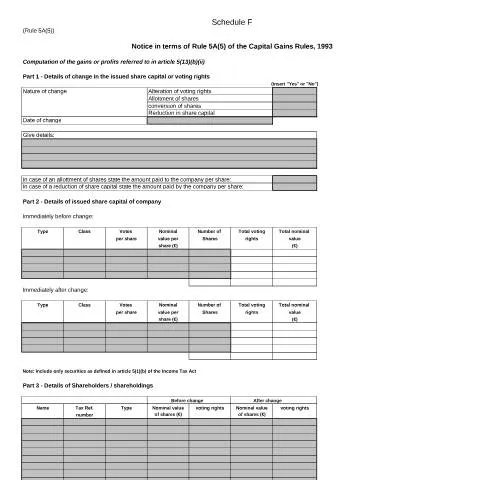
Understanding the Importance of the CGT Schedule F Form
The CGT Schedule F form plays a pivotal role in the property tax framework in Malta. This document is essential for property owners who need to declare the capital gains tax related to their property transactions. When a property is sold or otherwise disposed of, capital gains tax may apply, and this form must be submitted to ensure compliance with Maltese tax regulations.
Who Should Prepare and Submit the CGT Schedule F?
This form is primarily intended for individuals or entities selling or transferring property in Malta. If you are a resident property owner who has recently sold a residential, commercial, or agricultural property, it is your responsibility to fill out this form accurately. Additionally, if you are a non-resident who has sold property in Malta, you will also need to complete the CGT Schedule F.
Key Components of the CGT Schedule F Form
Completing the CGT Schedule F involves providing detailed information regarding the property transaction. Key components typically include:
- Personal Details: Name, identification number, and contact information of the seller.
- Property Details: Description of the property, including its address, type, and size.
- Transaction Information: Date of purchase, date of sale, and sale price.
- Cost Basis: Original purchase price and any costs associated with the acquisition, enhancement, or sale of the property.
Chronological Steps from Initiation to Submission
Submitting the CGT Schedule F requires a series of steps that every property seller should be aware of. Understanding this process can help avoid delays and ensure that all necessary information is included.
- Determine the Need for Submission: Identify whether your transaction is subject to capital gains tax based on the nature and timing of the sale.
- Gather Necessary Documentation: Collect all relevant documents, including purchase agreements, invoices for improvements, and any previous tax returns related to the property.
- Complete the CGT Schedule F Form: Accurately fill out the form based on the information you have gathered.
- Submit the Form: Choose your method of submission (online, by post, or in person).
- Await Confirmation: After submission, expect to receive acknowledgment from the property tax authority regarding the status of your form.
Submitting the CGT Schedule F: Online vs. Traditional Methods
In Malta, property owners have several options for submitting the CGT Schedule F, and understanding the differences can help you choose the most efficient channel.
| Method | Advantages | Considerations |
|---|---|---|
| Online Submission | Fast processing, immediate confirmation, and reduced paperwork. | Requires e-ID for authentication and a reliable internet connection. |
| Postal Submission | Accessible for those who prefer traditional methods; no need for e-ID. | Longer processing time, and potential delays in mail delivery. |
| In-Person Submission | Direct interaction with tax officials for clarification and guidance. | Time-consuming and may require an appointment. |
Preparing Supporting Documents: A Comprehensive Guide
Alongside the CGT Schedule F form, certain documents must be prepared and submitted to support your declaration. These documents vary based on individual circumstances, and proper organization can greatly improve the review process.
Common Supporting Documents
- Purchase Agreements: Proof of the original sale that includes historical pricing information.
- Receipts for Improvements: Any investments made in the property that may increase its value.
- Valuation Reports: Professional evaluations of the property's market value can substantiate your sale price.
- Identification Documents: A copy of your Maltese ID or any relevant residency documents.
The Review Process: What Happens After Submission?
Once the CGT Schedule F is submitted, the property tax authority will initiate a review process. Understanding what to expect during this phase can alleviate concerns and help property owners respond effectively to any inquiries.
Typical Review Timeline and Follow-Up
The review process duration can vary significantly. In general, the property tax authority aims to process submissions efficiently, but factors such as volume of applications and completeness of documentation can affect timelines. During this time:
- Expect to receive a notification confirming receipt of your form.
- Be prepared for potential additional requests for documentation if the authority requires further clarification.
- Monitor the status of your submission online if you opted for the digital submission route.
How to Handle Correspondence from the Authority
If contacted by the property tax authority for additional information, respond promptly. Failure to do so may result in delays or complications regarding your capital gains tax assessment. Always keep a record of any correspondences for your reference.
Conclusion: The Importance of Accuracy and Timeliness
Filing the CGT Schedule F accurately and on time is crucial for any property seller in Malta. By thoroughly understanding the steps involved in this process, property owners can ensure compliance with local tax regulations and avoid potential penalties. The combination of proper documentation, thoughtful submission methods, and effective communication with the property tax authority plays a vital role in successfully navigating the complexities of capital gains tax obligations.
Understanding the CGT Schedule and Its Implications for Property Transactions
The Capital Gains Tax (CGT) schedule, often referred to as cgt_schedule_f.pdf, is a critical document for anyone involved in property transactions in Malta. This schedule outlines the framework for calculating capital gains tax on the sale of property, a key financial consideration for both residents and non-residents. Understanding the provisions laid out in this schedule is crucial for determining your tax liabilities accurately.
The CGT in Malta is generally levied at a rate of 8% on the profit made from the sale of property, although this rate can vary depending on certain conditions. For instance, properties sold within five years of their acquisition may be subject to a different tax calculation, which aims to disincentivize short-term speculation and encourage long-term investment. When examining the cgt_schedule_f.pdf, it is essential to pay attention to specific exemptions and deductions that may apply, as they can significantly alter the final tax amount owed.
For individuals who have owned a property for a long period or have made substantial improvements, certain allowances might be available. The schedule often provides guidance on how to calculate the adjusted cost base of the property, including renovation costs, which could reduce taxable gains. Furthermore, understanding the implications of inheritance or gifts of property on CGT is vital, especially for families managing estates or planning for successors.
How to Access and Utilize the cgt_schedule_f.pdf for Compliance
Accessing the cgt_schedule_f.pdf is straightforward through official government portals. However, knowing how to use this document effectively requires an understanding of both its content and the compliance procedures surrounding it. The first step is to visit servizz.gov.mt, where you will find a plethora of resources, including tax forms and schedules essential for property transactions.
Once you've located the CGT schedule, it's advisable to familiarize yourself with the layout and specific sections that are most relevant to your situation. For instance, the document will typically include sections detailing applicable rates, deduction scenarios, and necessary calculations to determine your capital gains. It may also offer insights into the procedural aspects of filing your tax return, including deadlines and required documentation.
Keep in mind that the integration of an e-ID is often mandated for accessing certain online services, which means you should ensure that your digital identity is set up before attempting to download or submit any forms. The use of e-ID streamlines the process, enhancing security and simplifying interactions with government services.
For those unfamiliar with tax regulations, seeking professional advice from a tax consultant who understands Maltese law can be invaluable. They can provide clarity on how to interpret the cgt_schedule_f.pdf in the context of your specific property sale and guide you through the entire compliance process, from calculations to submissions.
Common Misconceptions about CGT in Malta
Many individuals entering the property market in Malta harbor misconceptions about Capital Gains Tax and its implications. One prevalent myth is that all property sales are automatically subject to CGT regardless of circumstances. However, this is not entirely accurate. For instance, properties that have been owned for more than 15 years are often exempt from CGT entirely, provided that they meet certain criteria outlined in the cgt_schedule_f.pdf.
Another common misunderstanding is related to the notion that improvements made to a property automatically increase CGT liability. In reality, the costs incurred during renovations or enhancements can often be deducted from the final sale price, thereby reducing the taxable capital gains. The cgt_schedule_f.pdf typically includes essential information on which types of expenses are eligible for deduction, illustrating the importance of maintaining comprehensive records of any property-related expenditures.
Additionally, some property owners assume that selling their property will trigger immediate tax obligations, but this is not always the case. The timing of the sale and the property owner's residency status can impact the effective date for CGT liability. Understanding these nuances can significantly influence tax planning strategies, allowing for more informed decision-making processes.
Ultimately, dispelling myths surrounding CGT is vital for effective financial management in property transactions. A thorough review of the cgt_schedule_f.pdf, combined with professional guidance, will equip property sellers with the knowledge necessary to navigate their tax obligations confidently.