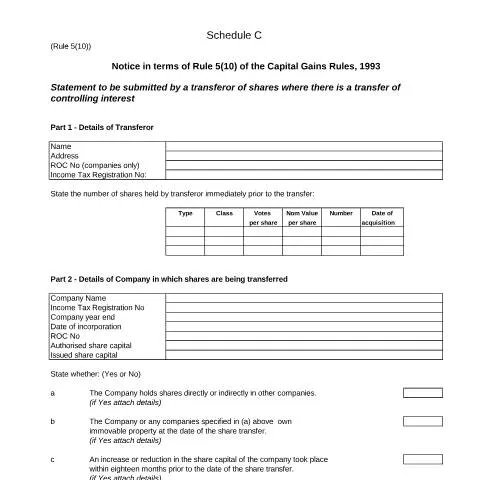
Understanding the Role of CGT Schedule C in Property Taxation
In the intricate landscape of property tax management in Malta, the CGT Schedule C form serves a crucial function. This document is specifically designed for the declaration of capital gains tax (CGT) related to property transactions. Individuals and entities intending to dispose of real estate must navigate this important requirement to ensure compliance with Maltese tax regulations. The financial implications of failing to submit this form accurately and on time can be significant, making familiarity with its nuances vital for taxpayers.
Who Needs to Complete CGT Schedule C?
This form is primarily targeted at property owners who are involved in the sale or transfer of real estate. This includes both residents and non-residents who own property in Malta. However, certain exceptions and special circumstances may alter the general requirement for submission.
Categories of Taxpayers
- Individuals: Maltese citizens or residents selling personal property.
- Companies: Corporate entities dealing in property transactions.
- Non-residents: Foreign investors selling real estate assets in Malta.
It is essential for individuals or entities in these categories to assess whether their transaction falls into the taxable events defined by Maltese law. Analyzing the ownership structure of the property and the nature of the transaction is crucial in determining the necessity of CGT Schedule C submission.
Completing CGT Schedule C: What You Need to Know
The process of filling out CGT Schedule C requires careful attention to detail. Each section of the form must be completed accurately to avoid complications in the tax assessment process. Taxpayers must provide comprehensive information about the property, including:
- The purchase and sale prices
- Date of acquisition
- Date of sale
- Property description and location
Documentation Requirements
In addition to completing the form itself, it is vital to prepare supporting documentation that substantiates the information provided. This may include:
- Purchase agreements
- Sale contracts
- Evidence of any improvements made to the property
- Valuation reports if applicable
It's also important to note that access to the Central e-ID is necessary for online submissions, further streamlining the process. If opting for paper submissions, ensure that all copies are clear and legible.
Submission Channels for CGT Schedule C
Submitting CGT Schedule C can be done through various channels, each with its own set of procedures. Understanding these options can aid taxpayers in choosing the most convenient method for their situation.
Online Submission via e-ID
Utilizing the online portal through the Central e-ID system is highly recommended. This method provides immediate confirmation of submission and allows for easier tracking of any required follow-up actions. Taxpayers simply log in using their e-ID credentials, complete the form, and submit it directly to the Property Tax Department.
Paper Submission
For those who prefer traditional methods or face difficulties with online processes, submitting a hard copy of CGT Schedule C is an option. Forms can be mailed to the relevant tax office or handed in personally at designated government offices. This method may involve longer processing times and does not provide immediate confirmation, which should be considered when choosing how to submit.
In-Person Submission
Lastly, taxpayers have the option to submit CGT Schedule C in person. Visiting the Property Tax Department can provide immediate assistance and clarification regarding any queries about the form or the submission process. This face-to-face interaction can be invaluable for those who may have questions or require guidance.
CGT Schedule C vs. Other Tax Forms: Key Differences
It is essential to distinguish CGT Schedule C from other tax forms related to property transactions. Many taxpayers may confuse this form with other declarations, such as those for property rental income or property purchase disclosures. Understanding these differences is key to ensuring compliance.
Comparative Overview
| Form | Purpose | When to Submit |
|---|---|---|
| CGT Schedule C | Capital gains tax declaration on property sale | Upon sale or transfer of property |
| Property Tax Return | Annual property tax declaration | Annually on a specified date |
| Rental Income Declaration | Income earned from property rentals | As part of annual income tax return |
This table highlights the primary distinctions between CGT Schedule C and other relevant forms, aiding taxpayers in identifying the correct documentation for their specific circumstances.
Implications of Accurate Submission
Accurate and timely completion of CGT Schedule C is not only a legal obligation but also a safeguard against potential fines and penalties. The Maltese tax authorities have stringent measures in place to ensure compliance, and any discrepancies in the declared information can result in audits or reassessments of the property’s tax liability.
Consequences of Errors
- Financial Penalties: Late submissions or inaccuracies may lead to financial repercussions.
- Legal Ramifications: In severe cases, failure to comply could result in legal action.
- Reputation Impact: For businesses, errors can affect credibility and trust with stakeholders.
As such, taking the time to ensure that every aspect of CGT Schedule C is filled out correctly is essential for property sellers in Malta.
The Process Following Submission
Once CGT Schedule C is submitted, taxpayers enter a waiting phase where the authorities review the application. The tax assessment may involve further inquiries or requests for additional documentation if needed. Understanding what to expect during this period can help alleviate concerns.
Post-Submission Steps
- Confirmation: If submitted online, taxpayers should receive an immediate acknowledgment; for paper submissions, expect a confirmation letter within a few weeks.
- Review Period: The authorities typically take several weeks to review submissions.
- Assessment Outcome: Taxpayers will be notified of their capital gains tax liability, which must be settled promptly to avoid penalties.
Any disputes or discrepancies identified during the review process can be addressed through official channels, and taxpayers are encouraged to respond to any communications from the tax authorities quickly.
Conclusion: Navigating the Property Tax Landscape in Malta
Understanding the significance of CGT Schedule C within the broader context of property taxation in Malta is critical for property sellers. By familiarizing themselves with the requirements, submission channels, and potential implications of incorrect submissions, taxpayers can navigate the complexities of property taxation with greater confidence. Ensuring compliance not only mitigates financial risks but also fosters a culture of transparency and responsibility in the property market.
Understanding the cgt_schedule_c.pdf Document: Contents and Implications
The cgt_schedule_c.pdf is an essential document for taxpayers in Malta, particularly for those engaged in capital gains transactions. It outlines the framework for reporting capital gains and losses, providing clarity on how these figures affect overall tax liabilities. The document typically includes detailed sections on the types of gains that must be reported, methodologies for calculating taxable gains, and the necessary forms and documentation needed to substantiate claims. Familiarizing oneself with the specific contents of this document is crucial for compliance with the Income Tax Act, which governs capital gains tax regulations.
Moreover, understanding the distinctions between various schedules (such as Schedule A and Schedule B) and how they interact with Schedule C is vital. For instance, while Schedule A addresses the taxation of income derived from property, Schedule C focuses explicitly on the realization of gains from asset disposals. Taxpayers should carefully analyze which sections of the cgt_schedule_c.pdf are applicable to their unique situations, especially when contemplating the sale of property or shares, as these transactions could lead to significant tax implications.
Step-by-Step Guide to Completing the cgt_schedule_c.pdf
Filling out the cgt_schedule_c.pdf requires attention to detail and a clear understanding of your financial transactions. The following steps can guide you through the process:
- Gather Documentation: Before beginning the completion of the schedule, ensure that you have all necessary documentation at hand. This includes sales contracts, purchase receipts, and any prior tax returns that may influence your capital gains.
- Identify Applicable Transactions: List all transactions that fall under capital gains. This includes property sales, stock dispositions, and any other asset sales. Make sure to differentiate between long-term and short-term capital gains, as they are taxed at different rates.
- Calculate Gains and Losses: Utilize the formula provided in the cgt_schedule_c.pdf to calculate your capital gains. Subtract the cost of acquisition from the sale price for each asset. If you incur any losses, these should also be documented as they can offset gains.
- Complete the Form: Begin filling out the cgt_schedule_c.pdf, ensuring that every section is completed accurately. Pay special attention to numerical accuracy and clarity in your explanations.
- Consult the Guidelines: Refer to the accompanying guidelines within the cgt_schedule_c.pdf for clarification on any sections you find confusing. It’s also beneficial to look for common pitfalls listed in the document.
- Submit Electronically or by Mail: Once completed, submit the form via the designated method outlined in the document. Most taxpayers are encouraged to use the electronic submission via the e-ID portal for efficiency and tracking purposes.
Common Mistakes to Avoid When Using the cgt_schedule_c.pdf
Navigating the complexities of capital gains tax reporting can be challenging, and there are several common mistakes that individuals make when utilizing the cgt_schedule_c.pdf. Awareness of these pitfalls can help in ensuring accurate submissions and reducing the risk of audits or penalties:
- Inaccurate Record-Keeping: Failing to maintain thorough and precise records of transactions is one of the major mistakes. Always document the acquisition and sale of assets, including dates and amounts paid.
- Neglecting to Report All Capital Gains: It’s crucial to report all relevant transactions. Omitting even a single profitable asset sale can lead to significant tax consequences.
- Confusing Personal and Business Transactions: Taxpayers often mistakenly mix personal and business-related capital gains. It's essential to distinguish between the two as they are taxed differently.
- Ignoring Depreciation Impacts: Many fail to account for depreciation on their assets, which can effectively reduce taxable gains. Understanding how to apply depreciation is vital when completing the cgt_schedule_c.pdf.
- Missing Deadlines: Ensure you are aware of submission deadlines. Late submissions can incur penalties and interest charges, complicating your tax situation further.