Navigating the cgt_schedule_b Form: Your Guide to Property Tax Compliance
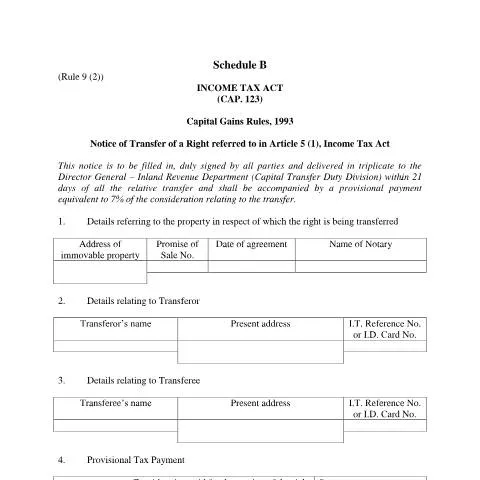
When it comes to property taxation in Malta, the cgt_schedule_b form stands as a crucial document for property owners. Whether you're a resident or a non-resident, understanding the intricacies of this form can make the difference between a smooth filing experience and unnecessary complications. This guide delves into every facet of the cgt_schedule_b form, from its timelines to the nuances of filling it out correctly.
The Timeline: Key Dates for Filing
Every property owner must be aware of the timelines surrounding the filing of the cgt_schedule_b form. The process begins with a crucial date: the filing period, which typically runs from January to March each year. It is essential to keep track of these dates to avoid penalties.
Important Filing Periods
- Start Date: From January 1st, property owners should begin preparing their documentation.
- End Date: Generally, submissions must be completed by March 31st.
- Review Period: After submission, the Lands Authority typically conducts reviews, which can take several weeks.
It’s advisable to start early; unexpected delays can arise, particularly in gathering necessary documentation. After the review period, property owners usually receive a notification regarding their tax status.
Decoding the cgt_schedule_b Rubrics
Each section of the cgt_schedule_b form plays a vital role in assessing the tax liability of property owners. Understanding these sections can help mitigate errors during completion.
Section Breakdown
- Taxpayer Information: Fill in your personal details accurately. This includes your name, address, and identification number. Be cautious with the formatting of your ID number; any discrepancies can lead to processing delays.
- Property Details: Here, you must provide specifics about the property in question. This includes the property type and its location. Ensure that the address matches official records to avoid complications.
- Calculation of Tax: This section requires you to detail the method used for calculating the estimated tax due. It’s crucial to apply the correct rates as specified by the property tax guidelines.
- Attachments: Be sure to include any required supporting documents here. Missing documents can result in rejection or delayed processing of your form.
Each section is designed with specific questions intended to extract information that will assist in calculating your tax liabilities accurately. Double-check your entries to avoid common pitfalls.
Modes of Submission: Online versus Paper
Submitting the cgt_schedule_b form can be done through multiple channels, each with its advantages and disadvantages. Understanding these options will help streamline your filing process.
Submission Channels
| Method | Advantages | Considerations |
|---|---|---|
| Online Submission | Fast processing, immediate confirmation, and reduced paperwork. | Requires a secure e-ID for authentication. |
| Paper Submission | Traditional method; allows for personal touch in filling out forms. | Longer processing times and risk of lost documents. |
| In-Person Submission | Opportunity to clarify any doubts with officials directly. | Potentially long queues and time-consuming. |
While online submission is often recommended for its efficiency, it’s crucial to ensure that you have your e-ID ready. If opting for paper submission, consider mailing your documents with a delivery confirmation, or visiting the appropriate office in person to guarantee that your submission is accepted.
What to Do If Issues Arise
Even with the best preparation, issues may still arise during the submission or review process of your cgt_schedule_b form. Knowing how to address these problems can save time and minimize stress.
Addressing Common Issues
- Form Rejection: If your form is rejected, carefully review any feedback provided. Typically, the Lands Authority will inform you of specific deficiencies that need rectification.
- Missing Documents: Gather and submit the required documentation as soon as possible. Ensure that all documents are current and formatted correctly.
- Errors in Submission: If you realize an error post-submission, contact the Lands Authority immediately to discuss the next steps. Timeliness is key in these situations.
Being proactive in addressing these issues can often lead to quicker resolutions and a smoother experience overall.
Preparing Required Documentation
Each filing of the cgt_schedule_b form comes with its suite of documentation requirements tailored to your property and financial circumstances. Preparing these in advance can make the submission process much more straightforward.
Documentation Checklist
- Proof of Identity: A valid Maltese ID or equivalent for non-residents.
- Property Deeds: This should include a copy of the title deed for the property.
- Valuation Reports: If applicable, include any property valuation reports that may affect tax liability.
- Income Statements: For rental properties, you may need to present income statements or lease agreements.
By ensuring that you have all necessary documentation ready, you can streamline your filing experience and avoid potential pitfalls that could delay your submission.
Understanding Regulatory Framework
The cgt_schedule_b form is rooted in Malta’s Public Administration Act, which outlines the regulations surrounding property taxation. Understanding this framework can provide valuable context for the requirements of the cgt_schedule_b form.
Legislative Background
The regulations surrounding property taxation in Malta have evolved, aiming for transparency and fairness. These guidelines dictate not only the rates applied but also the procedures required for filing and assessment.
In this evolving legislative landscape, it’s crucial for property owners to stay informed about changes that may affect their tax liabilities. Regularly consulting the official property tax guidelines ensures that you are not caught off-guard by new requirements or updates.
Key Distinctions: cgt_schedule_b vs. Other Forms
Property taxation involves a range of forms and submissions, leading to potential confusion. Understanding the unique role of the cgt_schedule_b form compared to similar documents can clarify your tax obligations.
Comparative Overview
| Form | Purpose | Key Differences |
|---|---|---|
| cgt_schedule_b | Specifically for property tax calculations. | Focuses on capital gains tax aspects related to property sales. |
| cgt_schedule_a | Related to property disposal documentation. | Includes details on previous ownership and legal encumbrances. |
| GOV1 | General revenue and taxation information request. | Broader tax-related submissions, not exclusive to property. |
By recognizing these distinctions, property owners can ensure they are using the correct form for their specific needs and avoid unnecessary delays in tax processing.
Understanding the CGT Schedule in Malta: Key Details and Implications
The Capital Gains Tax (CGT) schedule in Malta, encapsulated in the document cgt_schedule_b.pdf, serves as a crucial resource for residents and non-residents engaging in transactions that yield capital gains. It delineates the applicable rates, exemptions, and procedural nuances integral to effective tax planning. Familiarity with this schedule is essential not only for individual taxpayers but also for businesses that may be liable for CGT. The rates are particularly significant for property transactions, where CGT implications can be substantial.
One of the primary features of the CGT schedule is the flat-rate taxation on gains from the sale of property. For residents, the prevailing rate is typically 12% on the net gains derived from the sale of immovable property. Non-residents may face different conditions based on double taxation agreements in place between Malta and the seller's country of residence. The CGT schedule also specifies exemptions under particular conditions, such as the transfer of property as part of a marriage dissolution or inheritance. Therefore, individuals must reference the specific provisions laid out in the cgt_schedule_b.pdf to understand their eligibility for such exemptions.
Navigating CGT Compliance: Practical Steps for Taxpayers
To ensure compliance with the CGT regulations in Malta, taxpayers must follow a series of structured steps. The first step is to assess whether a transaction triggers CGT, which typically applies to the sale of properties, shares, or other valuable assets. Individuals should maintain detailed records of the purchase price, costs related to the acquisition, and expenses incurred during the improvement of the asset to accurately calculate the net gain.
Subsequently, taxpayers need to complete the required declarations and forms, as specified in the cgt_schedule_b.pdf, before the stipulated deadlines. For example, Form CG1, intended for the declaration of capital gains tax on property sales, must be submitted within 30 days from the date of the sale. Failure to meet these timelines may result in penalties or increased tax liability. Utilizing the e-ID for online submissions can streamline this process and reduce administrative burdens.
In more complex situations, such as those involving partial disposals or transactions with related parties, professional advice may be advisable. Engaging with a tax consultant or legal expert ensures that all facets of the transaction comply with the Public Administration Act (Cap. 595 of the Laws of Malta) and mitigates potential disputes with the tax authorities.
Potential Reforms and Future Considerations in Capital Gains Tax Legislation
The landscape of capital gains tax in Malta is continuously evolving, influenced by both domestic policies and international tax standards. Ongoing discussions regarding tax reforms reflect the government’s intention to align with OECD guidelines, which may potentially alter the CGT structure in the future. Stakeholders, including property developers, investors, and tax advisors, should remain vigilant regarding any announcements or consultations by the Maltese government regarding proposed amendments to capital gains tax legislation.
Future reforms may encompass adjustments to the current flat-rate system or alterations in the scope of exemptions. For instance, the introduction of targeted relief for first-time home buyers or changes in the treatment of gains from foreign investments could significantly impact taxpayer planning strategies. Engaging in public consultations or contributing to discussions on proposed reforms will enable stakeholders to voice their opinions and influence tax policy formulations.
Moreover, as Malta continues to pursue a competitive economic environment, the CGT framework will likely require periodic reviews to adapt to changing market conditions and global economic trends. Taxpayers are encouraged to stay informed through official government resources and consult the updated versions of the cgt_schedule_b.pdf for the most current regulations.