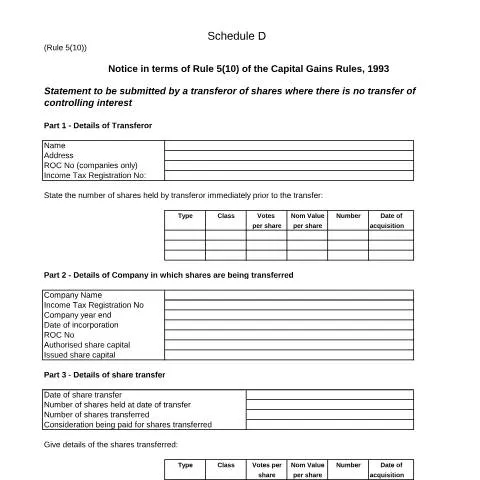
Navigating the Intricacies of the CGT Schedule D Form
In the realm of property taxation in Malta, the CGT Schedule D form stands as a pivotal document for individuals and entities involved in property transactions. This official form is essential for declaring and managing capital gains tax, a tax that can significantly impact the finances of property owners. Understanding its purpose and the nuances of its completion can be the difference between a smooth transaction and a potential tax liability.
Understanding the Significance of the CGT Schedule D Form
The CGT Schedule D form is a cornerstone for residents and non-residents alike who wish to declare capital gains incurred from property sales. While the letter “D” might suggest a straightforward declaration process, the implications of this form are far-reaching. Through the correct submission of this form, taxpayers can ensure compliance with the local tax regulations, minimizing the risk of penalties or audits.
Who is Required to File the CGT Schedule D?
This form is necessary for various stakeholders:
- Property Sellers: Individuals or entities selling real estate in Malta must file this form to report any gains made during the sale.
- Non-Residents: Foreign nationals selling Maltese property are also obligated to submit this form, highlighting Malta’s commitment to taxing gains from its real estate market.
- Entities: Companies or trusts engaged in property transactions must adhere to the filing requirements outlined in this context.
Timelines for Submission: A Crucial Aspect
Awareness of the timelines associated with the CGT Schedule D form is critical. The submission period typically coincides with the completion of the property sale. It is advisable to file the form within the stipulated deadlines to avoid any penalties, as late submissions can result in hefty fines or interest on unpaid taxes.
Key Dates to Consider
Generally, the CGT Schedule D must be submitted:
- Within 30 days: After the completion of the property sale.
- Quarterly Reporting: Depending on the circumstances of the sale, in some cases, taxpayers may opt for quarterly tax payments to avoid a lump-sum payment.
Moreover, following submission, taxpayers should expect to receive an acknowledgment from the tax authorities confirming receipt of their CGT Schedule D form. This acknowledgment is crucial for maintaining a clear record of compliance.
Completing the CGT Schedule D Form: A Step-by-Step Approach
Filling out the CGT Schedule D form requires meticulous attention to detail. Each section of the form is designed to elicit specific information relevant to the property transaction.
Essential Information to Include
- Property Details: Full description of the property, including its address, size, and type.
- Seller Information: Details of the seller, including personal identification numbers and contact information.
- Sale Information: Date of sale, selling price, and any associated costs leading to the capital gain.
It’s vital to ensure that all figures are accurate and verifiable, as discrepancies may lead to complications with the tax authorities.
Diverse Submission Channels: Exploring Options
Taxpayers have several avenues for submitting their CGT Schedule D form. Understanding the differences between these channels can enhance the submission experience and ensure compliance.
Online vs. Paper Submission
- Online Submission: Utilizing the e-ID for secure online submission is often the most efficient method, allowing taxpayers to submit the CGT Schedule D form through the official government portal.
- Paper Submission: For those who prefer traditional methods, the form can be filled out and mailed to the relevant tax authority. This method requires additional consideration for mail delays and the risk of lost documents.
- In-Person Submission: Another option is to visit the local tax office, where individuals can submit their forms directly and receive immediate confirmation of receipt.
Post-Submission: What Happens Next?
After the CGT Schedule D form has been submitted, individuals often wonder about the subsequent steps. This phase is crucial for ensuring that the process is concluded satisfactorily.
Expected Outcomes After Submission
Taxpayers should anticipate the following outcomes:
- Assessment of Capital Gains: The tax authority will review the submitted form and calculate the capital gains tax based on the information provided.
- Notification of Tax Due: If applicable, taxpayers will receive a notification detailing any tax owed, along with payment instructions.
- Right to Appeal: In the event of disputes regarding the assessment, taxpayers have the right to appeal the decision through proper channels.
What to Do in the Event of Complications
Not every submission results in a smooth process. Taxpayers may encounter issues such as missing documents or inaccurate information. Understanding the recourse available is essential.
Steps to Take if Refused or if Errors Occur
- Clarification Requests: If your submission is met with queries, promptly provide the necessary information or documentation to the authorities.
- Revisions: Should there be an error in the submitted form, a revised CGT Schedule D may need to be submitted.
- Appeal Process: If a tax liability is disputed, the taxpayer may initiate an appeal through a structured process, which is typically detailed in the initial correspondence from the tax authority.
The Role of the CGT Schedule D in Broader Taxation Procedures
The CGT Schedule D does not exist in isolation; rather, it is a component of Malta's broader taxation landscape. Understanding how this form fits into the larger context can provide valuable insights for taxpayers.
Integration with Other Tax Obligations
Taxpayers may also need to consider:
- Income Tax Returns: The gains reported via the CGT Schedule D may need to be included in annual income tax returns.
- Other Property Taxes: Depending on property holdings, other tax obligations may arise, such as property tax or duty on documents during the acquisition process.
The interplay between these various obligations is critical, requiring careful documentation and accurate reporting to ensure compliance.
Final Thoughts on the CGT Schedule D Form
Engaging with the CGT Schedule D form is an important step for anyone involved in property transactions in Malta. From initial submission to post-filing outcomes, every phase requires attention and diligence. By comprehensively understanding the process and the implications of this form, taxpayers can navigate the landscape of property taxation with confidence and clarity.
Understanding the CGT Schedule: Key Components and Implications
The Capital Gains Tax (CGT) Schedule, as detailed in the cgt_schedule_d.pdf document, plays a crucial role in the taxation framework of Malta. It outlines how capital gains taxes are calculated on various assets, which can have profound implications for both individuals and businesses. One of the significant components of this schedule is the distinction between different types of capital assets, such as immovable properties, shares, and securities.
Individuals must understand the specific tax rates applicable to each asset type, which can vary significantly. For instance, gains derived from the sale of immovable property may be subject to different exemptions and deductions compared to gains from the sale of shares. Furthermore, the schedule clarifies the residency status of individuals, which impacts their tax obligations. Residents of Malta are typically taxed on their worldwide income, while non-residents are taxed only on income sourced from Malta.
Practical implications arise when individuals consider selling their assets. Taxpayers should be aware of the criteria for determining the tax base, which includes not only the sale price but also the acquisition costs and any associated expenses that may be deducted. The schedule also emphasizes the importance of maintaining accurate records to substantiate these costs, as the burden of proof lies with the taxpayer. This necessitates a meticulous approach to documentation, particularly in scenarios where property improvements or additional investments have been made over the years.
Filing Requirements and Compliance for CGT in Malta
Filing requirements for capital gains tax in Malta hinge on the detailed stipulations laid out in the cgt_schedule_d.pdf. Individuals must navigate various obligations, including the timely submission of their tax returns and any required additional documentation. The tax year in Malta runs from January 1st to December 31st, and individuals must submit their returns by June 30th of the following year, adhering to the compliance deadlines set forth by the Malta Revenue Authority.
In addition to standard filing requirements, taxpayers must also be cognizant of the need for declarations specific to capital gains. Form CGT1 is commonly used to report capital gains, and it is essential that individuals complete this form accurately to avoid penalties. Non-compliance can lead to financial ramifications, including fines, interest on late payments, or even legal proceedings in severe cases.
For those with more complex situations, such as businesses engaging in the sale of multiple assets or transactions spanning several years, it might be prudent to consult a tax advisor. They can provide tailored advice to ensure compliance with the nuances of the tax code and assist in minimizing tax liabilities through legitimate means. Ultimately, being proactive about tax planning and filing can help individuals mitigate risks associated with capital gains tax obligations.
Special Considerations: Exemptions and Relief Options
The cgt_schedule_d.pdf also delves into significant exemptions and relief options available to taxpayers, helping to clarify the scope of capital gains tax liabilities. Understanding these exemptions is vital for effective tax planning and compliance. For example, individuals may be eligible for exemptions when the property sold was their primary residence, as long as certain conditions are met, such as ownership duration and use of the property.
Moreover, specific reliefs may apply in cases where assets are transferred between family members or in scenarios of inheritance. The schedule delineates the criteria and conditions under which these reliefs can be claimed, illustrating the need for individuals to stay informed on current regulations that may impact their tax obligations.
For those involved in investment activities, awareness of reinvestment reliefs also becomes crucial. The opportunity to defer capital gains tax liabilities by reinvesting proceeds into qualifying assets can be an effective strategy for wealth management. Taxpayers should ensure they keep abreast of the qualifying parameters for such reliefs, which can change over time, to optimize their financial strategies.