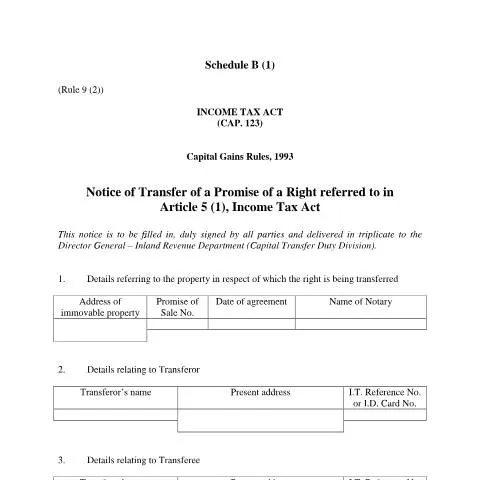
Navigating the Property Tax Landscape: The Role of the cgt_schedule_b1 Form
In the realm of property ownership in Malta, understanding the intricacies of taxation is paramount. For property owners, particularly first-time buyers or those unfamiliar with Maltese law, the cgt_schedule_b1 form becomes a crucial piece of the puzzle. This document is not merely a formality; it serves as a gateway to various tax liabilities and obligations, ensuring compliance with the local laws surrounding property taxes. With the potential for significant financial implications, knowing how to effectively navigate this process is essential.
Understanding the Trigger: When and Why to Submit the cgt_schedule_b1
The first step in this journey begins when a property owner decides to sell their asset. The need to complete the cgt_schedule_b1 arises primarily in the context of calculating the Capital Gains Tax (CGT) associated with the sale. This tax applies when the selling price exceeds the property's acquisition cost, making it imperative for sellers to accurately report these figures.
Moreover, there are specific scenarios that could prompt the filing of this form:
- A property transaction involving a sale, transfer, or exchange of real estate.
- Acquisition of property through inheritance, which may also entail CGT implications.
- In cases of gifted properties where market values differ significantly from the stated transaction values.
Decoding the Documentation: Essential Elements of cgt_schedule_b1
The cgt_schedule_b1 form requires a series of specific details that collectively help the Maltese Revenue Department assess the applicable tax. Here’s a breakdown of the elements you need to be prepared for:
- Property Details: Identification of the property, including its address, type, and purchase history.
- Transaction Values: The acquisition cost versus the sale price; this is critical as it determines the potential capital gain.
- Exemptions or Reliefs: If applicable, mention any exemptions that could lessen or negate the CGT.
Completing this form accurately is vital, as inaccuracies could lead to penalties or increased tax liabilities.
The Submission Process: Getting the cgt_schedule_b1 in Motion
Once the form is filled out, the next vital step is submission. This can be accomplished through the designated channels set by the Maltese tax authorities.
Typically, the submission of the cgt_schedule_b1 must be done electronically, utilizing a central e-ID account for authentication. This ensures that your identity is verified and that the submitted information is secure. The steps include:
- Log into the e-ID portal using your credentials.
- Navigate to the property tax section and locate the submission area for CGT forms.
- Upload your completed cgt_schedule_b1 form and any supplementary documents.
- Confirm the submission and save the confirmation for your records.
Attention to timing is key; submitting the form late may result in fines or additional tax assessments.
Following Your Submission: Insights into the Administrative Review Process
After submitting the cgt_schedule_b1, property owners often wonder about the next steps. Understanding the administrative review process can help alleviate concerns and provide clarity.
The tax authorities typically take a period to review submissions. During this time, they may reach out for additional information or clarification. Here's what to expect:
- Notification: You will receive a confirmation of your submission along with a timeline for when to expect feedback.
- Potential Audits: In some cases, the Revenue Department may audit your submission to verify details or cross-check against other records.
- Assessment: Based on the review, you will receive a formal assessment indicating whether tax is owed, including any applicable penalties or interest.
It’s advisable to maintain open lines of communication with the tax authorities, especially if further documentation is requested.
Comparing the cgt_schedule_b1 with Other Property Forms
In the realm of property taxes, it’s easy for individuals to confuse different forms and their purposes. The cgt_schedule_b1 serves a specific function distinct from other related documents, such as the property transfer forms or property tax return forms.
| Form | Purpose | Key Differences |
|---|---|---|
| cgt_schedule_b1 | Reports capital gains from property sales. | Specific to property disposals; focuses on tax implications directly tied to gains. |
| Property Transfer Form | Documents the official transfer of ownership. | Does not deal with taxation directly; focuses on legal ownership changes. |
| Property Tax Return Form | Annual reporting of property tax owed on owned properties. | Annual obligation; broader focus on property ownership rather than sales. |
Understanding these distinctions can help prevent missteps and ensure that all obligations are met accurately.
Special Circumstances: Navigating Complex Situations
Every property owner’s situation is unique, and various factors can complicate the completion and submission of the cgt_schedule_b1.
Some common scenarios include:
- Non-residents: Individuals not residing in Malta may face additional requirements or considerations when filling out the form.
- Minors: Properties owned by minors or transferred to them may require distinct processes that involve parental consent or legal guardianship.
- Complex Transactions: Transactions involving partnerships or companies can complicate the reporting process, necessitating extra documentation to clarify ownership stakes.
- Emergency Situations: If a sale is precipitated by unforeseen events, it may be prudent to seek expedited handling of the form submission.
In such cases, consulting with local tax professionals or legal advisors can provide tailored guidance and ensure compliance with Maltese tax laws.
Useful Resources and Next Steps
As you move through the property tax process and the completion of the cgt_schedule_b1, several resources are available to assist you. The Maltese government's official website offers extensive guidance, and engaging with local tax consultants can provide additional support.
Remember to keep copies of all submissions and correspondence related to your property transactions. These records will be invaluable if questions arise or if you decide to appeal any assessments in the future.
Navigating property taxes in Malta can be challenging; however, with thorough preparation and attention to detail, you can ensure compliance and safeguard your investment.
Understanding the CGT Schedule B1: A Comprehensive Guide
The Capital Gains Tax (CGT) Schedule B1 is a crucial document for individuals engaging in property transactions or other asset disposals in Malta. This form outlines the specific calculations required for determining the taxable gains and is essential for ensuring compliance with current regulations.
To effectively utilize the CGT Schedule B1, taxpayers should first familiarize themselves with the underlying principles of capital gains tax in Malta, specifically as outlined in the Income Tax Act. The gains subject to taxation are generally calculated as the difference between the acquisition price and the final selling price of the asset. However, certain allowable deductions, such as improvements or costs associated with obtaining the property, can significantly influence the taxable amount. It's important to maintain accurate records of these transactions and associated costs to support claims made in the CGT Schedule B1.
Additionally, interested parties should be aware of the specific deadlines associated with the submission of the CGT Schedule B1. Typically, the submission must occur within the timeframes specified by the Inland Revenue Department (IRD) following the completion of the asset disposal. Missing these deadlines can result in penalties, so it is advisable to stay informed through the official channels outlined on the IRD’s website.
For non-residents or individuals unfamiliar with the Maltese tax system, seeking professional advice or consultation may be beneficial. Tax consultants can provide personalized guidance to navigate any complexities associated with the CGT Schedule B1, ensuring a smooth compliance experience.
Step-by-Step Instructions for Completing CGT Schedule B1
Completing the CGT Schedule B1 requires careful attention to detail. Below is a step-by-step guide to help individuals accurately fill out the form, ensuring all necessary information is provided to the Inland Revenue Department.
- Gather Necessary Documentation: Before starting the form, collect all relevant documents, including purchase agreements, receipts for any enhancements made to the property, and evidence of sale.
- Identify the Asset: Clearly identify the asset being disposed of, including its acquisition date and disposal date. Ensure that you have the correct property title and any relevant registration information.
- Calculate the Acquisition Cost: Enter the total cost incurred to acquire the asset. This should include the purchase price, legal fees, and any additional costs that can be legally deducted.
- Record Disposal Proceeds: Input the total proceeds from the sale of the asset, which should reflect the actual amount received, including any associated costs deducted from the sale price.
- Determine the Capital Gain/Loss: Subtract the total acquisition cost from the disposal proceeds to determine whether you have made a capital gain or loss.
- Complete Additional Sections: There may be specific sections for exemptions or reliefs, such as the Principal Residence Relief. Ensure you fill these out accurately, provided you meet the criteria.
- Review and Submit: Double-check all entries for accuracy and ensure all required supporting documents are attached before submission. Use the Central e-ID system for secure submission.
It is also recommended to keep a copy of the completed form for personal records, as well as any correspondence sent to the IRD. This can be valuable should there be future queries about the submission.
Common Misconceptions about CGT Schedule B1
There are several misconceptions surrounding the CGT Schedule B1 and the capital gains tax process in Malta that can lead to confusion and compliance issues. Addressing these can empower taxpayers to navigate the system more effectively.
- Misconception 1: Only Residents Need to File CGT Schedule B1. In reality, both residents and non-residents who dispose of property or assets in Malta may be subject to capital gains tax and must file the schedule accordingly. Non-residents might have additional considerations regarding tax treaties and local laws.
- Misconception 2: Capital Gains Tax Only Applies to Real Estate. While real estate transactions are common, capital gains tax can also be applicable to the sale of other assets, such as shares or intellectual property. Hence, individuals should review the tax laws governing their specific situation.
- Misconception 3: All Gains are Taxable. There are certain exemptions that may apply, depending on the circumstances of the asset disposal. For example, the Principal Residence Relief can significantly reduce tax liability for qualifying homeowners. It’s essential to check the latest updates on exemptions from the IRD.
- Misconception 4: Filing CGT Schedule B1 is Optional. This form is mandatory for anyone who realises a capital gain through asset disposal. Failure to file can lead to penalties or additional scrutiny from the tax authorities.
By actively addressing these misconceptions, taxpayers can better prepare themselves for the responsibilities associated with CGT in Malta, ensuring compliance and minimizing unnecessary financial burdens.