Navigating the Taxpayer Registration Process: The TPR_007 Form
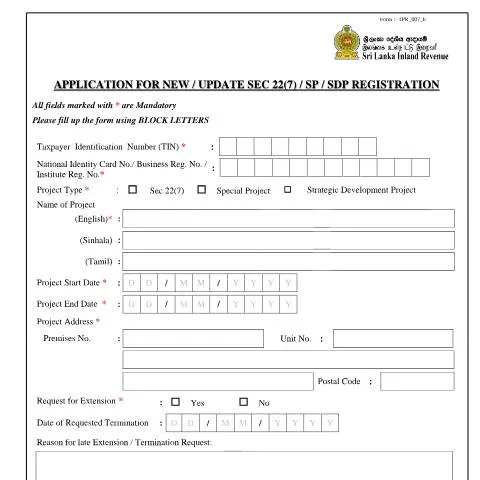
In the landscape of Sri Lanka's tax administration, the significance of accurately registering as a taxpayer cannot be overstated. Among the essential documents in this process is the Application for New / Update Sec 22(7) / SP / SDP Registration, known by its code TPR_007. This form is critical for individuals and entities looking to engage in projects classified under sections 22(7), Special Projects (SP), or Strategic Development Projects (SDP). Understanding its intricacies is indispensable for effective compliance and to unlock the benefits associated with these classifications.
Understanding the Profile of Applicants: Who Needs to File the TPR_007?
The TPR_007 serves a diverse range of applicants, from individual entrepreneurs to large corporations initiating substantial projects. It’s vital to pinpoint who is specifically required to submit this form:
- New Taxpayers: Any individual or organization starting a new project under the defined categories must complete this application to obtain their Taxpayer Identification Number (TIN).
- Existing Taxpayers Updating Information: Existing taxpayers who are modifying details related to ongoing projects or transitioning to new classifications also need to file this form.
- Authorized Representatives: In cases where an applicant cannot file personally, an authorized representative can submit the form on their behalf. It is crucial to provide their information, including designation and identification.
Each applicant's situation can vary significantly, particularly if the project is aimed at special economic zones or involves specific public-private partnerships. Therefore, understanding the nuances of the project type being declared can influence the registration process.
Specific Scenarios Requiring Submission
Different profiles of taxpayers might encounter unique situations necessitating the TPR_007 form:
- Special Projects: If an applicant is embarking on a project that is designed to spur economic growth in identified sectors, they must utilize this form to ensure their project is classified appropriately.
- Strategic Development Projects: For those involved in projects that align with government objectives for sustainable development, the correct registration under section 22(7) is critical.
Applicants must consider these angles carefully to ensure the appropriate classification is noted on the form, which can have tax implications and affect eligibility for various incentives offered by the government.
Completing the TPR_007: A Step-by-Step Approach
The completion of the TPR_007 is a meticulous process that requires precise information. Each section of the form must be filled out accurately to avoid delays or complications in registration. Here’s a breakdown of what to pay attention to:
Key Fields to Fill
The TPR_007 is structured with multiple mandatory fields, clearly marked with an asterisk (*). Here’s a glimpse of the essential sections:
- Identification Details: Include your name, NIC or passport number, and the TIN. This information is crucial for establishing your identity in the tax system.
- Project Classification: Select the appropriate category — whether it’s a Sec 22(7), Special Project, or Strategic Development Project. This classification determines the project's eligibility for various incentives.
- Project Dates: Ensure that the project start and end dates are accurate, as these dates are important for the timeline of your project.
- Address Information: Provide detailed project address including postal codes, which aids the IRD in processing your application effectively.
It is strongly recommended to use block letters when filling out the form to enhance readability and reduce the chances of misinterpretation by the authorities.
Signature and Authorization
The form also requires an authorization section wherein the applicant certifies that the particulars provided are correct. The applicant must sign and date this section. If someone else is submitting on your behalf, their details must be included as well.
Submission Channels: Where and How to Submit the TPR_007
Once the TPR_007 is completed, the next step is determining the best avenue for submission. Applicants have several options, each with its unique implications:
Online Submission Via ICTA
The most efficient method of submission is through the ICTA portal. This digital channel is designed to streamline processes and reduce paperwork. Here are the steps to submit online:
- Access the ICTA portal and navigate to the taxpayer registration section.
- Fill in the online version of the TPR_007 form.
- Attach any required supporting documents in digital format.
- Submit the application and keep a copy of the acknowledgment receipt for your records.
Paper Submission at IRD Branch
For those who prefer traditional methods, submitting a paper application at the nearest Inland Revenue Department (IRD) branch is still an option. Here’s how to go about it:
- Print the completed TPR_007 form.
- Gather any supplementary documents that support your application.
- Submit the entire package at the Help Desk of the IRD branch. Don’t forget to ask for a receipt as proof of submission.
Considerations for Authorized Persons
If the application is submitted by an authorized representative, it’s essential to ensure that their details are included clearly on the form. This includes their name, designation, and identification number.
Follow-Up Procedures: Tracking Your Application
After submission, applicants may wonder how to track the progress of their registration. The process can often take time, and understanding how to follow up can alleviate uncertainties:
How to Monitor the Status
Here are the methods to check the status of your TPR_007 application:
- Online Portal: If submitted online, log into the ICTA portal where you submitted your application. There is usually a section that allows users to track the status of their applications.
- Contacting the IRD: For paper submissions, call or visit the IRD branch where you submitted your application. Have your submission receipt on hand for reference.
Expected Timeframes
Processing times can vary depending on the complexity of the application and the workload of the IRD. It is advisable to follow up if you have not received a response within 30 days of submission.
Implications of Non-Compliance: What Happens if You Forget or Misfile?
Neglecting to file the TPR_007 or submitting an incomplete application can lead to significant repercussions:
Potential Consequences
- Fines and Penalties: Late submissions or incorrect filings may incur financial penalties from the IRD.
- Loss of Tax Benefits: Failure to register under the applicable project type can lead to losing out on essential tax incentives.
- Project Delays: If a project is not registered appropriately, it might be halted until compliance is achieved.
Steps to Rectify Mistakes
If after filing you realize there are mistakes or missing pieces of information, the first action should be:
- Contact the IRD immediately to inform them of the discrepancies.
- Provide any required documentation or clarifications as needed.
- Follow up and ensure that corrections are made in their records.
Addressing Refusals: What If Your Application Is Denied?
In the unfortunate event that your application for the TPR_007 is denied, it is crucial to understand the next steps:
Understanding the Reasons for Refusal
- Insufficient documentation or supporting evidence.
- Ineligibility under the specified project categories.
- Errors in submitted personal or project information.
Appealing the Decision
Should an application be denied, you have the right to appeal. The procedure typically involves:
- Gathering additional information or documentation that addresses the reasons for denial.
- Submitting an appeal letter to the IRD, citing the reasons for reconsideration.
- Following up to ensure your appeal is being processed.
Final Considerations: Leveraging the TPR_007 for Your Benefit
The Application for New / Update Sec 22(7) / SP / SDP Registration is more than just a form; it’s a gateway to accessing various tax benefits and ensuring compliance with Sri Lankan tax laws. Understanding the nuances of this application can lead to fruitful outcomes for prospective and existing taxpayers. Whether you are entering the field as a new taxpayer or updating your current status, the successful navigation of the TPR_007 process can pave the way for successful project implementation and growth in the Sri Lankan economy.