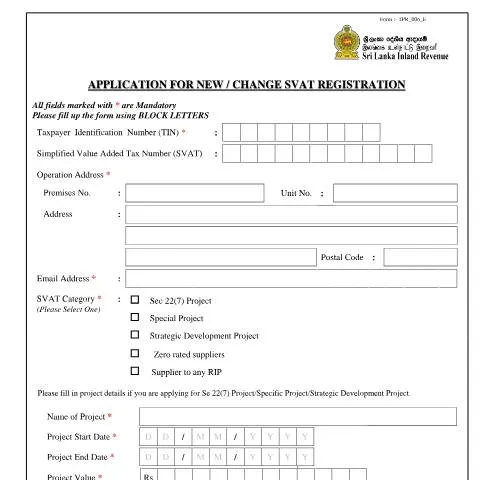
Understanding the Significance of the SVAT Registration Application
In the complex landscape of Sri Lanka’s taxation system, the Application for New / Change SVAT Scheme Registration, designated as TPR_006, plays a pivotal role in facilitating businesses’ compliance with the Simplified Value Added Tax (SVAT) system. This document is essential for both new entities seeking registration and existing taxpayers looking to amend their current status under the SVAT framework. Understanding this application is crucial for ensuring correct tax obligations are met, and it sets the stage for smoother operational processes.
Context and Regulatory Framework
The framework governing the SVAT registration application is rooted in Sri Lanka’s commitment to enhance tax administration efficiency. The Value Added Tax (VAT) Act and its subsequent amendments lay the groundwork for the SVAT scheme, which is designed to simplify tax compliance for specific categories of businesses.
In alignment with the Electronic Transaction Act, which promotes digital interactions in administrative processes, the Taxpayer Registration department has embraced online submissions through portals like forms.gov.lk. This transition not only streamlines the application process but also aims to reduce the bureaucratic burden on taxpayers.
Who Is Mandated to Submit the Application?
The obligation to submit the SVAT registration application lies primarily with individuals or organizations engaged in taxable activities that fall within the purview of the SVAT framework. Specifically, the following entities must consider submitting this application:
- New Businesses: Entities that have recently commenced operations and intend to engage in tax-exempt supplies.
- Existing Taxpayers: Those needing to update their SVAT status, such as changing their project classification or updating authorized representatives.
- Companies involved in Special Projects: Businesses engaged in strategic development projects with a specific focus on economic growth will find this application particularly pertinent.
Key Categories Under the SVAT Scheme
The application requires the applicant to select from various SVAT categories, shaping the nature of their tax obligations:
- Section 22(7) Project: Typically reserved for projects that yield significant economic benefits.
- Special Project: Encompassing projects that require distinct treatment due to their unique nature.
- Strategic Development Project: Aimed at fostering long-term economic stability.
- Zero Rated Suppliers: Businesses that supply goods or services exempt from VAT.
- Supplier to any RIP: Entities supplying goods or services to registered industrial projects.
Preparation of Supporting Documentation
Completing the SVAT registration application is not merely a matter of filling out the form; it necessitates the preparation of relevant supporting documentation. These documents must substantiate the claims made within the application, ensuring accuracy and compliance:
- Taxpayer Identification Number (TIN): Essential for any tax-related application.
- Details of the Project: Including the name, start and end dates, and the project value in Sri Lankan Rupees (Rs).
- Authorized Personnel: Names and identification numbers of individuals authorized to obtain credit vouchers. At least one signature is mandatory.
Compiling this documentation beforehand avoids delays and potential rejections, ensuring a smoother application experience.
Common Errors in Documentation
While submitting the application, applicants must pay careful attention to avoid common pitfalls that may lead to delays or rejections:
- Incomplete Fields: Ensure all mandatory fields marked with an asterisk (*) are filled in.
- Mismatched Information: The information provided must match other official documents, such as the NIC or passport.
- Incorrect Classification: Choosing the wrong category can lead to non-compliance and potential legal repercussions.
Step-by-Step Application Process
The process of submitting the TPR_006 application is systematic and involves several crucial steps:
- Fill Out the Application: Use BLOCK LETTERS to complete the form, ensuring all mandatory fields are addressed.
- Compile Supporting Documents: Gather all necessary documents such as NICs, project details, and any additional paperwork that supports your application.
- Verification of Information: Review all entries for accuracy to prevent errors during submission.
- Submission: Deliver the completed application form and supporting documents to the Help Desk at your nearest Inland Revenue Department (IRD) branch.
Timeline for Processing Applications
Upon submission, applicants are typically informed about the processing timeline and any necessary follow-up actions. The IRD aims to expedite processing, but applicants should be aware that certain factors, such as submission volumes or information discrepancies, can impact timelines.
Consequences of Non-Compliance
Understanding the implications of failing to register correctly under the SVAT scheme is essential. Non-compliance can lead to significant challenges, including:
- Financial Penalties: Late registrations or incorrect classifications may incur fines or penalties imposed by the IRD.
- Loss of Tax Benefits: Failure to register appropriately can result in the loss of entitlement to claim Input Tax credits, which can adversely affect cash flow.
- Legal Repercussions: Continuous non-compliance may lead to legal actions against the taxpayer, potentially jeopardizing business operations.
Rights and Obligations Under the SVAT Scheme
Once registered, taxpayers are entitled to certain rights and responsibilities under the SVAT system:
- Right to Claim Input Tax: Registered taxpayers can reclaim VAT on applicable purchases.
- Obligation to Maintain Records: Taxpayers must keep meticulous records to substantiate their claims for Input Tax deductions.
Addressing Special Circumstances in Application
It is important to note that certain unique situations may arise that necessitate special attention when submitting the SVAT registration application:
- Foreign Entities: Foreign businesses looking to engage in operations in Sri Lanka must provide additional documentation, such as proof of local representation and compliance with local laws.
- Minors or Incapacitated Persons: In cases where an application is submitted on behalf of a minor or an incapacitated individual, proper legal documentation must be provided to support the application.
- Emergency Situations: Should a business face an unexpected need for rapid registration (e.g., due to sudden market opportunities), it is advisable to contact the IRD directly for expedited processing options.
Post-Submission Steps and Follow-Up
After submitting the TPR_006 application, applicants should maintain communication with the IRD:
- Tracking Application Status: Regularly check for updates on the application status through the IRD's official communication channels.
- Responding to Requests: Be prepared to respond promptly to any requests for additional information or documentation from the IRD.
- Receiving Registration Confirmation: Upon successful processing, you will receive a confirmation detailing your SVAT registration number and relevant details.
Conclusion and Key Takeaways
The Application for New / Change SVAT Scheme Registration is vital for ensuring compliance with Sri Lanka’s tax regulations. By understanding its significance, preparation requirements, and the implications of non-compliance, taxpayers can effectively navigate the complexities of the tax system. For those embarking on this process, thorough preparation, and attention to detail will pave the way for successful registration and operational efficiency.
Understanding the SVAT Scheme: Key Benefits and Eligibility Criteria
The System for Value Added Tax (SVAT) Scheme in Sri Lanka is designed to provide a mechanism for certain categories of taxpayers to reclaim the value-added tax (VAT) that they have incurred on their inputs. This scheme is particularly beneficial for businesses engaged in exports or those who operate within sectors that have VAT-exempt products. Understanding the key benefits of SVAT registration can provide clarity on why businesses may seek to register under this scheme.
One of the primary benefits of the SVAT scheme is the ability to claim VAT refunds on purchases made for business purposes. This can significantly enhance cash flow, especially for exporters. Additionally, businesses that are registered under the SVAT can enhance their credibility with suppliers and customers, as registration suggests compliance with tax regulations and a commitment to lawful business practices.
Eligibility for the SVAT Scheme is primarily based on the turnover of the business and its engagement in qualifying activities. Businesses with an annual turnover exceeding LKR 12 million or those who expect to exceed this threshold in the current year can typically apply for SVAT registration. Furthermore, companies engaged in providing services or trading in goods that are exempt from VAT must also consider this registration to mitigate tax implications on their operations.
Navigating the Application Process: Step-by-Step Guide
Applying for SVAT Scheme registration can seem daunting, but understanding the step-by-step process can simplify the experience. Initially, applicants must ensure they have the necessary documents, which include a duly completed Application Form (SVAT Form A), a copy of the National Identity Card (NIC), and financial statements reflecting the business's turnover.
Once the required documentation is gathered, the next step involves submitting the application. This can typically be done via the online portal provided by the ICTA, or manually at the nearest Department of Inland Revenue (DIR) office. When submitting the application, it's essential to retain copies for your records, as they may be needed during follow-up communications or for future reference.
After submission, the DIR will review the application to verify the authenticity of the information provided. This stage includes a potential audit of the business's operational activities, revenue records, and VAT compliance history. The processing time can vary, but typically applicants should expect feedback within 30 days. If additional information or clarification is required, the DIR will contact the applicant directly. Successful applicants will receive their SVAT registration certificate via the specified communication method chosen during the application process.
Post-Registration Compliance: Obligations and Responsibilities
Upon successful registration under the SVAT Scheme, businesses must adhere to various compliance obligations to maintain their status and ensure the effective operation of the scheme. One of the primary responsibilities is to keep accurate records of all VAT input claims, along with supporting documentation such as invoices and receipts, as these may need to be presented during audits conducted by the DIR.
Additionally, businesses registered under the SVAT Scheme are required to file monthly VAT returns, irrespective of whether they have made any taxable supplies during the reporting period. This requirement ensures ongoing compliance and allows for any VAT refunds due to be claimed promptly. The deadline for submitting these returns is usually the 20th of the following month and must be done electronically through the DIR's online portal.
It's also crucial for businesses to stay updated on any changes in VAT laws and regulations that may affect their registration status. This includes monitoring any amendments to the SVAT Scheme or related tax policies announced by the government. Failure to comply can result in penalties and, in severe cases, deregistration from the scheme, which could adversely impact the business's financial viability.