Navigating the Tax Agent Registration Process in Sri Lanka
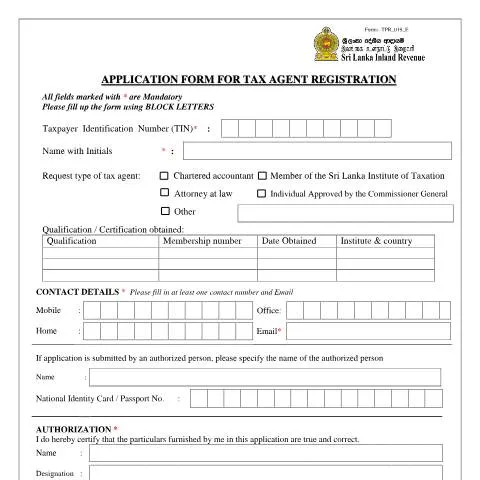
In the complex landscape of taxation in Sri Lanka, becoming a registered tax agent is a pivotal development for both individuals and organizations. This registration not only solidifies a professional’s standing in the tax community but also enhances credibility in offering tax-related services. The Application Form for Tax Agent Registration, officially designated as TPR_019, serves as the cornerstone of this registration process.
Understanding the Legal Framework Behind TPR_019
The foundation for the TPR_019 form is established within the framework of the Electronic Transactions Act, which legitimizes the use of digital forms for various administrative procedures. This act aligns with the principles of English common law and facilitates the digital transformation of public services.
- Authority Involved: The Inland Revenue Department (IRD) oversees the registration of tax agents, ensuring compliance with national regulations.
- Legislative Backing: The application process is governed by specific enactments that dictate the qualifications and responsibilities of tax agents.
The introduction of the TPR_019 form reflects an ongoing initiative to streamline tax administration and enhance professional standards in Sri Lanka.
Step-by-Step Journey: From Application to Registration
Completing the Application Form for Tax Agent Registration involves a series of systematic steps that guide applicants from initial submission through to final approval.
- Gather Necessary Documents: Before filling out the form, ensure that all required documentation, such as proof of qualifications, is ready for submission.
- Completing the Application Form: Fill out the TPR_019 using block letters, ensuring accuracy and clarity in each section.
- Submission Process: Applicants may submit the form in person at the nearest IRD branch or through the official digital platforms provided by the ICTA.
- Verification by IRD: The Inland Revenue Department will review the application for completeness and compliance with regulatory standards.
- Notification of Approval: Once approved, the applicant will receive a formal notification of their registration as a tax agent.
Breakdown of Key Sections in the Application Form
Each section of the TPR_019 application form is crucial for establishing the applicant's eligibility and qualifications. Here’s an in-depth look at the critical components.
Taxpayer Identification Number (TIN)
This unique identifier is essential for all tax-related activities in Sri Lanka. Ensure that the TIN provided is accurate to avoid unnecessary delays.
Name with Initials
Input your full name with the initials as required. Discrepancies between this name and the documents provided can lead to rejection.
Request Type of Tax Agent
Applicants must specify the category under which they are applying, including options like:
- Chartered Accountant
- Member of the Sri Lanka Institute of Taxation
- Attorney at Law
- Individual Approved by the Commissioner General
- Other
Qualification and Certification
List all relevant qualifications and certifications, including the membership number and the date obtained. Ensure that the qualifications are recognized by the relevant professional bodies.
Contact Details
Providing accurate contact information is mandatory. Include at least one mobile or office number in addition to your email address. This will facilitate communication during the review process.
Authorization Section
This section is pivotal. The applicant must certify that the information provided is accurate. Mistakes here, such as a failing to properly sign or date the form, can result in delays or rejections.
Who Is Eligible to Apply? Special Considerations
The TPR_019 form is designed for a broad spectrum of professionals. However, specific conditions apply based on the applicant's background and qualifications.
- Foreign Applicants: Non-residents seeking registration must meet additional criteria, including proof of local partnerships or affiliations.
- Minors: Individuals under 18 must have a guardian submit the application on their behalf.
- Complex Situations: Unique scenarios, such as those involving multiple qualifications or special circumstances, may require further documentation or clarification.
- Urgency in Applications: Certain situations, such as impending deadlines for tax submissions, may necessitate expedited processing; liaising directly with IRD is advisable.
Modes of Submission: Digital vs. Physical
The choice between digital and physical submission of the TPR_019 form significantly impacts the processing time and convenience. Here’s a comparative overview:
| Mode of Submission | Advantages | Considerations |
|---|---|---|
| Digital via forms.gov.lk | Faster processing, Eco-friendly, Real-time tracking | Requires internet access, May have technical issues |
| Physical Submission | Personal interaction with IRD staff, No tech issues | Longer wait times, Travel required |
Post-Submission: Understanding the Wait and Follow-up
Once the application is submitted, applicants may find themselves in a waiting period that can vary based on the volume of applications received. Regular follow-up is encouraged.
- Tracking Application Status: Applicants can inquire about their application's status through the IRD's contact numbers or email.
- Responding to Queries: Be prepared to provide additional information or documentation if requested by the IRD.
Successful registration will empower professionals to navigate the tax landscape effectively, fueling both personal and professional growth in this critical domain.
Understanding the Role of Tax Agents in Sri Lanka's Tax System
Tax agents in Sri Lanka play a crucial role in facilitating the relationship between taxpayers and the government. They serve as intermediaries, assisting clients in navigating the complexities of the tax system, ensuring compliance with tax regulations, and optimizing tax liabilities. The role of a tax agent encompasses various responsibilities, including the preparation and submission of tax returns, providing strategic tax planning advice, and representing clients in discussions with the Department of Inland Revenue (DIR).
To become a registered tax agent, individuals must meet specific criteria outlined by the DIR. This includes possessing relevant academic qualifications or professional certifications, such as a recognized degree in accounting or finance, or membership in professional accounting bodies. Additionally, applicants are required to demonstrate a certain level of experience in tax-related matters, thus ensuring that only qualified individuals can provide tax services to the public.
Moreover, tax agents are expected to adhere to ethical standards and guidelines set forth by the DIR and relevant professional bodies. This includes maintaining confidentiality, avoiding conflicts of interest, and ensuring that clients receive accurate information and advice. By fulfilling these responsibilities, tax agents contribute to the integrity of Sri Lanka's tax system and help foster a culture of compliance among taxpayers.
Steps to Maintain Compliance as a Tax Agent
Once registered, tax agents must stay informed about the evolving tax laws and regulations in Sri Lanka. This requires continuous professional development and adherence to compliance requirements set by the DIR. Tax agents are encouraged to regularly participate in training sessions, workshops, and seminars organized by professional associations and the DIR to keep abreast of new tax legislation, amendments, and best practices in tax management.
Furthermore, tax agents should implement robust systems and processes to ensure timely filing of tax returns and other obligations. This includes maintaining meticulous records of client interactions, tax documents, and financial statements to facilitate accurate reporting and compliance audits. The DIR, under the Electronic Transaction Act, has encouraged the use of digital platforms for submitting tax returns, which tax agents must utilize effectively to streamline their operations.
Networking with other tax professionals can also be beneficial for tax agents to exchange insights and experiences related to tax compliance and client management. By building a supportive professional network, tax agents can enhance their knowledge base and provide better services to their clients. Ultimately, maintaining compliance not only protects the interests of clients but also reinforces the credibility and reputation of tax agents in the industry.
Challenges Faced by Tax Agents and Solutions
While tax agents play a vital role in the tax system, they encounter various challenges that can impact their operations and the services they provide. One of the prominent challenges is the frequent changes in tax regulations and policies. Tax agents must constantly adapt to new laws, which can be time-consuming and may require additional resources for training and compliance. To address this, tax agents should establish a systematic approach to monitor legislative updates, such as subscribing to newsletters from the DIR and joining professional associations that provide timely information on tax reforms.
Another significant challenge is the increased pressure on tax agents to deliver accurate and timely services in a highly competitive environment. With many professionals vying for clients, tax agents must differentiate themselves by offering specialized services, such as niche tax consulting or industry-specific expertise. By focusing on specific client segments and building a strong personal brand, tax agents can attract and retain a loyal client base.
Additionally, technological advancements pose both opportunities and challenges for tax agents. While digital tools can enhance efficiency in managing client accounts and filing tax returns, they also require tax agents to possess a certain level of technical proficiency. Thus, investing in technology training and utilizing reliable software solutions can help tax agents streamline their workflows and improve service delivery.
In summary, despite the challenges faced by tax agents in Sri Lanka, proactive measures such as continuous education, strategic networking, and embracing technology can equip them to provide high-quality services while ensuring compliance with the tax regulations.