Navigating the Application for Change Tax Type Registration
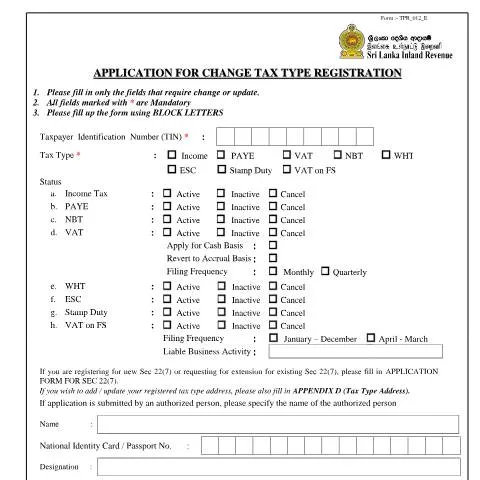
Engaging with tax regulations can be daunting, especially when there's a need to modify your Tax Type Registration. The Application for Change Tax Type Registration (TPR_012) serves as a crucial document in the Sri Lankan tax landscape, enabling taxpayers to adjust their tax information as needed. This article delves into the nuances of this form, guiding users through the specific requirements, potential pitfalls, and the overall process involved in submitting the application.
Understanding Your Tax Obligations: More Than Just a Change
When a taxpayer identifies the necessity to alter their tax type registration, several implications come into play. Different tax types—such as Income Tax, Value Added Tax (VAT), or Withholding Tax (WHT)—carry distinct obligations and rights. Making changes does not merely entail filling out a form; it can influence your financial responsibilities and compliance with the law. For example:
- Income Tax: Shifting from 'Active' to 'Inactive' status could affect your liabilities for that fiscal period.
- VAT: Transitioning to a cash basis can alter your filing frequency, affecting cash flow management.
- WHT: Adjustments here could directly impact your payroll and employee relations.
It is essential to understand these implications fully before proceeding with the application. Seek guidance from a tax consultant if uncertainties arise regarding the consequences of your changes.
Key Elements of the Application: A Field-by-Field Breakdown
Completing the TPR_012 accurately is paramount to avoid delays or complications. Here’s a detailed look at the necessary fields, including common mistakes that should be avoided:
| Field | Description | Common Pitfalls |
|---|---|---|
| Taxpayer Identification Number (TIN) | Your unique number for tax purposes. | Ensure it is correctly entered; double-check for transposed digits. |
| Tax Type | Select the applicable tax types. | Confusion between similar categories, e.g., WHT vs. NBT. |
| Status | Indicate whether the tax is active, inactive, or cancelled. | Missing status selection can lead to application rejection. |
| Filing Frequency | Specify how often you file taxes (monthly or quarterly). | Incorrect filing periods can result in penalties. |
| Authorization | Signature and certification of the information provided. | Neglecting to fill in the authorized person's details if applicable. |
By meticulously examining each section, taxpayers can mitigate the risks associated with application errors.
Timelines and Deadlines: When to Act
Understanding the timeline associated with the TPR_012 application is vital for compliance. The Registrar of the Department of Inland Revenue (IRD) operates on a strict fiscal calendar, and any changes to your tax status must align with their timelines. Here’s how the timeline generally unfolds:
- Submission Period: The application should be submitted as soon as the need for change is identified, preferably at the start of a new fiscal year.
- Processing Time: Generally, applications are processed within 15 business days, though this can vary based on the IRD’s workload.
- Notification: You will receive a confirmation once your application has been processed. Keep an eye on any communication from the IRD for further instructions or clarifications.
- Effective Date: Changes may take effect at the beginning of the next tax period, depending on the nature of the modification.
Thus, proactive engagement with the deadlines can significantly alleviate stress and ensure smooth tax operations.
Channels for Submission: Choosing Your Path
Taxpayers can submit the TPR_012 through various channels, each with its specific processes and advantages:
- Online Submission: Through the IRD’s portal, the digital form facilitates quicker processing times and reduces the need for physical paperwork. Ensure you have a valid .lk domain email for registration.
- Paper Submission: A traditional method, this involves physically delivering the completed form to the nearest IRD branch. It could be beneficial for those who prefer face-to-face interactions for clarifications.
- Authorized Representatives: If submitting via a third party, ensure they are equipped with the necessary authorization and supporting documents to avoid delays.
Selecting the appropriate channel can simplify your experience and maximize efficiency.
Handling Issues: What to Do When Things Don’t Go as Planned
Despite careful preparation, sometimes applications may be rejected or require further clarification. Understanding how to navigate these challenges is crucial:
- Clarification Requests: If the IRD seeks additional information, respond promptly with accurate details to avoid prolonged delays.
- Rejections: In the event of a rejection, review the reasons outlined in the IRD's communication. Correct the identified issues and resubmit the application as soon as possible.
- Missing Documents: Ensure that all necessary supporting documents are attached when submitting the application. If a document is missing, it may lead to application rejection.
Moreover, maintaining regular communication with the IRD can facilitate a smoother resolution process.
Post-Application Follow-Up: Ensuring Compliance and Updates
Once you have submitted your TPR_012 application, it’s essential to monitor its status until you receive confirmation. Here are strategic steps to ensure you remain informed and compliant:
- Keep Records: Maintain copies of the submitted form and any correspondence with the IRD. This documentation serves as proof of your compliance.
- Check Status Online: If you submitted online, utilize the IRD’s portal to check the status of your application frequently.
- Proactive Engagement: Don’t hesitate to contact the relevant IRD branch for updates, especially if you believe the processing time exceeds the standard duration.
By staying engaged, taxpayers can prevent any unexpected issues from arising and ensure their tax obligations are met efficiently.
The Broader Context: Tax Types and Their Implications in Sri Lanka
Understanding the various tax types available in Sri Lanka and their implications is essential for any taxpayer. Here’s a brief overview:
| Tax Type | Description | Key Considerations |
|---|---|---|
| Income Tax | Tax levied on individual or corporate earnings. | Rate varies based on income brackets. |
| PAYE | Pay As You Earn tax on employee salaries. | Employers are responsible for the withholding and remittance. |
| VAT | Value Added Tax on goods and services. | Mandatory for businesses meeting the threshold. |
| NBT | Nation Building Tax for businesses. | Must be calculated on gross income. |
| ESC | Economic Service Charge for certain businesses. | Applicable based on revenue levels. |
| Stamp Duty | Tax on documents or transfers. | Varies based on the type of document. |
Understanding these tax types can significantly impact your compliance strategy and financial planning.
Conclusion: Empowering Your Tax Journey
The TPR_012 form is not merely a bureaucratic hurdle but a vital document that enables taxpayers in Sri Lanka to manage their tax responsibilities effectively. By understanding its nuances, keeping abreast of deadlines, and engaging with the IRD proactively, you can navigate the complexities of tax registration changes with confidence. Whether you are a seasoned business owner or a new taxpayer, leveraging this knowledge can empower you to fulfil your tax obligations seamlessly.
Understanding the Tax Types in Sri Lanka
The taxation framework in Sri Lanka is structured around several tax types that serve different purposes and sectors. Understanding these tax types is crucial for individuals and businesses when considering a change in their tax type registration. The primary tax categories include Income Tax, Value Added Tax (VAT), and Withholding Tax, among others.
Each tax type has specific compliance requirements, rates, and implications on financial reporting. For instance, Income Tax applies to individual earnings and corporate profits, while VAT is levied on the sale of goods and services. Withholding Tax is essentially a prepayment of income tax that employers withhold from employee wages and certain payments to suppliers. Understanding the nuances of these tax categories will aid in making informed decisions regarding which tax type to register for, depending on the nature of your income and business operations.
It's also important to consider how different tax types can impact your overall tax liability. For example, while VAT is a consumption tax that businesses collect from customers and remit to the government, businesses might opt for VAT registration if their annual turnover exceeds the threshold set by the Department of Inland Revenue (DIR). Engaging with a tax consultant can clarify the benefits and obligations attached to each tax type, especially concerning eligibility for deductions and exemptions, which can vary significantly based on the choice of tax type.
Procedures and Documentation Required for Changing Tax Type Registration
When initiating a change in tax type registration in Sri Lanka, it is essential to be meticulous about the procedures and documentation involved. This process can vary based on the specific tax type you are transitioning to, so understanding the requirements is vital for a smooth transition.
Typically, the first step involves submitting an Application for Change Tax Type Registration to the Department of Inland Revenue (DIR). This application must be accompanied by supporting documents that provide a clear rationale for the change. Necessary documentation often includes:
- A copy of your National Identity Card (NIC) or a valid business registration document
- Financial statements for the previous fiscal year
- Any past tax returns relevant to the current tax type
- Proof of business activities and turnover
- Additional documents specific to the new tax type, such as VAT registration forms if applicable
After submitting the application and required documents, the DIR will evaluate your request, and you may be required to attend a follow-up meeting or provide additional clarification. Depending on the complexity of the case, the approval process can take several weeks, so it is advisable to submit your application well ahead of any deadlines.
Once approved, the DIR will issue a new Tax Identification Number (TIN) under the new tax type, and you must begin adhering to the compliance regulations associated with that tax type from the date of registration. It’s also prudent to keep records of all communications with the DIR for future reference.
Common Challenges and Solutions in Changing Tax Type Registration
Changing your tax type registration in Sri Lanka can present several challenges that may complicate the process. Being aware of these potential issues can help you navigate them more effectively.
One common challenge is incorrect or incomplete documentation. Missing documents or errors on forms can lead to delays or outright rejections of your application. To mitigate this, double-check all documents before submission and ensure that they comply with the DIR's requirements. Keeping abreast of any changes in tax law or registration procedures can also minimize misunderstandings.
Another issue can arise from a lack of clarity regarding the implications of the new tax type. For instance, switching from Income Tax to VAT can introduce complexities in pricing strategies, invoicing, and accounting practices. It is advisable to consult with a tax advisor who can provide insights tailored to your business needs.
Additionally, businesses may experience a temporary disruption in cash flow during the transition period, especially if there are upfront costs associated with compliance or if the new tax type involves different payment schedules. To counter this, create a financial plan that takes into account the potential effects on cash flow, and explore options for managing expenses during the transition.
In conclusion, while changing tax type registration in Sri Lanka is a process that requires careful consideration and planning, understanding the tax landscape, following the correct procedures, and being aware of common challenges can facilitate a smooth transition.