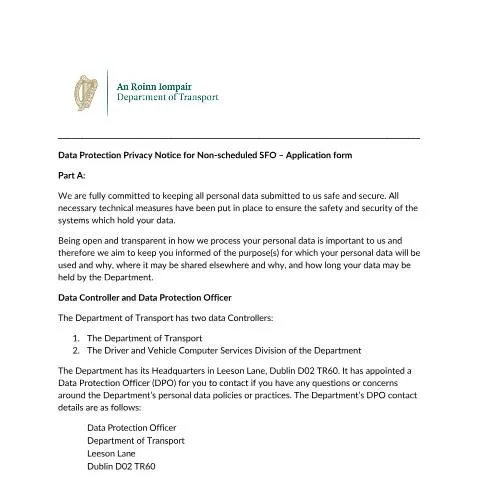
Understanding the Data Protection Privacy Notice for Non-scheduled SFO Applications
The Data Protection Privacy Notice issued by the Department of Transport plays a crucial role in ensuring transparency and security for individuals and organizations involved in non-scheduled flights under the Special Flight Operations (SFO) framework. When you submit personal data in the context of such applications, this notice provides essential information about how your data will be processed, stored, and protected.
The Importance of Data Protection in Aviation
In the aviation sector, where sensitive information is routinely exchanged, data protection is of paramount importance. The notice aims to inform stakeholders about their rights and the measures in place to safeguard personal data. This is particularly relevant for operators and representatives involved in non-scheduled flights who may be required to submit personal details as part of their applications.
Who Should Pay Attention?
This privacy notice is primarily aimed at:
- Air operators submitting applications for non-scheduled flights.
- Representatives of these operators who handle the necessary documentation.
- Individuals concerned about their personal data rights under Irish and EU legislation.
Key Components of the Privacy Notice
The privacy notice consists of several important sections detailing how the Department of Transport handles personal data.
Data Commitment and Security Measures
The Department is dedicated to maintaining the integrity and security of personal data submitted. This involves implementing robust technical measures designed to protect data from unauthorized access and breaches. Such measures are critical in fostering trust among data subjects.
Understanding Data Controllers
In the context of the notice, it is crucial to know who manages your data:
- The Department of Transport itself.
- The Driver and Vehicle Computer Services Division, which also has data management responsibilities.
The presence of a designated Data Protection Officer (DPO) serves as a vital resource for inquiries regarding data handling practices, ensuring that individuals have a point of contact for any concerns.
Your Rights as a Data Subject
The privacy notice outlines several rights available to individuals regarding their personal data:
- The right to be informed: Clear communication regarding data use.
- The right of access: Request access to your personal data.
- The right to rectification: Correct any inaccuracies in your data.
- The right to erasure: Request the deletion of your data under specific circumstances.
- The right to restrict processing: Limit how your data is used.
- The right to data portability: Transfer your data from one service to another.
- The right to object: Oppose the processing of your data.
- Rights related to automated decision-making: Safeguards against decisions made without human intervention.
For any inquiries regarding these rights, data subjects are encouraged to reach out to the DPO for assistance.
Specifics of Data Collected for Non-scheduled SFO Applications
The privacy notice goes into detail about the types of personal data collected for processing applications for non-scheduled flights:
- Name of the data subject
- Job title of the data subject
- Business contact number
- Business email address
- Business mailing address
This information is crucial for the application process and ensures effective communication between the department and the applicant.
The Legal Framework for Data Collection
The processing of personal data is governed by the Air Navigation and Transport Act, 1965, and associated statutory instruments. This legal grounding ensures that the data is collected and handled in accordance with Irish law, providing a clear framework for how personal data is managed.
Information Retention Policies
Understanding how long your data is stored is vital. The Department retains personal data in compliance with the National Archives Act, 1986. Ultimately, after the retention period, data is transferred to the National Archives, making it accessible to the public, in line with legal obligations.
Data Sharing and Disclosure Practices
While the collected information is predominantly used internally within the Department of Transport, there are circumstances under which it could be shared:
- With other government departments and agencies relevant to SFO applications.
- In response to freedom of information requests, subject to the necessary consultations to protect third-party rights.
This sharing is done with caution and aligns with the principles of data protection, ensuring that your information is not disclosed without due consideration.
Important Considerations for Data Transfer
A critical aspect of any data privacy notice is understanding where your data may be transferred. In this case, the notice specifies that the personal information collected is not transferred outside the EU or EEA. This is an important assurance, especially for those concerned about international data transfers and compliance with data protection regulations.
Practical Steps for Applicants
For individuals or organizations engaging with the Department of Transport regarding non-scheduled SFO applications, the following steps can guide you through the process effectively:
- Gather Required Information: Make sure all necessary personal data is collected and organized.
- Review the Privacy Notice: Familiarize yourself with the privacy notice to understand your rights and obligations.
- Contact the DPO if Necessary: Should you have any concerns regarding your data, don’t hesitate to reach out to the designated Data Protection Officer.
- Submit Your Application: Follow the appropriate channels to submit your application for non-scheduled flights.
- Await Confirmation: After submission, maintain communication to track the progress of your application and any subsequent requirements.
Navigating Questions and Concerns
It’s natural for applicants to have questions or concerns regarding the handling of their personal data. The Department has made provisions for such inquiries through the Data Protection Officer's contact details:
Data Protection Officer Department of Transport Leeson Lane, Dublin D02 TR60 Phone: 00353 (85) 879 7044 Email: [email protected]
Final Insights on Data Protection in the Aviation Sector
Data protection ensures that personal information is handled responsibly and transparently, particularly in the aviation sector where precision and security are paramount. By understanding the Data Protection Privacy Notice for Non-scheduled SFO Applications, stakeholders can navigate the complexities of data handling more confidently, ensuring their rights are respected and upheld throughout the application process.
This notice serves as a vital document, not just for compliance but as a framework that fosters trust and accountability amongst all parties involved. Whether you are an air operator, a representative, or someone concerned about data privacy, the information within this notice is essential to ensure that your rights and data are safeguarded effectively.
Understanding Data Protection in the Context of Non-Scheduled Flights
Data protection has become a prominent issue in various sectors, including aviation. In Ireland, the handling of personal data, especially regarding non-scheduled flights, falls under the purview of the General Data Protection Regulation (GDPR) and the Data Protection Act 2018. It is crucial for individuals and operators alike to understand their rights and obligations when it comes to personal data management.
The application process for non-scheduled flights often involves the collection of sensitive personal information, such as names, contact details, and travel itineraries. These data points are necessary for ensuring effective communication and safety during travel. However, applicants must be aware of their rights regarding the use and storage of their data. For instance, under GDPR, individuals have the right to access their data, rectify inaccuracies, and request erasure under certain circumstances.
Fill in your form directly online
No printing: type your details into the boxes of the official form, tick, then download the PDF ready to send.
- 1Type into the form boxes
- 2Tick in one click
- 3Save and download the PDF
To comply with legal requirements, operators must provide applicants with a clear privacy notice that outlines how their data will be used, the legal basis for processing, and the duration of data retention. This notice should also inform individuals of their right to lodge a complaint with the Data Protection Commission if they feel their rights have been violated.
Key Elements of a Privacy Notice for Non-Scheduled Flights
A comprehensive privacy notice is a critical document that operators must create when processing personal data related to non-scheduled flights. This notice serves multiple purposes, primarily ensuring transparency and compliance with data protection legislation.
Here are the key elements that should be included in the privacy notice:
- Data Controller Information: Clearly identify the data controller, including contact details and any relevant registration information. This is essential in establishing accountability.
- Purpose of Data Collection: Specify the reasons for collecting personal data, which may include booking management, operational communications, emergency contact purposes, and compliance with legal obligations.
- Legal Basis for Processing: Identify the legal grounds under which personal data is processed, such as consent, contractual necessity, or compliance with a legal obligation.
- Data Retention Period: Outline how long personal data will be stored and the criteria used to determine this timeframe. For example, data may be retained for a certain period after the completion of travel.
- Rights of Individuals: Provide clear information regarding the rights individuals hold under GDPR, including the right to access, rectify, and erase their data. This section should also include details on how to exercise these rights.
- Data Security Measures: Explain the measures taken to protect personal data from unauthorized access, loss, or theft. This might include encryption, access controls, and staff training on data protection.
- Complaint Mechanism: Inform individuals of their right to lodge a complaint with the Data Protection Commission. Include contact details for the Commission, emphasizing the importance of addressing concerns promptly.
By incorporating these elements, operators not only fulfill their legal obligations but also foster trust with their customers through transparency in data handling practices.
Challenges in Data Protection for Non-Scheduled Flight Operators
While the legal framework for data protection is well-defined, operators of non-scheduled flights may face several challenges in implementing compliance measures effectively. Understanding these challenges and how to address them can enhance operational integrity and customer trust.
One significant challenge is the inconsistent application of data protection practices across different jurisdictions. Non-scheduled flight operators may operate in multiple countries, leading to confusion regarding varying local regulations. It is essential for operators to conduct thorough research and possibly seek legal advice to ensure compliance with data protection laws in each jurisdiction where they operate.
Another challenge is the rapid evolution of technology. The increasing use of digital platforms for booking and managing flights presents new risks related to data breaches and cyber-attacks. Operators must remain vigilant and continuously update their security measures to protect personal data from malicious actors. Regular audits and risk assessments can help identify vulnerabilities and reinforce overall data security strategies.
Additionally, employee training is critical. Staff members handling personal data must be adequately trained on data protection laws and practices. Regular training sessions can help ensure that employees understand their responsibilities and the importance of safeguarding customer information.
Lastly, the financial implications of non-compliance can be significant. Fines levied by regulatory authorities for breaches can be substantial, not to mention the reputational damage that can arise from negative publicity related to data mishandling. Operators must proactively invest in data protection compliance to mitigate these risks.
In conclusion, while data protection presents various challenges for non-scheduled flight operators in Ireland, understanding these difficulties and implementing robust compliance strategies can ultimately lead to improved customer relations and operational integrity.