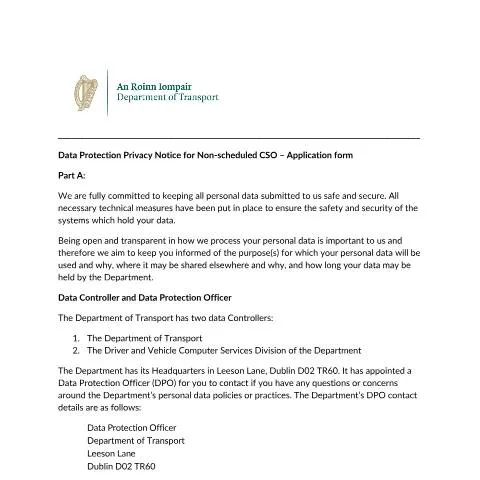
Understanding the Data Protection Privacy Notice for Non-Scheduled Flights
When engaging with aviation operations in Ireland, understanding the nuances of data protection regulations is paramount for any operator involved in non-scheduled flights. The Data Protection Privacy Notice pertaining to the Non-Scheduled CSO Application Form plays a critical role in ensuring that personal data handled by the Department of Transport aligns with both the legal standards set forth in the Data Protection legislation and the operational needs of the aviation industry. This document is essential not only for compliance but also for building trust with all stakeholders involved.
Key Components of the Privacy Notice
The Privacy Notice outlines several key areas that are crucial for data subjects, particularly those submitting applications related to non-scheduled flights. Here’s a breakdown of the major components:
- Data Controllers: The notice identifies two data controllers: the Department of Transport and the Driver and Vehicle Computer Services Division. It is crucial for individuals to understand who manages their data.
- Data Protection Officer (DPO) Contact: Access to the DPO is provided, giving data subjects an avenue for inquiries regarding data processing and privacy concerns.
- Data Subject Rights: A comprehensive list of rights is detailed, empowering data subjects to engage and manage their data proactively.
- Legal Basis for Data Collection: The legal framework underpinning data collection is grounded in the Air Navigation and Transport Act, 1965, ensuring that data processing is legitimate and justifiable.
- Retention Period: Information about how long data will be held is provided, aligning with national archival standards.
Data Subject Rights Explained
Understanding your rights as a data subject is essential for any stakeholder involved in the application process. The Privacy Notice delineates several rights, each designed to protect personal data and uphold individual privacy. Here's what they entail:
- The right to be informed: Individuals have the right to know how their data will be used.
- The right of access: Data subjects can request access to the personal data held about them.
- The right to rectification: If data is inaccurate, individuals can request corrections.
- The right to erasure: Under certain circumstances, a data subject can request the deletion of their data.
- The right to restrict processing: Individuals may limit the processing of their personal data.
- The right to data portability: Data subjects can transfer their data to another controller in certain situations.
- The right to object: Individuals can contest the processing of their data based on certain grounds.
- Rights in relation to automated decision making and profiling: Data subjects have rights regarding automated processes that affect them.
Practical Use of the Privacy Notice
For anyone considering applying through the Non-Scheduled CSO Application Form, understanding the privacy notice is key to navigating the application process effectively. Here's a step-by-step guide on utilizing the privacy notice efficiently:
- Review the Notice Thoroughly: Before submitting any data, familiarize yourself with the content of the notice. This will prepare you for how your data will be used and your rights.
- Document Your Communication: Keep records of any interactions with the Department of Transport or the DPO, particularly if you exercise your rights.
- Clear Queries: If you have any questions, do not hesitate to reach out to the DPO using the provided contact information.
- Assess Your Data: Understand what personal data you are submitting. Ensure that it aligns with what is required for the application.
- Stay Updated: The landscape of data protection can change. Staying informed about updates from the Department of Transport can help you remain compliant.
Delving into Data Processing Specifics
The notice specifies the types of personal data collected through the Non-Scheduled CSO Application Form. Understanding these elements is crucial for applicants:
| Type of Data | Description |
|---|---|
| Name | The full name of the data subject. |
| Job Title | The position held within the organization. |
| Direct Business Contact Number | The phone number used for business communications. |
| Business Email | The professional email address for contact. |
| Business Address | The physical address of the business. |
Understanding the Limits of Data Usage
The Privacy Notice clarifies that personal data will only be used for the specific purposes laid out when the data is collected. It is important to recognize that:
- The data may be shared internally within the Department of Transport.
- It can be disclosed to other government departments or agencies under specific circumstances.
- Information might be subject to Freedom of Information requests, where applicable.
- Data will not be transferred outside the EU/EEA, ensuring that all processing complies with EU data protection standards.
Interplay with Other Regulatory Frameworks
The Data Protection Privacy Notice is not a standalone document; it works in tandem with several other legislation and guidelines. Here’s how it interacts with other regulations:
- General Data Protection Regulation (GDPR): The Privacy Notice aligns with GDPR principles, ensuring that personal data protection standards are upheld.
- Freedom of Information Act: The notice outlines how data can be accessed through formal requests, creating transparency around data handling.
- National Archives Act, 1986: This act governs the retention and eventual transfer of data to the National Archives, ensuring historical oversight.
Considerations for Stakeholders in Aviation
Aviation stakeholders must approach the application process with a keen understanding of their responsibilities concerning data protection. Here are some considerations:
- Ensure that all personal data provided is accurate and up-to-date.
- Implement internal policies to handle data requests efficiently and in compliance with the notice.
- Regularly train staff on data protection principles to foster a culture of privacy and compliance.
- Prepare for potential inquiries from the DPO and understand the protocols surrounding data access.
The Importance of Data Security Measures
The Department of Transport emphasizes the implementation of technical measures to secure personal data. Understanding the significance of these measures can help stakeholders appreciate the importance of data protection:
- Encryption: Sensitive data should be encrypted to prevent unauthorized access.
- Access Controls: Limiting access to personal data ensures that only authorized personnel can view or handle the data.
- Regular Audits: Conducting audits can help identify potential vulnerabilities in data handling practices.
- Incident Response Plans: Having a clear plan in place for data breaches ensures timely action to mitigate risks.
Conclusion: Navigating the Complexity of Data Protection
In summary, the Data Protection Privacy Notice for the Non-Scheduled CSO Application Form serves as a vital resource for stakeholders in Ireland's aviation industry. By understanding its contents, rights, and the broader legislative context, data subjects can navigate the complexities of personal data processing with greater confidence and security. Ensuring compliance with these guidelines not only meets legal obligations but also fosters a culture of respect for personal privacy and safety in aviation operations.
Understanding the Privacy Framework for Data Protection in Non-Scheduled Flights
The privacy framework surrounding data protection in Ireland is governed by both local and European Union regulations, primarily the General Data Protection Regulation (GDPR). This affects how personal data is handled, particularly when filing applications related to non-scheduled flights. The Central Statistics Office (CSO) in Ireland requires certain information to comply with statistical regulations, yet individuals must be aware of their rights concerning their personal data.
When applying through the relevant CSO application form for non-scheduled flights, it is essential to understand what data is collected, its purpose, and how it will be used. The information requested typically includes personal identifiers such as name, email, and travel details, which are necessary for processing applications accurately. However, individuals are entitled to know how their data is protected, the duration it will be held, and their rights to access and rectify any misinformation.
Additionally, the CSO provides clear guidelines on the handling of personal data, stating that it will not be retained longer than necessary and that all data will be anonymized where feasible. To exercise your rights under GDPR, you may contact the Data Protection Officer (DPO) at the CSO, ensuring that you are aware of your entitlements, such as the right to access your data, request erasure, or lodge a complaint with the Data Protection Commissioner should you feel your rights have been infringed.
Specific Considerations for Aviation Professionals
Aviation professionals, including pilots, flight crew, and company representatives, must navigate a complex landscape of data protection regulations when submitting applications for non-scheduled flights. The requirements laid out by the CSO can differ based on the type of entity submitting the application—whether an individual, a private operator, or a commercial airline. Therefore, understanding these nuances is critical for compliance and smooth processing.
Fill in your form directly online
No printing: type your details into the boxes of the official form, tick, then download the PDF ready to send.
- 1Type into the form boxes
- 2Tick in one click
- 3Save and download the PDF
For instance, professional entities may be subject to additional scrutiny due to the nature of their operations and the volume of data they handle. They are encouraged to maintain strict data management practices, ensuring that data shared with the CSO is accurate and up-to-date. This is particularly important in maintaining operational licenses and meeting regulatory compliance standards set forth by the Irish Aviation Authority (IAA).
Furthermore, aviation professionals should ensure any personal data they share—especially regarding flight crew and operational details—aligns with both GDPR and national data protection laws. Mismanagement or unauthorized sharing of personal information can lead not only to violations of privacy rights but also to significant regulatory consequences. Therefore, ongoing training and awareness around data protection practices should be an integral part of professional development in this field.
Implications of Data Security Breaches on Non-Scheduled Flight Operations
The implications of a data security breach can be particularly severe for operators of non-scheduled flights. It goes beyond the immediate loss of data; the reputational damage, potential legal repercussions, and loss of trust from clients can be detrimental to a business's viability. Therefore, appropriate measures must be in place to mitigate this risk.
Non-scheduled flight operators should invest in robust cybersecurity protocols, including encryption of personal data, secure transfer methods for documents, and regular audits to assess vulnerabilities in their systems. In the event of a breach, operators must act swiftly to inform affected individuals and the Data Protection Commissioner as mandated under GDPR, which stipulates a 72-hour notification timeline following the identification of a breach.
Moreover, the repercussions of failing to comply with data protection laws can extend to substantial fines and legal action from affected parties. Consequently, operators should have a clear incident response plan that addresses potential breaches, outlining steps for containment, investigation, communication, and remediation.
In summary, understanding the implications of data security not only protects individual rights but also serves as a fundamental component of operational integrity in the aviation sector. Continuous education and strategic planning are essential to maintain compliance and safeguard against potential threats to data security.