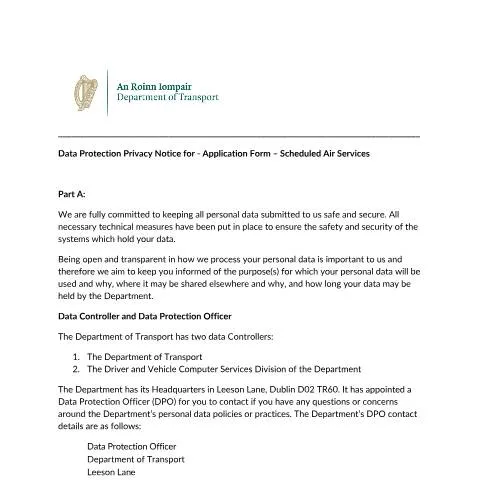
Understanding the Importance of Data Protection in Scheduled Air Services Applications
When applying for scheduled air services in Ireland, individuals and businesses must navigate various regulatory requirements. A key document in this process is the Data Protection Privacy Notice issued by the Department of Transport. This notice not only outlines how personal data will be handled but also provides applicants with vital information about their rights and responsibilities under data protection laws.
Who Should Refer to This Privacy Notice?
This privacy notice is essential for anyone who submits personal information as part of their application for scheduled air services. The primary audience includes:
- Air Operators: Companies applying for licenses to operate scheduled flights.
- Representatives: Individuals who act on behalf of these companies and submit applications.
- Government Agencies: Departments and bodies that require access to data for regulatory compliance.
Each of these groups should carefully review the notice to ensure that they fully understand how their data will be processed and the implications involved.
Key Components of the Privacy Notice
The privacy notice is structured to provide clarity on several critical aspects of data handling. Here’s a breakdown of its core components:
- Commitment to Data Security: The Department emphasizes its dedication to safeguarding personal data through rigorous technical measures.
- Data Controllers: It identifies the Department of Transport and its Driver and Vehicle Computer Services Division as the primary data controllers.
- Data Subject Rights: The notice outlines the rights that individuals have concerning their personal data.
Understanding these components is crucial for compliance and ensuring a smooth application process.
Exploiting the Privacy Notice in Your Application Process
To make effective use of this privacy notice, applicants should follow these steps:
- Review the Privacy Notice: Familiarize yourself with the content to understand how your data will be used.
- Document Your Data: Keep a record of all personal data you intend to submit. This includes names, job titles, and contact information.
- Contact the Data Protection Officer: If you have questions regarding data processing, reach out to the Data Protection Officer using the provided contact details.
- Understand Your Rights: Be aware of your rights regarding data access, rectification, and erasure, as outlined in the notice.
- Comply with Legal Obligations: Ensure that all data provided complies with the requirements set out in the Air Navigation and Transport Act, 1965.
By taking these steps, you can enhance your understanding of the process and protect your rights as a data subject.
The Legal Framework Behind the Privacy Notice
The processing of personal data in relation to scheduled air service applications is governed by the Air Navigation and Transport Act, 1965 and associated statutory instruments. This legal backdrop is crucial for multiple reasons:
- Establishes a Legal Basis: The Act provides the necessary framework that legitimizes the collection and processing of your personal data.
- Ensures Accountability: The Department is obligated to adhere to the guidelines set forth in the Act, thus promoting transparency and accountability.
- Facilitates Regulatory Compliance: Understanding this legal context can help applicants ensure they are meeting all necessary compliance requirements during the application process.
What Happens to Your Data After Submission?
Once your application is submitted, the notice clarifies that the data collected will be retained only as long as necessary for the processing of your application. Here are the key points to keep in mind:
| Retention Aspect | Description |
|---|---|
| Business Need | Data is held based on the specific purposes outlined in the privacy notice. |
| Destruction Procedures | Data will be marked for destruction and disposed of in accordance with internal guidelines and statutory requirements. |
| Third-Party Access | Data may be shared with other governmental agencies as required, particularly in response to freedom of information requests. |
Understanding this retention policy can help you manage expectations regarding the duration of data security and access.
Common Misunderstandings of Data Processing Rights
Despite the clarity offered in the privacy notice, applicants often hold misconceptions regarding their rights. Here are some common misunderstandings:
- Right to Access: Some applicants believe that they cannot request access to their data. However, you have the right to know what data is held about you.
- Right to Erasure: There may be a misconception that requesting deletion of data can lead to issues with the application process. Under certain conditions, you can request your data to be erased.
- Automated Decision Making: Many assume that their application will be subject to automated processing, which is incorrect as outlined in the notice.
Awareness of these rights can empower you to engage more effectively with the application process.
Engaging with the Data Protection Officer
Applicants are encouraged to reach out to the Data Protection Officer (DPO) with inquiries or concerns regarding their data. Here’s how to engage effectively:
- Prepare Your Questions: Before contacting the DPO, list specific questions or concerns you may have about your data.
- Understand Response Times: The DPO is obligated to respond to queries in a timely manner, so set realistic expectations when awaiting a reply.
- Document Communications: Keep records of your communications with the DPO for future reference.
This proactive engagement can help clarify concerns and ensure adherence to data protection standards.
Conclusion: Navigating Data Protection in Air Service Applications
The Data Protection Privacy Notice is more than just a regulatory requirement; it serves as a guide for applicants engaging with the Department of Transport. By understanding its components, applying the advice provided, and actively exercising your rights, you can navigate the complexities of data protection in scheduled air service applications. Remember, informed applicants are empowered to safeguard their personal information effectively.
Understanding Your Rights Under GDPR in the Context of Scheduled Air Services
Under the General Data Protection Regulation (GDPR), individuals in Ireland have specific rights regarding their personal data. When you are applying for scheduled air services, it is essential to understand these rights and how they apply to the data you provide. The GDPR is designed to protect the privacy of individuals and gives them greater control over their personal information.
One of the foremost rights is the right to access your personal data. This means you can request to know what personal information is being held about you and how it is being used. If you believe your data has been collected inappropriately or used without your consent, you have the right to request correction or deletion of that data.
Moreover, you have the right to data portability, allowing you to obtain and reuse your personal data across different services. For instance, if you're switching airlines or booking different travel services, you can take your data with you, making it easier to manage your travel preferences and history.
Fill in your form directly online
No printing: type your details into the boxes of the official form, tick, then download the PDF ready to send.
- 1Type into the form boxes
- 2Tick in one click
- 3Save and download the PDF
Additionally, you can request that your data be erased, particularly if it is no longer necessary for the purpose for which it was collected or if you withdraw your consent. It's vital to understand that this right is not absolute and may be subject to certain conditions.
Lastly, under GDPR, you also have the right to object to the processing of your personal data under certain circumstances, such as profiling, which can be relevant when airlines use data to tailor services or offers to you.
The Role of the Data Protection Commission in Regulating Air Service Providers
The Data Protection Commission (DPC) is the authority responsible for upholding the rights of individuals in relation to data protection. In the context of scheduled air services, the DPC plays a crucial role in ensuring that airlines and service providers comply with the GDPR and the Data Protection Act 2018.
Airlines are required to submit a data protection impact assessment (DPIA) when their data processing is likely to result in a high risk to the rights and freedoms of individuals. The DPC provides guidelines and resources to assist companies in conducting these assessments, which are essential for identifying potential risks and implementing measures to mitigate them.
Furthermore, the DPC has the authority to investigate complaints regarding data breaches or unlawful processing of personal data. If you believe an airline has mishandled your information, you can lodge a complaint with the DPC, which will then assess the situation and determine the appropriate course of action. Airlines found in violation of data protection laws may face significant fines and must take corrective measures to protect customers' data going forward.
The DPC also conducts regular audits of airlines to ensure compliance with data protection regulations. These audits can help identify weaknesses in data handling practices and promote better privacy management within the aviation sector.
Best Practices for Travelers to Protect Their Personal Information
As a traveler using scheduled air services, you have a role to play in protecting your personal data. Here are some best practices to consider when providing your information:
- Be Informed: Before submitting any personal information, read the privacy notice provided by the airline to understand how your data will be used.
- Use Secure Connections: When booking tickets or managing your travel details online, ensure you're using a secure connection (look for HTTPS in the URL) to protect your data from potential breaches.
- Minimize Data Sharing: Only provide the information that is absolutely necessary for the booking process. Avoid giving additional details unless required.
- Update Your Preferences: Regularly check and update your privacy settings and preferences with the airline, allowing you to control what information is shared.
- Monitor Communications: Keep an eye on emails and messages from airlines. If you receive unsolicited communications or feel that your information has been compromised, report it immediately.
By being proactive, you can help safeguard your personal information while enjoying the benefits of scheduled air services.