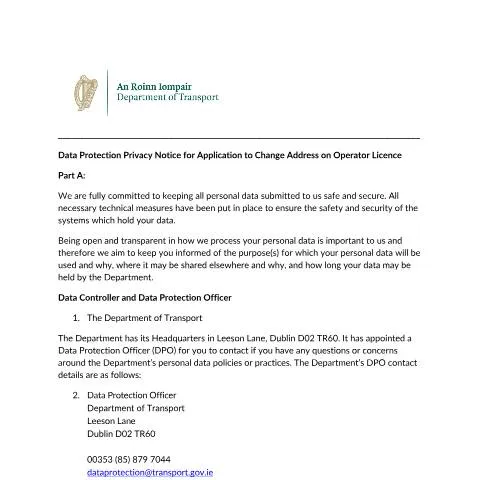
Understanding the Privacy Landscape: Data Protection Notice for Address Change Applications
In an age where data privacy is of utmost importance, the Department of Transport has outlined a comprehensive Data Protection Privacy Notice specifically tailored for those applying to change their address on an Operator Licence. This document not only serves as a formal guideline but also ensures that applicants are well-informed about how their personal information is processed, stored, and protected.
Key Principles of Data Protection Explained
The privacy notice encapsulates essential aspects of data protection that applicants must comprehend to safeguard their rights effectively. Here are the core principles:
- Transparency: The Department commits to clearly communicating the purpose for collecting personal data, the methods of processing, and potential sharing of information.
- Security: Technical safeguards are in place to protect submitted data, ensuring it remains confidential and secure throughout its lifecycle.
- Responsibility: The Department operates under strict compliance with the Data Protection legislation, ensuring all personal data processed aligns with legal requirements.
The Role of the Data Protection Officer
Understanding who to contact with privacy concerns is crucial for applicants. The Data Protection Officer (DPO) at the Department of Transport serves as the primary contact for any queries regarding personal data practices. The DPO can be reached through the following:
Address: Leeson Lane, Dublin D02 TR60
Phone: 00353 (85) 879 7044
Email: [email protected]
Navigating the Application: Step by Step
When applying to change your address on an Operator Licence, understanding the process is essential. Here’s a breakdown of the application journey:
- Initiation: Begin by obtaining the Application Form to Change Address on Operator Licence.
- Data Collection: Fill out the required personal details, including your current address and new address.
- Submission: Submit the completed application form to the Road Transport Operator Licensing Unit.
Why is This Process Important?
Timely updates to your business address are crucial for compliance with Section 8(1) of the Road Transport Act 2011. Failure to notify the Department of such changes could result in penalties or complications regarding your operator licence.
Specifics of Personal Data Processing
Understanding what types of data are processed and the legal justifications for their collection is pivotal. The notice specifies that personal data collected in this application will be utilized solely for:
- Updating Licence Records: Ensuring that the register of operator’s licences is accurate and up-to-date.
- Compliance and Enforcement: Sharing necessary data with enforcement bodies as required under the law.
Retention Policy: How Long is Your Data Held?
The data collected is retained only as long as necessary to fulfill the purpose for which it was collected. Once the retention period elapses, the information will be securely destroyed following internal guidelines or directives from the National Archives Office.
Rights of the Data Subject: What You Need to Know
As a data subject, you possess several rights concerning your personal data. Here’s a brief overview:
- The Right to be Informed: You have the right to know how your data will be used.
- The Right of Access: You can request to access the data held about you.
- The Right to Rectification: You may request corrections if your data is inaccurate.
- The Right to Erasure: Under certain circumstances, you can demand your data be deleted.
- The Right to Restrict Processing: You have the right to limit how your data is processed.
- The Right to Data Portability: You can request your data in a format that allows you to transfer it to another service.
- The Right to Object: You may object to the processing of your data under specific situations.
- Rights Related to Automated Decision-Making: You are protected against unfair automated decisions.
Taking Action on Your Rights
Should you wish to exercise any of these rights, direct your communication to the Department’s DPO using the provided contact details. It is essential to clearly indicate which right you wish to exercise, facilitating a more efficient response.
Legal Framework: The Basis for Data Collection
The notice outlines the legal basis for processing your data, primarily driven by Section 8(1) of the Road Transport Act 2011. This legislation mandates that operators inform the Department of any changes in their details as soon as possible, ensuring that the operator’s records remain accurate.
Implications of Non-compliance
Failure to adhere to these legal obligations could result in penalties or revocation of the operator licence, underscoring the importance of timely communication with the Department.
Understanding Data Transfers and Security Measures
Another vital aspect covered in the privacy notice pertains to the handling of personal data concerning international transfers. All personal information collected through the address change application is retained within the EU/EEA, with no transfers to countries lacking appropriateness agreements, thus prioritizing data security.
Technical Safeguards
The Department has implemented robust technical measures to ensure the security of the systems housing your data. Regular audits and updates to security protocols are carried out, enhancing the protection against unauthorized access.
Complementary Documentation and Related Processes
It’s crucial to recognize how this privacy notice interrelates with other important documents and processes within the Department of Transport. Understanding these connections can aid applicants in navigating the broader regulatory framework.
- Road Transport Act 2011: This act underpins the requirement for notifying address changes.
- Data Protection Act 2018: It reinforces the rights of data subjects, outlining the processing of data for various purposes.
How This Notice Affects Other Applications
While this privacy notice is specifically for changing an address on an Operator Licence, similar principles and rights apply to other forms of applications within the Department. Understanding these principles can provide a more holistic view of data protection across various processes.
Fill in your form directly online
No printing: type your details into the boxes of the official form, tick, then download the PDF ready to send.
- 1Type into the form boxes
- 2Tick in one click
- 3Save and download the PDF
Final Thoughts on Data Protection Practices
As you engage with the Department of Transport, maintaining awareness of your rights and the handling of your personal data is imperative. The Data Protection Privacy Notice for Application to Change Address on Operator Licence is designed to inform and empower applicants, promoting transparency and trust in the process.
For further insights into data protection policies, you can explore more resources on the official government website, ensuring you remain informed and proactive regarding your data rights.
Understanding Your Rights Under GDPR in Ireland
In the context of changing your address and submitting an application to various authorities, it is crucial to understand your rights under the General Data Protection Regulation (GDPR). GDPR aims to protect the personal data of individuals and gives you specific rights regarding how your data is handled. As part of your address change application, you are entitled to:
- The Right to Access: You can request access to your personal information held by government bodies such as the Revenue or the Companies Registration Office (CRO). This includes knowing what data they hold about you, how it is used, and to whom it has been disclosed.
- The Right to Rectification: If your personal data is inaccurate or incomplete, you have the right to ask for corrections. For example, if you change your address and your new address is not reflected in official records, you can request corrections to ensure all your information is up-to-date.
- The Right to Erasure: This allows you to request that your personal data be deleted under certain circumstances, for instance, if it is no longer needed for the purposes for which it was collected or if you withdraw your consent.
- The Right to Restrict Processing: You can request the restriction of data processing if you contest its accuracy, if it is unlawful, or if you need the data for legal claims.
- The Right to Data Portability: This permits you to obtain and reuse your personal data across different services. You can request your personal data in a structured, commonly used format to transfer it to another service provider.
- The Right to Object: If you believe that your personal data is being processed unlawfully or you have concerns about how your data is used, you can object to such processing.
Understanding these rights is paramount as you proceed with your address change application. For further assistance on how to exercise these rights, you may consult the Data Protection Commission (DPC), which oversees data protection in Ireland.
Preparing Your Privacy Notice for Address Change Applications
When submitting an application for a change of address, particularly to official bodies such as Revenue or the CRO, it’s essential to prepare a comprehensive privacy notice. This notice informs individuals about how their personal data will be handled and used throughout the process. Here are some key elements to include in your privacy notice:
- Identity and Contact Details: Clearly state who is responsible for handling the data (e.g., your business name or personal name) and provide contact details for further queries.
- Purpose of Data Processing: Specify why you are collecting the data (e.g., to update your address for taxation purposes or official documentation). Make sure to explain how this processing is legal under GDPR.
- Data Retention Period: Indicate how long you will retain the data collected through the application. For example, you might retain it for the duration necessary to fulfill the purpose for which you collected it, or as required by law.
- Recipients of the Data: Identify any third parties to whom you will disclose the data (such as the Revenue or CRO) and explain the reason for such disclosures.
- Data Protection Rights: Remind individuals of their rights under GDPR, as outlined in the previous section, and how they can exercise them.
- Cookies and Tracking: If your application process involves online forms, transparency regarding the use of cookies and tracking technologies is necessary. Specify if cookies are used to collect any personal data during the application.
Providing a clear and detailed privacy notice reinforces trust and ensures compliance with data protection regulations. Consider consulting with a legal expert or data protection officer to ensure your privacy notice is comprehensive and up to date.
The Role of the Data Protection Officer in Address Change Processes
Many organizations in Ireland, particularly larger ones or those that process sensitive personal data, are required to appoint a Data Protection Officer (DPO). The DPO plays a crucial role in managing compliance with data protection laws during processes like address changes. Here’s how the DPO contributes to this process:
- Compliance Monitoring: The DPO ensures that all processes related to personal data, including address changes, comply with GDPR and local data protection laws. They monitor the application procedures to ensure that data is collected and processed lawfully.
- Training and Awareness: A DPO is responsible for ensuring that staff involved in processing personal data are adequately trained and aware of data protection policies. This is particularly important in contexts where personal information might be shared across departments during an address change.
- Data Risk Assessments: The DPO conducts regular risk assessments related to data processing activities. If any risks are identified during the address change application process, they work to mitigate those risks to protect individuals' data.
- Communication with Data Subjects: The DPO serves as a point of contact for individuals whose data is being processed. They can address concerns regarding data handling and provide information on how to exercise data protection rights.
- Incident Response: Should a data breach occur during the processing of address change applications, the DPO plays a key role in managing the incident response, notifying affected individuals, and liaising with the Data Protection Commission if required.
For any organization processing personal data during an address change, having a DPO can significantly enhance compliance efforts and improve the organization's overall data protection practices.