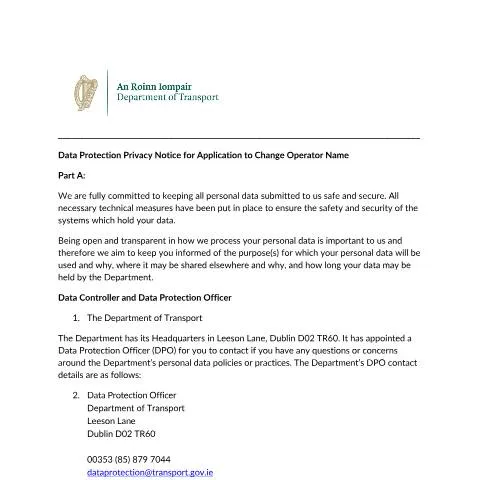
Navigating the Data Protection Privacy Notice for Change of Operator Name Application
In today's dynamic transport industry, operators may find themselves needing to change their registered name. This requirement could arise from personal circumstances, such as marriage or divorce, or for reasons related to brand identity. The Department of Transport has established a comprehensive Data Protection Privacy Notice that outlines how the department handles personal data during this critical process. This guide unpacks the notice, providing clarity on its contents and practical implications for those affected.
Understanding the Scope of Personal Data Collection
When applying to change an operator name, the Department of Transport collects specific personal data from individuals and businesses. This data is essential for processing the application and ensuring compliance with legal standards.
Types of Data Collected
- Identifying Information: Full name, previous name (if applicable), and any alias used.
- Contact Details: Address, phone number, and email for communication regarding the application.
- Operational Details: Current operator licence number and business information.
This data collection is necessary under the Road Transport Act 2011, with specific purposes outlined in the privacy notice. Operators must ensure that the information provided is accurate to facilitate the processing of their application.
The Role of the Data Protection Officer
The Data Protection Officer (DPO) serves as a key point of contact for any concerns regarding personal data processing within the Department of Transport. For operators, understanding how to engage with the DPO is crucial.
Contacting the DPO
Operators can reach the DPO via the following details:
Department of Transport Leeson Lane, Dublin D02 TR60 Phone: 00353 (85) 879 7044 Email: [email protected]
The DPO can address queries about data policies, rights regarding personal data, and any concerns operators may have following the submission of their application.
Rights of Data Subjects Under the Privacy Notice
As individuals providing personal data, operators possess several rights under data protection regulations. Awareness of these rights ensures that operators can exercise control over their information effectively.
Key Rights Available
- The Right to be Informed: Operators have the right to understand how their data will be used.
- The Right of Access: Operators may request access to their personal data held by the department.
- The Right to Rectification: Operators can request corrections to any inaccurate data.
- The Right to Erasure: Operators may ask for their data to be deleted under certain conditions.
- The Right to Restrict Processing: Operators can limit how their data is used in specific situations.
- The Right to Data Portability: Operators may request their data in a structured format for transfer to another entity.
- The Right to Object: Operators can oppose the processing of their data under specific circumstances.
- Rights in Automated Decision Making: Operators have protections against decisions made solely based on automated processing.
Exercising these rights can enhance operators' engagement with the Department and ensure transparency in how their data is managed.
Legal Framework Governing Data Processing
The processing of personal data is governed by specific legal frameworks to protect individuals' rights. Understanding this legal context is vital for operators.
Legal Basis for Data Collection
The Department collects data based on the legal requirements established in the Road Transport Act 2011. According to Section 8(1), operators must notify the Minister of any changes in their details or circumstances within one month. This legal obligation reinforces the importance of timely reporting of name changes to maintain compliance.
Public Register of Operator Licences
Furthermore, Section 12 of the same act mandates the establishment of a public register of operator licenses. This register includes vital information such as the operator’s name and business address, helping maintain transparency and accountability within the transport sector.
Data Retention Practices
Operators will be interested in understanding how long their data is retained and the policies surrounding its destruction. The department follows strict data retention protocols to uphold privacy and compliance.
Retention Periods
The personal data collected will be held by the Department only as long as there is a business need to do so, in alignment with the purpose for which it was collected. After fulfilling this purpose, data will be marked for destruction based on internal guidelines or statutory requirements.
Exceptions and Limitations in Data Sharing
While the Department is committed to protecting personal data, there are circumstances where data may be shared as stipulated by law.
Sharing with Enforcement Bodies
Under Section 41 of the Data Protection Act 2018, certain licence data may be shared with An Garda Síochána and other law enforcement bodies for purposes related to preventing and investigating criminal offences. Operators should be aware of this possibility when providing their information.
International Data Transfers
Operators can rest assured that the Department does not transfer personal information outside the EU/EEA. This policy ensures that operators' data remains protected under stringent EU data protection laws.
Common Misunderstandings about the Privacy Notice
Interpreting privacy notices can be complex, and several common misunderstandings may arise during the application process.
Clarifying Misconceptions
- Misunderstanding the Scope: Some operators may think that all personal data is used for licensing purposes, neglecting the broader implications of how their information may be processed.
- Assuming Data is Permanently Stored: Operators might believe that their data is kept indefinitely, but the retention policy ensures timely destruction of data once it serves its purpose.
- Confusing Rights: Operators may not fully grasp their rights under the data protection legislation, leading to missed opportunities to exercise those rights effectively.
Practical Steps for Operators Considering a Name Change
For operators planning to change their name, knowing the procedural steps is crucial to ensure compliance with the Department’s guidelines.
Step-by-Step Process
- Review the Privacy Notice: Familiarize yourself with the data protection privacy notice to understand your rights and obligations.
- Gather Necessary Information: Collect all relevant personal information required for the application, ensuring accuracy and completeness.
- Submit Application Form: Complete the Application Form to Change Operator Name and submit it to the Road Transport Operator Licensing Unit.
- Engage with the DPO: If any queries or concerns arise, contact the DPO for clarification on personal data handling.
- Monitor the Process: Keep track of your application status and follow up if necessary.
The Broader Implications of Data Protection in the Transport Sector
Data protection is not merely a regulatory requirement; it plays a pivotal role in shaping trust and transparency within the transport sector. For operators, understanding and navigating the data protection landscape can significantly enhance operational integrity.
Building Trust Through Compliance
Operators who actively engage with data protection practices help foster a culture of accountability and trust among clients and stakeholders. By accurately managing personal data and adhering to legal obligations, operators contribute to a sustainable transport ecosystem.
Acknowledging the Importance of Data Protection in Business Operations
As the transport landscape evolves, staying informed about data protection practices is essential for all operators. The Data Protection Privacy Notice for Change of Operator Name Application serves as a fundamental guide that outlines the responsibilities and rights of operators. By understanding this document, operators can navigate the complexities of data protection with confidence and uphold the highest standards of compliance in their operations.
Understanding the Application Process for Changing Operator Names
Changing the name of an operator in Ireland involves several administrative steps, particularly in the context of data protection and privacy regulations. When you submit an application to alter the operator name, you must ensure compliance with the relevant frameworks, including the General Data Protection Regulation (GDPR) and the Data Protection Act 2018. Here’s a detailed breakdown of the process:
Filing Your Application: The application for a change of the operator name must be submitted to the relevant authority, which could be the Commission for Communications Regulation (ComReg) depending on the sector involved. Ensure that the application form is correctly filled out, which may include Form 11 for individual operators or specific forms tailored for business entities.
Documentation Requirement: Accompanying your application, you must provide supporting documents that verify the change. This could include evidence of the new operator name registration, identity verification documents, and proof of compliance with any contractual obligations with customers.
Privacy Notice Update: As part of the application, you are required to update your privacy notice. This notice must clearly explain how personal data will be processed under the new operator name, including the nature of the data collected, purposes of processing, and the legal basis for processing.
Considerations for Data Subjects: Ensure that data subjects (i.e., individuals whose data is being processed) are informed about the changes and their rights. They should be made aware of who the new data controller will be, how they can exercise their rights under GDPR, and how to lodge complaints.
Timelines: Typically, the review process for your application will last several weeks, depending on the complexity of the case. It is advisable to keep track of the application status and maintain communication with the relevant authority.
Compliance Check: Following the change, conduct regular audits to ensure that data handling under the new operator name complies with both GDPR and any sector-specific data protection requirements.
Creating an Effective Privacy Notice during Operator Name Change
Crafting a comprehensive privacy notice is essential during the operator name change process. This notice not only fulfills legal obligations but also builds trust with your clients and stakeholders. Here are some critical components that should be included in your privacy notice:
Introduction: Start with a clear statement identifying your business and the purpose of the notice. State that it reflects the change in the operator name and reassures individuals their privacy is a priority.
Detailing Data Collection: Specify what types of personal data you collect. This could involve names, contact details, payment information, and any other relevant personal identifiers.
Purpose of Data Processing: Clarify the reasons for collecting and processing data. Examples may include fulfilling contracts, legal obligations, or legitimate interests. Each purpose should be clearly linked to the type of data collected.
Fill in your form directly online
No printing: type your details into the boxes of the official form, tick, then download the PDF ready to send.
- 1Type into the form boxes
- 2Tick in one click
- 3Save and download the PDF
Lawful Basis for Processing: Under GDPR, you must outline the legal grounds for processing personal data. Common bases include consent, contractual necessity, and compliance with legal obligations. Each basis should be clearly defined in your notice.
Data Subject Rights: Explicitly inform individuals of their rights under GDPR, including the right to access their data, rectify inaccuracies, erase data, restrict processing, and the right to data portability. Clear instructions should be provided on how to exercise these rights.
Retention Policy: State how long personal data will be retained. This period should be justifiable based on the purpose of the data collection. If data is no longer necessary, it should be securely deleted.
Contact Information: Provide detailed contact information for your Data Protection Officer (DPO) or designated individual responsible for data protection matters. This should include an email address, phone number, and physical address.
Review and Amendments: Communicate that the privacy notice will be regularly reviewed and updated as necessary. This helps to remain transparent about changes in data processing activities.
By ensuring that these elements are thoroughly addressed in your privacy notice, you will not only comply with legal requirements but also enhance your organization's reputation regarding data protection.
Monitoring Compliance and Best Practices Post-Change
Once you have successfully changed your operator name and updated your privacy notice, it is vital to monitor compliance and implement best practices to ensure ongoing adherence to data protection regulations. Here are several strategies to consider:
Regular Training for Staff: Conduct regular data protection training sessions for employees to ensure they are aware of their responsibilities regarding personal data handling. This should cover the implications of the operator name change and the updated privacy notice.
Establishing a Data Protection Framework: Implement a comprehensive data protection framework that aligns with GDPR regulations. This framework should include policies and procedures for data handling, incident response protocols, and data breach notification mechanisms.
Conducting Data Audits: Regularly perform data audits to assess how well your organisation adheres to its privacy policies and the provisions of the GDPR. This will help identify any weaknesses in compliance and areas for improvement.
Stakeholder Engagement: Maintain clear communication with stakeholders regarding data protection practices. Engage with customers and provide them with updates on changes, particularly how their data is protected under the new operator name.
Utilising Technology for Data Protection: Invest in data protection technologies such as encryption, access controls, and data loss prevention tools. These technologies can significantly enhance the security of personal data and help in compliance with GDPR.
Feedback Mechanism: Create a process for obtaining feedback from data subjects on your data protection practices. This will help identify potential concerns and areas where you may need to enhance your processes.
Documenting Compliance Efforts: Keep thorough records of all compliance efforts, including training sessions, audits conducted, and updates made to privacy policies. Documentation not only helps in demonstrating compliance but also serves as a reference for future audits.
Engaging with the Data Protection Commission: Regularly consult the Data Protection Commission for guidance and updates on best practices in data protection. Their resources can be invaluable when navigating the complexities of GDPR compliance.
Implementing these strategies ensures that your organisation remains compliant with data protection laws even after a significant change like an operator name change. By prioritising privacy and transparency, you will foster a responsible data culture within your organisation.