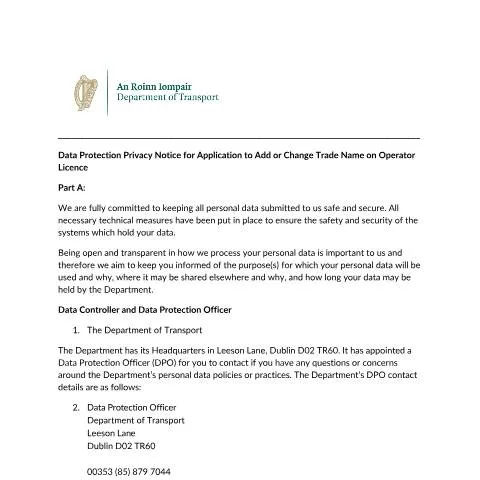
Understanding the Privacy Notice for Trade Name Applications
Navigating through the intricacies of data protection can be daunting, especially when it comes to specific applications like the Application to Add or Change Trade Name on Operator Licence. This privacy notice serves as a crucial guide for operators in the transport sector who need to change or add a trade name linked to their operator licence. The document emphasizes transparency in data processing and outlines the protective measures around personal data collected by the Department of Transport.
Key Components of the Privacy Notice
The privacy notice is divided into several key components, each designed to provide clarity on how personal data is handled. Understanding these sections is vital for operators to ensure compliance with data protection legislation and safeguard their rights:
- Commitment to Data Security: The Department of Transport outlines its commitment to protecting personal data, highlighting the technical measures in place to secure this information.
- Data Controller Information: It specifies that the Department of Transport is the data controller and provides contact details for their Data Protection Officer (DPO), enabling individuals to reach out with concerns.
- Rights of Data Subjects: The notice details the rights individuals have regarding their personal data, ensuring transparency and accessibility.
Purpose and Legal Basis for Data Collection
The privacy notice clarifies the specific purposes for which personal data is collected when submitting an application to change or add a trade name. This is governed by Section 8(1) of the Road Transport Act 2011, which mandates operators to notify the Minister of any changes. Key legal bases include:
- Compliance with Legal Obligations: Operators must fulfill statutory requirements by providing accurate and updated data.
- Operational Necessity: The Department processes data specifically for managing operator licenses, ensuring the integrity of transport operations.
Legal Framework Supporting Data Collection
The notice references the legal framework surrounding data processing, particularly Section 12 of the Road Transport Act 2011 and Section 41 of the Data Protection Act 2018. These sections outline the obligations of the Department and the rights of data subjects. Understanding these references can help operators appreciate the seriousness of compliance.
Exercising Your Data Rights
As a data subject, the notice outlines several rights available under data protection laws. Operators should be aware of these rights to protect their personal information, including:
- The right to be informed: Operators must be made aware of how their data will be used.
- The right of access: Individuals can request access to their data held by the Department.
- The right to rectification: Any inaccuracies in the data can be corrected upon request.
- The right to erasure: Operators may request their data to be deleted under certain conditions.
Steps to Exercise Your Rights
To exercise any of the above rights, operators should directly contact the Data Protection Officer at the details provided. Clear communication is essential, and it's advisable to specify the right being invoked to ensure prompt assistance.
Retention Period and Data Disposal
Understanding the retention policy for personal data is crucial for operators. The notice explains that personal data will be held only as long as there is a business need, in line with the purposes for which it was collected. Key points include:
- Data is marked for destruction once it is no longer required.
- Destruction processes are conducted in accordance with guidelines from the National Archives Office to ensure compliance with statutory requirements.
Implications of Data Retention Policies
Operators must be cognizant of how long their personal data may be retained and the conditions under which it will be processed. This understanding can help in managing expectations regarding data privacy and security.
Understanding Data Sharing Regulations
The privacy notice indicates that personal data may be shared with relevant authorities under specific circumstances. This includes sharing data with An Garda Síochána and other enforcement bodies to prevent and investigate criminal activities as permitted by law. Operators should be aware of:
- The nature of shared data: Information shared typically includes details necessary for regulatory compliance.
- Legal justifications: Data sharing is governed by legal provisions that prioritize public safety and compliance with the law.
Impacts of Data Sharing on Operators
Operators should consider the potential implications of data sharing, especially in relation to privacy. Understanding when and why their data might be shared can help in building trust in the regulatory process.
Technical Security Measures in Place
The Department of Transport emphasizes that technical measures have been implemented to protect the personal data collected. These may include:
- Encryption: Data encryption techniques to prevent unauthorized access.
- Access Controls: Restricted access to personal data to authorized personnel only.
Importance of Staying Informed About Technical Policies
Operators should stay informed about the technical measures in place and understand how these affect their personal data's security. This knowledge is essential for ensuring that appropriate safeguards are being maintained.
Privacy Notice Updates and Communication
The Department of Transport commits to keeping the privacy notice updated to reflect any changes in data processing practices or legal obligations. Operators should remain proactive in staying informed of these updates, which can impact their rights and responsibilities. Regular reviews and communications can help operators:
- Understand evolving data protection laws.
- Ensure that their data remains secure and compliant.
Strategies for Effective Communication with the Department
Operators are encouraged to maintain open lines of communication with the Department, ensuring that any queries or concerns about their data are addressed promptly. Keeping a record of communications can also aid in resolving any disputes that may arise.
Final Thoughts on Data Protection Compliance
Operators holding a Road Haulage Operator Licence or a Road Passenger Transport Operator Licence must understand the implications of the privacy notice for the Application to Add or Change Trade Name. Awareness of one's rights, obligations, and the procedures involved in data processing is essential in fostering a compliant and secure operating environment. As data protection laws evolve, continued education about your rights and responsibilities under these regulations will be beneficial in the long run.
Understanding Your Rights Under GDPR in Ireland
As a business owner in Ireland, it’s essential to understand the rights you possess under the General Data Protection Regulation (GDPR) when managing personal data. GDPR, which came into effect on 25 May 2018, safeguards individuals when it comes to their personal information and data privacy. When submitting an application to add or change your trade name, you must ensure that you remain compliant with these regulations.
Firstly, you have the right to be informed about how your data is processed. This means that when collecting personal information as part of your application, you need to provide a clear and concise privacy notice. The notice should specify the purpose of collecting data, how long it will be retained, and who it will be shared with. Failure to do so may lead to severe penalties from the Data Protection Commission (DPC).
Moreover, individuals have the right to access their data, rectify inaccuracies, and even request deletion under certain circumstances. It is prudent to establish a system in place for handling such requests, ensuring compliance with the timelines set forth by the regulations. Generally, you’re required to respond to access requests within one month, and this can be extended to two months for complex requests.
Furthermore, ensure to conduct Data Protection Impact Assessments (DPIAs) if your data processing may result in high risks to individuals' rights and freedoms. In the context of changing a trade name, this may arise if the new name involves processing sensitive personal data. Such assessments can identify potential risks and help in establishing measures to mitigate them.
In summary, understanding your rights and obligations under GDPR is crucial when adding or changing a trade name. It not only protects your business but also fosters trust with your customers by demonstrating your commitment to data protection and privacy.
Creating an Effective Privacy Notice for Trade Name Applications
When you apply to add or change a trade name in Ireland, a well-structured privacy notice is essential. This document serves as a communication tool between your business and individuals whose data you collect. It should be easy to understand and accessible. Here are the critical components to include in your privacy notice:
Identity and Contact Information: Clearly state the name of your business, your contact details, and the name of your Data Protection Officer (DPO) if applicable. This information allows individuals to reach out for any inquiries about their data.
Purpose of Data Processing: Specify why you are collecting personal data as part of the trade name application. This may include fulfilling legal obligations, such as compliance with the Companies Registration Office (CRO) requirements, or for operational needs like record-keeping.
Legal Basis for Processing: It's important to mention the legal grounds for processing personal data. This could be based on consent, contractual necessity, compliance with a legal obligation, or legitimate interests.
Data Retention Period: Include information on how long you will retain the personal data collected. Be transparent about your data retention policy and the factors that might influence these timeframes.
Data Sharing: Clearly explain if you share personal data with third parties, such as governmental bodies, and for what purposes. This could include sharing information with Revenue for tax compliance or with the CRO for trade name registration.
Rights of Data Subjects: Inform individuals about their rights under GDPR, including their rights to access, rectify, erase, restrict processing, data portability, and object to processing.
Right to Withdraw Consent: If consent is your legal basis for processing data, explain that individuals have the right to withdraw their consent at any time and how they can do so.
Fill in your form directly online
No printing: type your details into the boxes of the official form, tick, then download the PDF ready to send.
- 1Type into the form boxes
- 2Tick in one click
- 3Save and download the PDF
Security Measures: Describe how you will protect personal data through technical and organizational measures. This reassures individuals that their information will be handled securely.
The privacy notice should be readily available to individuals involved in your application, such as stakeholders or employees, ensuring you comply with GDPR requirements. It is wise to review and update this notice regularly, especially when there are changes to your data processing activities or if you amend your trade name.
Steps to Incorporate Data Protection into Your Trade Name Application Process
Integrating data protection into your trade name application process is not merely a compliance exercise but also enhances your business credibility. Here’s a step-by-step approach to ensure that you adequately protect personal data throughout the application process:
Conduct a Data Audit: Before initiating your trade name application, perform a thorough audit of the personal data you currently hold and the types of data you will need to collect. Determine whether any sensitive data will be involved and how such data will be processed.
Establish Clear Data Policies: Develop and document data protection policies that outline how personal data will be collected, processed, and protected during the trade name application process. Ensure that all employees are trained on these policies to maintain compliance.
Implement Data Minimization Principles: Collect only the personal data that is necessary for the purpose of the trade name application. Avoid excessive data collection to reduce the risk of non-compliance with GDPR.
Designate a Data Protection Officer: If your business processes large volumes of personal data or sensitive data types, appoint a Data Protection Officer to oversee compliance efforts. This officer should be well-versed in GDPR and can provide guidance on best practices.
Utilize Secure Data Collection Methods: When collecting personal data for your trade name application, utilize secure forms of data collection, such as encrypted online forms. This protects data against unauthorized access during transmission.
Regularly Review Data Processing Activities: Set up a schedule to regularly review your data processing activities associated with the trade name application. This includes assessing the effectiveness of data protection measures and making adjustments where necessary.
Engage with Legal Advisors: Consult with legal professionals who specialize in data protection law to ensure your application process complies with GDPR and other applicable regulations. Having an expert review your approach can help identify any potential compliance gaps.
Document and Maintain Records: Keep thorough records of all data processing activities related to your trade name application. This documentation will be crucial in demonstrating compliance with GDPR if your business is ever subject to an audit by the Data Protection Commission.
Prepare for Data Breaches: Establish a robust data breach response plan that outlines the steps to take in the event of a data breach. This includes notifying affected individuals and the DPC within the legal timeframes to mitigate potential damage.
By following these steps, you will not only comply with GDPR when adding or changing your trade name but also foster a culture of accountability regarding data protection within your business. This proactive approach can enhance trust with your customers and stakeholders, ultimately benefiting your brand's reputation.