Skip to content
Government & admin

Understanding Data Protection for Ship Radio Licences

Official documentGovernment & admin
PreviewDocument preview: Understanding Data Protection for Ship Radio Licences — Government & admin
Official document

What would you like to do?

After payment, download your document or edit it in your account.

After payment, download your document or edit it in your account.

Understanding the Data Protection Privacy Notice for Ship Radio Licence Applications

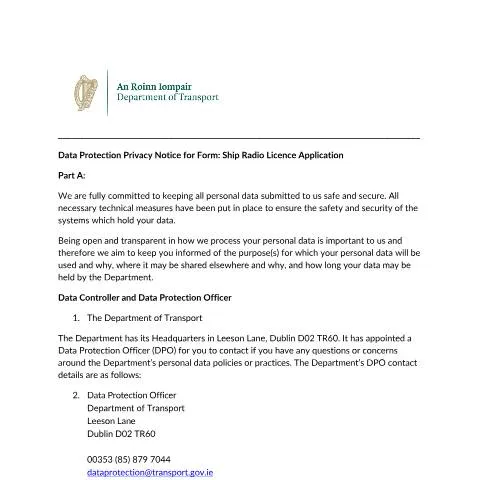
When navigating the complexities of maritime communication, ensuring compliance with data protection regulations is often overlooked. The Data Protection Privacy Notice pertaining to the Ship Radio Licence Application form from the Department of Transport serves as a crucial guide for applicants, outlining how personal data will be handled, safeguarded, and the implications of providing such data.

The Essence of Data Protection in Maritime Applications

The maritime sector operates within numerous regulatory frameworks, and the Ship Radio Licence is no exception. This privacy notice embodies the Department's commitment to transparency in handling personal data. Adhering to data protection legislation is not merely a legal obligation; it reflects a deep-seated respect for individual privacy and data security.

Purpose of Data Collection

The data collected via the Ship Radio Licence Application serves specific purposes:

  • To assess and process applications for Ship Radio Licences.
  • To comply with the Radio Equipment and Telecommunications Terminal Equipment (R&TTE) Regulations.
  • To adhere to the requirements set forth by the Marine Equipment Directive, Wireless Telegraphy Act of 1926, and other relevant maritime legislation.

Understanding these purposes is vital for applicants as it informs them why certain data is necessary and how it will be utilized.

The Role of the Data Protection Officer

One of the pivotal players in ensuring compliance with data protection is the appointed Data Protection Officer (DPO). The DPO is responsible for overseeing the Department's data handling practices and serves as a point of contact for any queries regarding data privacy.

Contacting the DPO

Applicants can reach the DPO at:

Department of Transport Leeson Lane Dublin D02 TR60 Phone: 00353 (85) 879 7044 Email: [email protected]

Engaging with the DPO can help clarify any concerns regarding personal data rights and the processing of such data.

Personal Data Rights: Empowering Applicants

When submitting personal data through the Ship Radio Licence Application, applicants are entitled to several rights under data protection legislation. These rights empower individuals to have a say in how their data is managed:

  • The Right to be Informed: Applicants should be clearly informed about how their data will be used.
  • The Right of Access: Individuals can request access to their personal data processed by the Department.
  • The Right to Rectification: If data is inaccurate, applicants have the right to request corrections.
  • The Right to Erasure: Under specific conditions, applicants can request deletion of their personal data.
  • The Right to Restrict Processing: Individuals can limit how their data is used.
  • The Right to Data Portability: People can request their data in a structured format for transfer.
  • The Right to Object: Applicants can oppose the processing of their personal data.
  • Rights in Relation to Automated Decision-Making: Individuals are entitled to protections against automated decisions.

These rights are not merely theoretical; they are actionable and can be exercised by contacting the DPO directly.

Retention Period: How Long Will Your Data Be Held?

Understanding the retention period for personal data is essential. The Department will retain the data collected via the Ship Radio Licence Application only for as long as it is necessary to fulfill the purpose(s) for which it was collected.

Retention Guidelines

Post-application, the data will be:

  • Held as long as there is a legitimate business need.
  • Marked for destruction once the purpose has been fulfilled.
  • Destroyed according to internal guidelines or statutory requirements, ensuring compliance with national laws.

This structured approach to data retention underscores the Department's commitment to minimizing the risk of data breaches while also respecting personal privacy.

Important Legislative Frameworks

The Ship Radio Licence Application operates under a matrix of legislative frameworks. These laws not only provide the basis for data collection but also establish the standards for processing such data.

Online editing included

Fill in your form directly online

No printing: type your details into the boxes of the official form, tick, then download the PDF ready to send.

  1. 1Type into the form boxes
  2. 2Tick in one click
  3. 3Save and download the PDF
Get started for €0.90
Legislation Purpose
Radio Equipment and Telecommunications Terminal Equipment (R&TTE) Regulations Ensures compliance in telecommunications equipment.
Marine Equipment Directive (MED) Standardizes equipment safety and performance.
Wireless Telegraphy Act, 1926 Regulates wireless communication methods.
Merchant Shipping Act, 1894 Establishes the framework for shipping operations.
Mercantile Marine Act, 1955 Regulates maritime commercial activities.

Each of these acts plays a crucial role in shaping how personal data is processed during the licensing application, ensuring that applicants are protected and informed.

Who Should Refer to This Privacy Notice?

The Data Protection Privacy Notice is essential reading for a variety of stakeholders:

  • Ship Owners: Those applying for a licence must understand the implications of providing personal data.
  • Maritime Operators: Businesses operating in the maritime sector need clarity on data handling practices.
  • Legal Representatives: Lawyers advising clients on maritime regulations should be aware of data privacy issues.

This notice stands as a vital resource for anyone involved in the application process, ensuring all parties are informed of their responsibilities and rights.

Practical Steps for Applicants: Navigating the Data Protection Landscape

For applicants looking to ensure compliance and safeguard their data, several practical steps can be taken:

  1. Review the Privacy Notice: Before starting the application process, read the data protection notice thoroughly.
  2. Prepare Necessary Information: Gather all personal data required for the application to avoid delays.
  3. Engage with the DPO: If uncertainties arise, reaching out to the DPO can provide clarity.
  4. Be Aware of Your Rights: Familiarize yourself with your rights regarding personal data.
  5. Keep Copies of Correspondence: Maintain records of all communications regarding your application and data queries.

By following these steps, applicants can better navigate the data protection landscape while applying for a Ship Radio Licence.

Ireland's approach to data protection is grounded in both European and national legislation. The primary legal instruments governing data protection include the General Data Protection Regulation (GDPR) and the Data Protection Acts 1988 to 2018. Under these laws, any personal data collected during the application process for a ship radio licence is subject to strict safeguards aimed at protecting the privacy of individuals and organizations. When submitting the application form, applicants must provide personal data, which may include their name, address, contact details, and potentially sensitive information related to their maritime operations. The Ship Radio Licence Application Form is designed to collect only the necessary data required for processing applications effectively while ensuring compliance with the principles outlined in GDPR. It is pivotal for applicants to understand their rights concerning their personal data. The right to access, rectify, or erase personal data collected by the relevant authorities, such as the Department of Transport, is enshrined within the GDPR. Applicants can request copies of their data, ask for corrections to inaccurate information, or even request deletion under certain circumstances. These rights form a fundamental aspect of the data protection landscape in Ireland, encouraging transparency and accountability from data controllers. Moreover, the Data Protection Commission (DPC) oversees enforcement and compliance with these regulations in Ireland. The DPC provides numerous guidelines and resources for individuals and businesses to navigate the complexities of data protection. Applicants seeking further clarity on how their data will be used when applying for a ship radio licence can contact the DPC or refer to their website for comprehensive information.

How to Ensure Compliance with Data Protection When Handling Sensitive Information

When completing the Ship Radio Licence Application Form, data protection compliance extends beyond just understanding your rights; it also involves ensuring that the information provided is handled appropriately. Organizations and individuals submitting applications must adopt best practices to protect sensitive data throughout the process. Firstly, it is crucial to ensure that the application form is submitted through secure channels. This may involve using encrypted methods of sending personal information to the Department of Transport. When applicable, applicants should verify that any third-party services involved in the submission process comply with applicable data protection regulations. Secondly, applicants should be mindful of the storage and retention of personal data. Once the application is submitted, it is vital to understand how long data will be retained by the authorities and for what purposes. Typically, data retention policies dictate that personal information should not be kept longer than necessary for the fulfilment of the purpose for which it was collected. Therefore, awareness of these policies can prevent potential data breaches and ensure compliance. Furthermore, the principle of data minimization is an essential consideration. Only the information that is absolutely necessary for the processing of the ship radio licence should be provided. Applicants should review the form carefully and question any required fields that may seem excessive or irrelevant to their application. The emphasis should be on providing accurate and succinct information that directly relates to the licence being requested.

The Role of Privacy Notices in the Ship Radio Licence Application Process

A privacy notice is a critical component of the data protection process, particularly when individuals and organizations apply for a ship radio licence. It serves as a transparent communication tool, informing applicants about how their personal data will be processed, including the purposes of processing, data retention periods, and individuals' rights. When applicants engage with the Ship Radio Licence Application Form, they should be presented with a privacy notice that covers key elements. This notice should clearly outline who the data controller is - typically the Department of Transport - and provide contact information for inquiries related to data protection. In addition, the privacy notice must specify the legal basis for processing the personal data collected. For example, if the data is processed for regulatory compliance or the performance of a task carried out in the public interest, this should be clearly articulated. Understanding the legal basis for data collection is crucial for applicants as it informs them of their rights under the GDPR. Moreover, the privacy notice should detail the potential sharing of data with third parties, such as other governmental departments or enforcement agencies, if applicable. Applicants must be made aware of any scenarios where their information might be disclosed outside the immediate processing context, thereby allowing them to make informed decisions regarding their data. Lastly, the privacy notice must include information regarding the applicants' rights in relation to their data. This includes informing them about their rights to access, rectify, and request the erasure of their personal information, as well as their rights to restrict processing, object to processing, and lodge a complaint with the Data Protection Commission if they believe their rights have been violated. By providing a comprehensive privacy notice as part of the ship radio licence application process, the Department of Transport not only complies with its legal obligations but also fosters trust and transparency with applicants. Ensuring that applicants have a clear understanding of how their data will be handled helps create a culture of data protection and respect for individual privacy rights in Ireland.

Frequently asked questions

What is the purpose of the Data Protection Privacy Notice?

It informs applicants how their personal data will be managed and protected.

Who is responsible for data protection in maritime applications?

The Department of Transport oversees data protection for ship radio licence applications.

What implications arise from providing personal data?

Applicants must understand how their data may be used and the associated risks.

How is personal data safeguarded?

The notice outlines the measures taken to ensure the security of personal information.

Similar documents