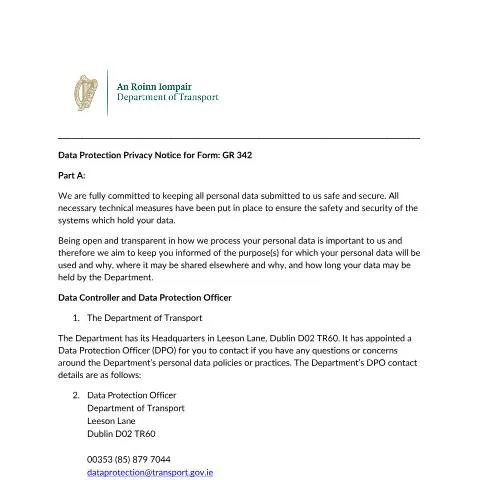
Understanding the GR342 Privacy Notice: A Deep Dive
The Data Protection Privacy Notice for Form GR342 issued by the Department of Transport is a crucial document for anyone interacting with the department regarding vessel registrations. Whether you’re a seasoned mariner or a first-time applicant, understanding this notice is essential for navigating the process smoothly. This article dissects its components, highlighting how this privacy notice impacts your rights and responsibilities when providing personal data.
Unpacking the Intent Behind Data Collection
At the heart of the GR342 privacy notice is a commitment to protecting personal data. The Department of Transport emphasizes the importance of transparency in how they handle your information. The personal data collected serves specific purposes tied to vessel registration under the Merchant Shipping Act, 1894 and the Mercantile Marine Act, 1955.
Understanding the purpose behind data collection helps to clarify why certain details are requested. For instance, when registering a vessel, the department requires essential information, which typically includes:
- Name of the vessel
- Owner's contact details
- Proof of ownership
This information is not merely bureaucratic; it serves to uphold maritime safety and regulatory compliance.
Your Rights as a Data Subject
The notice articulates your rights under data protection legislation, ensuring you are not merely a passive participant in the data collection process. Here are the rights you can exercise:
- The right to be informed: You’re entitled to know how your data will be used.
- The right of access: You can request access to your personal data held by the Department.
- The right to rectification: If your data is inaccurate, you can ask for corrections.
- The right to erasure: Under certain conditions, you can request that your data be deleted.
- The right to restrict processing: You can limit how your data is used.
- The right to data portability: You can request that your data be transferred to another service.
- The right to object: You can object to your data being used for specific purposes.
- Rights in relation to automated decision making: You have protections regarding automated decisions.
Should you feel that your rights are not being respected, you also have the option to lodge a complaint with the Data Protection Commission, the governing body for data protection issues in Ireland.
The Data Controller and Communication Channels
Understanding who manages your data is vital. The Data Controller in this instance is the Department of Transport, located at:
Leeson Lane, Dublin D02 TR60
The Department has designated a Data Protection Officer (DPO) to handle inquiries regarding personal data policies. You can reach out to the DPO through the following:
Telephone: 00353 (85) 879 7044 Email: [email protected]
This open channel is a key aspect that enhances the transparency of data processing activities.
Legal Framework Governing Data Collection
The legal backdrop for the collection and processing of personal data via Form GR342 derives from the Merchant Shipping Act, 1894 and the Mercantile Marine Act, 1955. These acts provide the necessary legal basis for the Department to request personal data and outline the obligations for handling such data securely.
The notice also stresses that the data will be used solely for the outlined specific purposes and not in any unauthorized manner. This guarantees that your personal information is handled within a legal framework, promoting trust and accountability.
Clarifying the Scope of Data Use
When it comes to data processing, it’s essential to know the extent of the use of your information. According to the privacy notice, personal data provided is strictly used internally within the Department of Transport. This limitation is crucial as it ensures that your data does not end up in unauthorized hands.
Importantly, the notice states that no personal data will be transferred outside the EU/EEA. This is an essential consideration, particularly in an age where data breaches are common, as it offers a higher level of protection.
Retention Period and Data Disposal Protocols
Understanding how long your data will be kept is vital for your peace of mind. The privacy notice indicates that personal data will be retained only as long as there is a business need. After the completion of this need, the data will be securely marked for destruction. Here’s a brief overview of the retention process:
| Phase | Action Taken |
|---|---|
| Collection | Data is collected for a specific purpose. |
| Retention | Data is retained only as long as necessary. |
| Destruction | Data is securely destroyed following internal guidelines. |
This structured approach to data retention and disposal helps ensure that your data does not linger longer than necessary, mitigating the risks associated with data breaches.
Technical Safeguards in Place
In a world where data security is paramount, the Department of Transport has outlined various technical measures to protect the information collected. While specific details on these measures are not exhaustively listed in the notice, it confirms that significant efforts have been made to ensure the safety and security of systems that hold your data.
Additionally, the privacy notice references the technical information about cookies employed on their website, which can further affect how data is collected and processed when engaging with online services.
For those wanting more information on the technical aspects, the notice suggests visiting the official government website, where broader data protection practices are discussed.
Practical Insights for Users
The GR342 privacy notice serves not only as a guideline for the processing of personal data but also as a strategic document for users. Here are some practical insights for individuals who may need to register a vessel or provide personal data:
- Familiarize yourself with your rights under data protection laws, as this empowers you to engage constructively with the Department.
- Keep a record of your communications with the Department, especially if you have exercised any of your rights or requested further information.
- Understand the importance of providing accurate information as this will expedite the processing of your application.
- Be aware of the retention policies so that you know when and how your data will be disposed of after its intended use.
- Utilize the contact details provided for the DPO should you have any queries or concerns—this channel is designed to enhance your understanding and trust.
Being informed about these specifics not only aids in compliance but can also enhance your overall experience with the Department of Transport during your interactions regarding vessel registration.
Understanding the Fundamentals of Data Protection in Ireland
Data protection in Ireland is primarily governed by the General Data Protection Regulation (GDPR), which came into effect on May 25, 2018. This regulation sets forth stringent requirements on how personal data should be collected, processed, stored, and shared, not only within the European Union but also with external countries. As a resident or business operating in Ireland, it’s essential to understand that the GDPR provides specific rights to individuals concerning their personal data.
The Office of the Data Protection Commissioner (DPC) is the leading authority in Ireland that enforces data protection legislation. The DPC offers guidance on compliance, oversees the implementation of data protection laws, and investigates complaints from individuals regarding the mishandling of their data. Understanding the role of the DPC is crucial for both individuals and businesses, as it ensures that privacy rights are respected and upheld.
In addition to GDPR, local laws, including the Data Protection Act 2018, complement these regulations, providing additional clarity on issues such as the processing of personal data in specific sectors, such as healthcare or finance. Organizations must be aware of these additional obligations based on their operations and the types of data they handle. For example, processing sensitive personal data, such as health information, requires explicit consent from the data subject, which can complicate compliance efforts.
Implementing a Privacy Notice: Key Considerations
The Privacy Notice Form GR342 is an essential component of any organization's data protection strategy. This form serves as a means for organizations to inform individuals about how their personal data is being used, the legal basis for processing, and their rights regarding the data. Here are key considerations when implementing a privacy notice:
Fill in your form directly online
No printing: type your details into the boxes of the official form, tick, then download the PDF ready to send.
- 1Type into the form boxes
- 2Tick in one click
- 3Save and download the PDF
Clear and Accessible Language: A privacy notice must be written in clear, straightforward language that is easily understandable to the average individual. Avoiding legal jargon and technical terms will facilitate better comprehension and build trust with users. The notice should effectively communicate the nature of the data collected, its purpose, and the duration of storage.
Purpose Limitation: The GDPR states that personal data should only be collected for specified, legitimate purposes and not further processed in a manner that is incompatible with those purposes. This principle must be clearly articulated in the privacy notice. Organizations should specify the exact purposes for which personal data is collected and processed, ensuring transparency and accountability.
Data Subject Rights: Individuals have several rights under the GDPR, including the right to access their personal data, the right to rectify inaccuracies, the right to erasure, and the right to object to processing. A comprehensive privacy notice should detail these rights and provide clear instructions on how individuals can exercise them. This empowers users and fosters a culture of transparency.
Legal Base for Processing: Organizations must clarify the legal basis under which they are processing personal data, such as consent, contractual necessity, legal obligation, or legitimate interests. This section of the privacy notice aids individuals in understanding whether their data is being processed fairly and lawfully.
Data Sharing and Transfers: If personal data is shared with third parties or transferred outside the European Economic Area (EEA), the privacy notice should detail these practices. Organizations should explain the measures taken to ensure adequate protection of personal data in these instances, such as data processing agreements or adherence to international frameworks.
Challenges and Best Practices for Compliance
Compliance with data protection regulations can be challenging for organizations of all sizes. The rise in data breaches and increasing scrutiny from regulatory bodies means that organizations must prioritize data protection measures. Here are some common challenges and best practices for ensuring compliance with data protection laws in Ireland:
Data Mapping: One of the first steps in achieving compliance is conducting a thorough data mapping exercise to understand what personal data is collected, processed, and retained. This involves tracking data flows within the organization, identifying data entry points, and mapping out how data is used throughout the organization’s operations. This effort will also help in assessing risks associated with data processing activities.
Employee Training: Regular training of employees on data protection principles is vital for compliance and fostering a culture of privacy. Employees should be trained on their responsibilities regarding data handling and the importance of safeguarding personal information. Providing clear guidelines and resources can empower staff to act in accordance with data protection requirements.
Regular Audits: Regular audits of data protection practices are essential for identifying gaps in compliance and ensuring continuous improvement. Organizations should conduct periodic reviews of their data processing activities, data security measures, and incident response plans to ensure that they remain aligned with legal obligations and industry best practices.
Incident Response Plans: An effective incident response plan is crucial for minimizing the impact of data breaches, should they occur. Organizations should establish procedures for identifying, reporting, and managing data incidents. This includes notifying affected individuals and the DPC within the legally mandated timelines. Having a robust incident response strategy can mitigate reputational damage and legal ramifications.
Engaging with the DPC: Building a proactive relationship with the DPC can be beneficial, especially for organizations that handle large volumes of personal data or operate in high-risk sectors. Seeking guidance from the DPC on compliance issues can help organizations navigate complex data protection landscapes and gain insights into best practices.