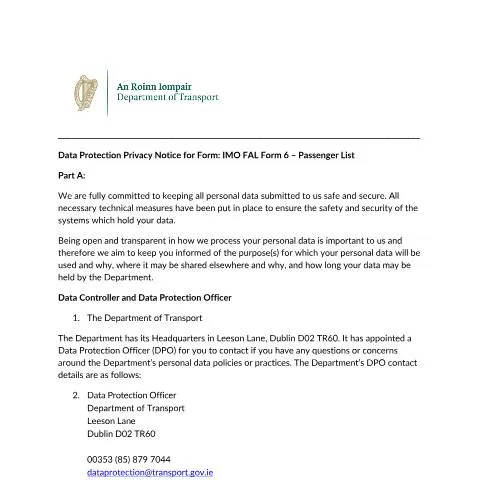
Understanding the Data Protection Privacy Notice: An Essential Guide to IMO FAL Form 6
In the evolving landscape of data protection, understanding the nuances of documents like the Data Protection Privacy Notice for the IMO FAL Form 6 – Passenger List is paramount for stakeholders in the marine transport sector. This guide will delve into the intricacies of this notice, focusing on how users can navigate its stipulations to ensure compliance while protecting personal data.
The Key Objectives of the Privacy Notice
The primary aim of the privacy notice is to provide transparency regarding the handling of personal data collected through the IMO FAL Form 6. It lays bare the Department of Transport’s commitment to data security while elucidating the legal and practical frameworks governing these practices. Below are the main objectives outlined in the notice:
- Data Security: Assurance that all technical measures are in place to safeguard personal data.
- Transparency: Detailed disclosure on usage, sharing, and retention periods of personal data.
- Data Subject Rights: Clearly articulated rights available to individuals concerning their personal data.
Transparency and Data Usage
Understanding how your data will be used is foundational. The notice specifies that personal data collected through the IMO FAL Form 6 will be utilized solely for the purposes set forth when the data is gathered. These purposes include compliance with various legal frameworks, specifically those aligned with the European Union (Reporting Formalities for Ships) Regulations.
Data Subject Rights: What You Need to Know
Under the Data Protection legislation in force, individuals have rights regarding their personal data. Users of the IMO FAL Form 6 should be aware of their rights, which include:
- The Right to be Informed: Individuals have the right to know how their data will be utilized.
- The Right of Access: Users can request access to the personal data held by the Department.
- The Right to Rectification: If any data is inaccurate, individuals can request its correction.
- The Right to Erasure: Under certain conditions, individuals can request deletion of their data.
- The Right to Restrict Processing: Users can limit how their data is processed under specific circumstances.
- The Right to Data Portability: Individuals have the right to receive their data in a structured format.
- The Right to Object: Users can object to data processing for certain purposes.
- Rights in Relation to Automated Decision Making: Users are protected against automated decisions that significantly affect them.
The Role of the Data Protection Officer
For any inquiries regarding personal data policies or practices, the Data Protection Officer (DPO) at the Department of Transport serves as the primary point of contact. Their responsibilities encompass ensuring compliance with data protection standards and addressing any concerns raised by individuals.
Contacting the DPO
The notice provides essential contact details, enabling stakeholders to seamlessly reach out for clarifications regarding data practices:
Department of Transport Leeson Lane, Dublin D02 TR60 Phone: 00353 (85) 879 7044 Email: [email protected]
Navigating Legal Frameworks and Compliance
The legal underpinnings of the IMO FAL Form 6 are rooted in specific statutory regulations, particularly S.I. No. 166/2012 and its amendments. Understanding these regulations is crucial for stakeholders, as they mandate the collection and processing of personal data for maritime operations.
Key Regulatory References
| Regulation | Description |
|---|---|
| S.I. No. 166/2012 | Establishes reporting formalities for ships arriving to or departing from ports in Ireland. |
| S.I. No. 678/2019 | Amendment to the initial regulation, enhancing reporting requirements. |
These regulations not only outline the required data but also emphasize the importance of timely and accurate reporting. Non-compliance can result in delays or issues with maritime operations.
Data Retention Policies and Their Implications
The notice specifies that personal data collected will be retained only for as long as necessary for the purposes outlined at the time of collection. After this period, data will be marked for destruction, in compliance with internal guidelines or statutory requirements.
Retention Considerations
It’s essential for users to understand that:
- Business Need: Data should be retained only as long as there is a justified business necessity.
- Destruction Protocol: Once the data retention period lapses, it is destroyed following strict internal protocols.
Understanding the Scope of Data Collection
Form IMO FAL Form 6 requires specific personal data. This data is primarily collected to comply with maritime regulations and to ensure that safety and health regulations are followed during the arrival and departure of vessels.
Types of Data Collected
Typically, this data may include:
- Full names of passengers
- Nationalities
- Date of birth
- Travel document information
Risks of Data Misinterpretation and Mismanagement
Stakeholders must be aware of the potential risks associated with data handling. Misinterpretation of the privacy notice can lead to inadequate compliance and potential legal repercussions.
Common Misinterpretations
- Data Sharing: Assumptions that data will be shared beyond regulatory requirements without consent.
- Retention Period: Misunderstanding the length of data retention as indefinite rather than as defined by business needs.
Such misconceptions can result in operational challenges and potential breaches of data protection laws.
Conclusion: Practical Steps for Stakeholders
In navigating the complexities of the Data Protection Privacy Notice for IMO FAL Form 6, stakeholders should adopt a proactive approach to data management. This includes:
- Regularly reviewing internal data handling processes to ensure compliance with the outlined regulations.
- Establishing clear lines of communication with the Department’s DPO for addressing any uncertainties.
- Ensuring that all personal data collected is done with full awareness of the rights and obligations set forth in the notice.
By adhering to these practices, stakeholders can effectively manage their obligations while safeguarding personal data in compliance with Irish and EU regulations.
Understanding the Privacy Notice under the Data Protection Act
In the context of the Irish data protection landscape, compliance with the Data Protection Act is essential for organizations that manage personal data, particularly those that handle passenger information. The Privacy Notice, as stipulated under the General Data Protection Regulation (GDPR) and the Data Protection Act 2018, serves as a critical transparency tool, informing individuals about how their data is collected, processed, and stored.
The Privacy Notice should include specific elements such as the identity and contact details of the data controller, the purposes of processing the personal data, the legal basis for processing, data retention periods, and the rights of the individuals regarding their data. For entities using the Form 6 Passenger List, it is crucial to ensure that your privacy notice reflects the exact nature of the data being collected and the reasons for its collection.
Fill in your form directly online
No printing: type your details into the boxes of the official form, tick, then download the PDF ready to send.
- 1Type into the form boxes
- 2Tick in one click
- 3Save and download the PDF
Moreover, organizations must ensure that the notice is easily accessible to passengers, ideally before data collection occurs. This might involve incorporating the privacy notice into ticketing procedures, included in communications with passengers, or prominently displayed in physical or digital formats where the data is collected. It's also necessary to keep the notice up to date, particularly when there are changes in data processing activities or legal obligations.
In practice, this means that if an organization is collecting data via the Form 6 Passenger List, it should state clearly that this data may be shared with relevant authorities for purposes such as immigration control, public health, or security. Transparency builds trust and ensures compliance with legal obligations.
Implications of Non-Compliance with Data Protection Regulations
Failing to comply with data protection regulations can have serious repercussions for organizations that process personal data, including those involved in transport and passenger lists. The Data Protection Commission (DPC) in Ireland oversees compliance with these laws and has the authority to investigate breaches and impose significant fines.
Non-compliance could lead to a range of consequences, including financial penalties, reputational damage, and potential legal action from affected individuals. For example, if a passenger’s personal data is mishandled or not protected, they may lodge a complaint with the DPC, which could lead to an investigation. If found to be in violation of the GDPR, an organization may face fines of up to €20 million or 4% of their total worldwide annual turnover, whichever is higher.
Additionally, organizations may be required to compensate affected individuals for damages arising from the breach of their personal data. This reinforces the importance of adhering to data protection principles—ensuring data is collected lawfully, processed transparently, and stored securely.
To mitigate risks, organizations should regularly conduct data protection impact assessments (DPIAs) to identify and minimize risks to personal data. This proactive approach not only safeguards the organization against potential fines but also enhances customer trust and loyalty by demonstrating a commitment to protecting personal information.
Best Practices for Completing Form 6 and Ensuring Data Protection
When completing Form 6 for passenger lists, it's vital to adopt best practices that align with data protection regulations. Here are several key recommendations:
- Data Minimization: Collect only the necessary information required by the regulations. Avoid collecting extraneous data that is not pertinent to the passenger's travel information.
- Accuracy: Ensure that the data you collect is accurate and kept up to date. Regular audits should be conducted to confirm that the information is correct and relevant.
- Secure Data Handling: Implement robust security measures to protect personal data from unauthorized access or breaches. This includes using encryption and secure storage solutions.
- Staff Training: Regularly train staff on data protection principles and the importance of handling personal data responsibly. This fosters a culture of compliance and awareness throughout the organization.
- Transparency: Be clear and transparent with passengers regarding how their data will be used. This includes providing them with your privacy notice at the point of data collection.
- Regular Review: Periodically review data protection practices and policies to ensure they comply with current regulations and best practices. Adapt to changes in the legal framework or the nature of the data processed.
By following these best practices, organizations can not only comply with legal obligations but also establish a trustworthy relationship with passengers, ultimately enhancing the overall customer experience.