Navigating Financial Relief: The Instalments Application Process
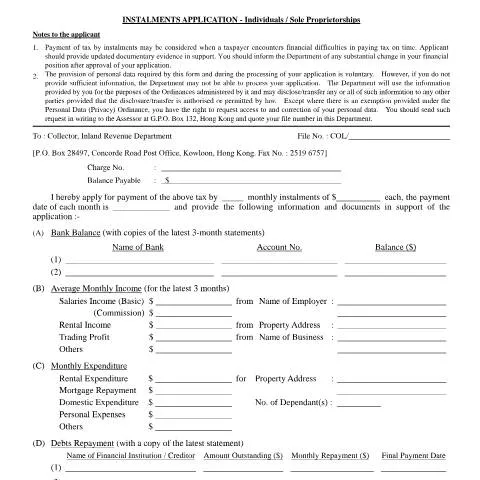
In the bustling economic landscape of Hong Kong, encountering financial difficulties is not uncommon. For individuals and sole proprietorships facing challenges in managing tax payments, the Instalments Application (IR 1360) can be a vital tool. This document allows taxpayers to seek approval for payment of taxes in monthly instalments, providing essential relief during turbulent financial periods.
Understanding Your Eligibility: Who Should Apply?
The Instalments Application is primarily aimed at individuals and sole proprietorships who are unable to pay their taxes in a lump sum due to financial distress. Below are specific scenarios that warrant the use of this form:
- Sudden Financial Hardship: Unexpected expenses like medical emergencies or business downturns.
- Seasonal Income Variability: Individuals whose income fluctuates seasonally may benefit from instalments.
- Temporary Unemployment: Those recently out of work needing to manage taxes while searching for new employment.
Distinct Situations Requiring Consideration
Each applicant's circumstances can differ significantly, necessitating tailored approaches. Here are specific sub-cases:
- Foreign Nationals: If you are a non-resident and meet the tax obligations, your application may require additional documentation.
- Minors: Applications submitted on behalf of minors must include consent from a legal guardian.
- Complex Financial Situations: If you possess multiple income streams or financial obligations, a detailed breakdown will be essential.
Step-by-Step Completion of the Instalments Application
Filling out the Instalments Application requires careful attention to detail. Here’s a structured approach to ensure all necessary information is accurately presented:
- Personal Details: Start by providing your name, address, and contact information. Ensure that these details are current.
- Tax Information: Specify the total balance payable and the proposed monthly instalment amount. This is crucial for calculating the monthly payments.
- Bank Balance: Document the latest three-month bank statements. You'll need to provide the bank's name, account number, and balance.
- Average Monthly Income: List your sources of income over the last three months, detailing salaries, rental income, or any other profits.
- Monthly Expenditure: A thorough breakdown of your monthly expenses is essential. Categories include rental, mortgage repayments, and personal expenses.
- Debts Repayment: Include a summary of any outstanding debts, along with repayment amounts and final payment dates.
- Additional Information: Provide any relevant details regarding your financial standing, especially any impacts from dependents or spouse’s income.
The Application Submission Process: Key Steps
Once the form is completed, it must be submitted to the appropriate authority for processing. Here’s how to effectively navigate the submission:
- Check and Review: Ensure that all sections are filled out comprehensively. Double-check for any missing signatures or information.
- Gather Supporting Documents: Attach necessary documentation such as bank statements, proof of income, and a list of debts.
- Submission: Send your application to the Collector of the Inland Revenue Department at the designated address:
- Retain Copies: Keep copies of your application and attached documents for your records.
| Department | Address |
|---|---|
| Inland Revenue Department | P.O. Box 28497, Concorde Road Post Office, Kowloon, Hong Kong |
What Happens Next? Awaiting the Decision
After submission, the Inland Revenue Department will review your application. Here’s what to anticipate:
- Processing Time: Typically, applications are processed within a few weeks. However, this can vary based on the volume of applications received.
- Communication: You will be notified via written correspondence regarding the outcome of your application. This will include details about the approval or any required adjustments.
- Follow-Up: If you haven’t received a response within the expected timeframe, consider following up with the department to ensure your application is being processed.
Consequences of Application Denial: What to Do Next
In the unfortunate event that your application for instalment payments is denied, it’s crucial to understand your options:
- Request Clarification: Contact the Inland Revenue Department for an explanation of the denial. Understanding the reasoning can provide clarity and inform your next steps.
- Reassess Financial Data: Review your financial submissions to determine if there are any inaccuracies or missing information.
- File an Appeal: Depending on the circumstances, an appeal may be possible. Ensure to follow the departmental guidelines to initiate this process.
Tips for a Successful Application: Enhancing Your Chances
Submitting an Instalments Application effectively requires strategic planning. Here are actionable tips to bolster your application’s chance of approval:
- Be Transparent: Provide a complete and honest account of your financial situation. Transparency builds trust and supports your case.
- Document Everything: Ensure you have all necessary documents to substantiate your claims. This includes proof of income, expenses, and debts.
- Professional Advice: Consider consulting with a tax advisor for tailored advice, especially if your situation is complex.
Understanding the Impact of Late Payments and Surcharges
It’s important to be aware that if your application is declined, you may still be responsible for timely tax payments. Here’s how surcharges work:
- Surcharge of 5%: A surcharge is applicable on unpaid taxes after the due date.
- Further Surcharge: If payments remain unpaid for six months, an additional surcharge of 10% may be imposed, increasing the total amount owed.
Concluding Thoughts on Financial Management Through Instalments
Facing financial struggles can be daunting, but the Instalments Application (IR 1360) offers a viable pathway to manage tax obligations without overwhelming stress. Ensure to approach the process with diligence, providing complete and accurate information, and consider seeking professional advice when necessary. By taking proactive steps to manage your tax liabilities, you can work towards regaining financial stability.
Understanding the Instalment Application Process for Individuals and Sole Proprietorships in Hong Kong
The Instalment Application process in Hong Kong provides a flexible payment structure for individuals and sole proprietorships who may find themselves in a financial bind regarding their tax obligations. To initiate this process, taxpayers need to understand the specific criteria and steps involved. The Hong Kong Inland Revenue Department (IRD) offers an avenue for taxpayers to apply for instalment payments under certain conditions. Generally, this applies to those who are unable to pay their taxes in a lump sum due to financial difficulties.
To commence the Instalment Application, you must submit a completed Form IR1122, which can be obtained from the IRD's official website or directly from their offices. Accompanying this application, it is essential to include relevant documentation that supports your claim, such as financial statements or proof of income, to demonstrate your inability to pay the full amount upfront. The IRD will assess your application based on your financial situation, and it’s advisable to submit these forms as early as possible, particularly before the tax deadline on 31 March of each year.
Upon successful approval, you will receive a notice detailing the instalment payment schedule, which typically involves monthly payments spread over a specified period. However, remember that interest may apply on the outstanding tax amount during the instalment period. Therefore, accurate financial planning is crucial – it is recommended to account for both fixed and variable expenses while considering the instalments.
In instances where an application for instalment relief is denied, taxpayers have the option to appeal the decision within a specified timeframe. This appeal must be well documented and should present a compelling case for reconsideration. In general, it is beneficial to seek advice from a tax professional if you find yourself in this situation to improve your chances of a successful appeal.
Common Pitfalls and How to Avoid Them When Applying for Instalment Payments
Even with a clear understanding of the Instalment Application process, many individuals and sole proprietorships encounter common pitfalls that can hinder their applications or lead to complications later. Awareness of these potential issues can help taxpayers navigate the process more smoothly.
One frequent mistake is failing to provide adequate documentation. As mentioned earlier, it is vital to include supporting documents that justify your request for instalment payments. Incomplete submissions can lead to delays or outright rejection of your application. Ensure that you have comprehensive financial records ready, including bank statements, income reports, and expense lists that clearly outline your financial difficulties.
Another common error is miscalculating the installment amounts. When preparing your financial projections, it is important to accurately estimate both your tax obligations and your ability to meet the instalment payments. Underestimating your income or overestimating your expenses can create a situation where you are unable to meet the instalment requirements, leading to further complications and potential penalties.
Additionally, many applicants fail to adhere to the communication guidelines set forth by the IRD. Keeping the department informed of any changes in your financial situation throughout the instalment period is crucial. If your ability to pay changes, contact the IRD immediately to discuss your new circumstances. Failure to communicate can result in enforcement actions, including penalties or legal action.
Lastly, some individuals underestimate the importance of timelines. Understanding the deadlines for submission and responding promptly to any correspondence from the IRD will help you avoid unnecessary complications. The IRD operates under strict deadlines, and any delays in your response can adversely affect your application status.
Exploring Alternatives to Instalment Payments: Options for Individuals and Sole Proprietorships
While instalment payments can provide relief for tax obligations, they are not the only option available to individuals and sole proprietorships in Hong Kong facing financial difficulties. Understanding these alternatives can empower taxpayers to make informed decisions that best suit their circumstances.
One alternative is to apply for a tax deferral. Under certain conditions, the IRD may allow you to defer your tax payments without incurring penalties for a limited time. This can provide temporary respite while you address your financial challenges. However, similar to the instalment application, you will need to provide compelling documentation illustrating your financial hardships and present a clear plan for settling your tax obligations once the deferral period ends.
Another option is to explore government grants or financial assistance programs aimed at providing relief to small businesses and individuals affected by economic downturns. Various government departments in Hong Kong offer such programs, and it may be beneficial to consult with a financial advisor or tax professional to identify suitable options based on your profile.
Moreover, some individuals may consider restructuring their finances by consolidating debts or negotiating payment plans with creditors. This approach can help streamline your financial commitments and free up resources to meet your tax obligations more effectively. Working with a financial advisor can provide clarity and direction in navigating these options.
Finally, for persistent financial struggles, seeking help from a licensed insolvency practitioner might be necessary. If your financial issues are severe enough, this professional can guide you through the intricate process of bankruptcy or insolvency, which could ultimately lead to a fresh start financially. It’s a difficult step, but in some cases, it may be the best course of action to relieve overwhelming financial pressures.