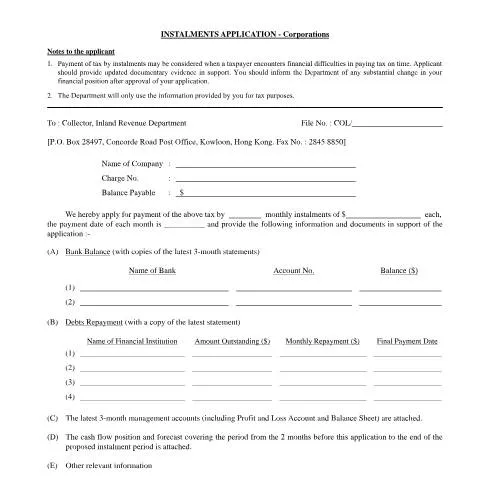
Understanding the Instalments Application - Corporations
Navigating the intricacies of tax payments in Hong Kong can be daunting, particularly for corporations facing financial hurdles. The Instalments Application – Corporations (IR 1360B) serves as a critical tool for companies grappling with tax obligations. This document enables organizations to apply for the option to pay their tax dues in manageable instalments, rather than in a lump sum, alleviating immediate financial pressure.
The Role of the Inland Revenue Department in Tax Instalments
When corporations find themselves in a challenging financial situation, the Inland Revenue Department (IRD) plays a vital role in assessing their applications for tax payment by instalments. The department evaluates the financial conditions presented in the application, including current financial statements and any debts owed while ensuring compliance with the Basic Law of the Hong Kong Special Administrative Region.
Assessment Process
The IRD conducts a thorough review of the documentation submitted alongside the application. This includes:
- Bank Statements: Recent statements demonstrating the corporation's liquidity.
- Debt Repayment Plans: Current obligations that may affect the corporation's ability to meet tax liabilities.
- Management Accounts: Profit and loss statements alongside balance sheets to provide insight into financial health.
Understanding the assessment process is crucial for corporations, as it directly impacts the likelihood of approval.
Who Should File the Instalments Application?
This application is not merely for any corporation—it is tailored for those demonstrating genuine financial distress. The IRD expects applicants to provide substantive evidence supporting their claim, which could encompass:
- Significant declines in revenue.
- Unexpected expenses or liabilities that jeopardize cash flow.
- Economic downturns affecting the company's specific industry.
Corporations that do not exhibit financial difficulties may face difficulties in gaining approval for their application.
Navigating the Completion of the Application
Filling out the IR 1360B form requires precision and attention to detail. Each section of the form serves a specific purpose and must be completed meticulously to avoid delays.
Deciphering the Form: A Breakdown
Understanding each field in the form is essential for a successful application. Here’s a detailed look at the main sections:
| Section | Description | Common Pitfalls |
|---|---|---|
| Name of Company | The legal name of the corporation. | Inaccurate or abbreviated company names can lead to confusion. |
| Balance Payable | Total amount of tax owed. | Omitting additional charges may lead to discrepancies. |
| Bank Balance | Details of the corporation's current financial status. | Failure to provide updated statements may hinder the application. |
| Debts Repayment | Listing outstanding debts and repayment schedules. | Inaccurate amounts or missing statements will complicate assessment. |
| Management Accounts | Providing recent financial performance data. | Incompleteness can undermine the application’s credibility. |
Submission Channels: Online vs. Paper vs. In-Person
Corporations have several options when it comes to submitting the IR 1360B form. Each channel offers distinct advantages, and choosing the right one can significantly impact the processing time and ease of follow-up.
Online Submission
Submitting the application through the IRD's e-service platform is often the most efficient method. Benefits include:
- Immediate confirmation of submission.
- Reduced paperwork and faster processing times.
- Convenience of accessing the service 24/7.
Paper Submission
For those who prefer traditional methods, submitting a paper application is still viable. However, corporations must account for potential delays in processing.
In-Person Submission
Visiting the IRD office can be advantageous for complex cases. This method allows for direct interaction with staff, enabling clarification of queries and immediate feedback. However, this option may require waiting in line, so it’s advisable to schedule appointments when possible.
What to Expect After Submission
Upon submitting the application, corporations must be prepared for the next steps. The IRD will review the documentation and may require additional information to support the application. Understanding these potential follow-up actions can help streamline the process.
Follow-Up Actions
Corporations might need to:
- Provide further documentation to clarify financial standing.
- Attend a meeting with IRD representatives to discuss the application.
- Respond promptly to any queries or notices from the IRD.
Staying proactive during this phase can significantly influence the outcome of the application.
Dealing with Refusals, Errors, or Missing Documents
Receiving a refusal or discovering errors in the application can be disheartening. However, understanding the avenues available for rectification is crucial.
Addressing Refusals
If the application is denied, corporations may appeal the decision. This process entails:
- Reviewing the reasons for denial outlined by the IRD.
- Submitting a revised application with additional documentation or clarification.
- Engaging legal or tax professionals if needed to bolster the appeal.
Rectifying Errors
For minor errors in the application, contacting the IRD promptly can lead to corrections before the application undergoes final assessment. Timeliness is key—errors not addressed quickly can lead to an outright rejection.
Understanding Your Obligations After Approval
Once the IRD grants approval for the instalment application, it is essential to adhere to the stipulated payment schedule. Failure to meet these obligations can result in penalties or surcharges.
Penalties and Surcharges
The IRD may impose a surcharge of up to 5% on unpaid balances. Moreover, if payments continue to be missed, additional surcharges could apply. Keeping track of payment dates and amounts is vital for compliance and avoiding unnecessary financial strain.
Final Considerations: Preparing for Future Applications
Successful navigation of the IR 1360B form can pave the way for future applications. Understanding the nuances of financial documentation, as well as the IRD's expectations, can enhance the process significantly. It is advisable for corporations to maintain robust financial records and be prepared to justify any requests for payment instalments proactively.
In summary, the Instalments Application - Corporations (IR 1360B) provides a significant avenue for companies in financial distress to manage their tax obligations more effectively. By understanding the intricacies of the application process and the requirements set forth by the Inland Revenue Department, corporations can position themselves for greater financial stability and compliance.
Understanding the Installments Application Process for Corporations in Hong Kong
The installments application process for corporations in Hong Kong is a critical aspect of managing cash flow and ensuring compliance with local tax obligations. To effectively navigate this process, it is essential to grasp the fundamental principles and steps involved. Corporations may apply to the Inland Revenue Department (IRD) for an installment arrangement if they face difficulties in settling their tax liabilities in one lump sum. This arrangement allows them to spread their tax payments over a specified period, easing the financial burden.
To initiate the application, the corporation must complete the relevant forms, such as the IR56G form, detailing their financial situation. It's important to provide accurate and comprehensive information, including the corporation’s income, expenditures, and any other pertinent financial data. This information enables the IRD to assess the application more efficiently.
Key Considerations for a Successful Application
When preparing an installments application, several factors must be considered to increase the likelihood of approval:
- Timeliness: Submit the application well before the tax payment due date. The IRD requires a minimum processing time, and delays may lead to penalties for late payment.
- Financial Documentation: Include supporting documents such as bank statements, financial reports, and proof of current liabilities. This helps establish the corporation's ability to meet proposed payment terms.
- Proposed Payment Schedule: Clearly outline a realistic payment plan that aligns with the corporation's cash flow. Consider factors such as seasonal revenue fluctuations and operational expenses.
- Communication: Maintain open lines of communication with the IRD throughout the process. If any changes occur in the corporation's financial situation, inform the IRD promptly to adjust the payment plan if necessary.
Common Challenges and How to Overcome Them
While the installments application process is designed to assist corporations, several challenges can arise:
- Documentation Requirements: Corporations may struggle to gather adequate financial documentation. To overcome this, it’s advisable to implement a robust record-keeping system annually, ensuring that all financial transactions are documented clearly.
- Rejection of Application: If an application is rejected, it’s crucial to examine the reasons for denial. The IRD typically provides feedback on the decision, allowing corporations to address any shortcomings and reapply. Understanding the rejection reasons can guide amendments to the financial data or proposed payment schedules.
- Changing Financial Circumstances: A sudden downturn in business can complicate an existing installment plan. It’s essential to notify the IRD of such changes immediately, as they may allow for renegotiation of terms or temporary suspension of payments.