Navigating the Intricacies of the IR 1314B: A Deep Dive into the Certificate of Resident Status
In the complex world of international taxation, individuals often encounter challenges when it comes to understanding their obligations and rights across borders. One crucial element in this landscape is the Certificate of Resident Status (IR 1314B), issued by the Inland Revenue Department of Hong Kong. This certificate is vital for those seeking to claim benefits under Double Taxation Agreements (DTAs), ensuring that individuals do not face double tax burdens on the same income in different jurisdictions. Let’s explore the intricacies of obtaining this certificate, its legal value, eligibility criteria, and its practical implications.
Understanding the Legal Weight of the Certificate
The IR 1314B certificate serves as an official declaration of an individual's tax residency status in Hong Kong. This certificate holds significant legal weight, as it is issued under the framework of the Double Taxation Relief measures, designed to prevent the same income from being taxed in multiple countries.
The Jurisdictional Importance
When applying for this certificate, it’s essential to recognize that its value extends beyond mere documentation. The certificate acts as proof to foreign tax authorities that the individual is a tax resident of Hong Kong. This status can significantly affect the tax liabilities of the individual in the relevant jurisdiction, potentially leading to reduced tax rates or exemptions.
Key Elements of the Certificate
- Identification of the Individual: The certificate clearly identifies the individual applying, including their Hong Kong Identity Card number and other personal details.
- Specified Income: It outlines the types of income for which the individual seeks tax benefits under the DTA.
- Calendar Year of Claim: It specifies the calendar years for which the claim applies, providing clarity on tax reporting periods.
Who Qualifies for the Certificate? Defining Eligibility
Not everyone residing in Hong Kong is automatically eligible for the Certificate of Resident Status. The eligibility criteria encompass specific conditions that applicants must meet. Understanding these prerequisites is crucial for a successful application process.
Residency Requirements
To qualify for the IR 1314B, applicants are required to demonstrate that they "ordinarily reside" in Hong Kong. This is typically interpreted as having a permanent home in the region. The following factors are taken into account:
- Duration of Stay: The applicant must have resided in Hong Kong for a substantial part of the relevant tax year, which runs from April 1 to March 31 of the following year.
- Nature of Employment: Individuals engaged in business or employment are often considered favorable candidates, especially if they can show significant economic ties to Hong Kong.
- Family Ties: Those with families residing in Hong Kong are likely to meet the residency criteria more easily.
Specific Conditions for Application
In addition to residency, applicants must ensure that they are compliant with the following conditions:
- The applicant should not have tax residency in another jurisdiction concurrently, as this could jeopardize the application.
- The income for which benefits are being sought must be clearly outlined and must fall under the specific agreements detailed in the DTA.
The Application Process: Step-by-Step Guidance
Obtaining the IR 1314B certificate requires careful attention to detail and adherence to specific procedural steps. Here, we will break down the application into manageable stages.
Gathering Necessary Documentation
Before starting the application, it’s essential to collect the requisite documents that substantiate your claim:
- Identification Documents: A valid Hong Kong Identity Card and, if necessary, a passport.
- Proof of Residency: Documentary evidence demonstrating periods of stay in Hong Kong, such as rental agreements, utility bills, or travel itineraries.
- Income Documentation: Any documents related to the income for which the DTA benefits are sought.
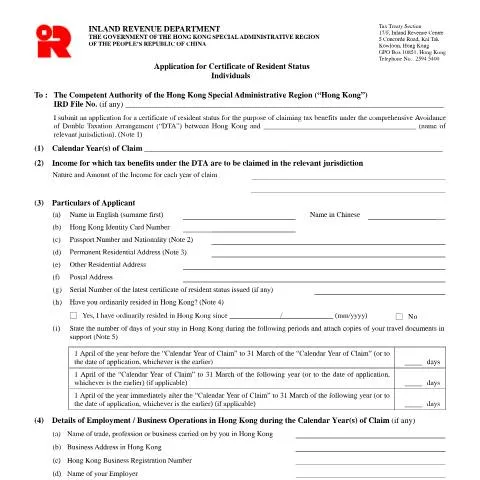
Filling Out the IR 1314B Form
The next step involves completing the application form thoroughly. Below are key sections to focus on:
| Section | Description |
|---|---|
| Particulars of Applicant | Ensure all personal details are accurate, including names, addresses, and IDs. |
| Details of Income | Clearly specify the income types and the years for which the claim is made. |
| Employment Details | Provide thorough information about your work in Hong Kong, including your employer’s details. |
Submitting the Application
Once the form is completed, the next step is submission. The application can be submitted directly to the Inland Revenue Department, with the following methods:
- In Person: Applicants can visit the Inland Revenue Centre in Kowloon.
- By Mail: Applications can also be sent to GPO Box 10851, Hong Kong.
It’s crucial to keep a copy of all submitted documents for your records.
Validity Period and Renewal of the Certificate
The Certificate of Resident Status is not indefinite and comes with its own validity terms. Understanding these can help in planning future applications.
Duration of Validity
The certificate is typically valid for the specified tax year indicated. For example, if the application is made for the tax year 2023, it will cover the period from April 1, 2023, to March 31, 2024.
Renewal Considerations
As situations change, individuals may need to renew their certificate. The renewal process generally follows the same steps as the initial application, but it is crucial to:
- Check that the circumstances surrounding your residency status have not changed.
- Resubmit updated documentation that reflects any changes in your personal or employment situation.
Handling Issues: Loss, Errors, or Disputes
Like any official document, the Certificate of Resident Status can be subject to mishaps. Knowing how to navigate these issues can save time and stress.
What to Do in Case of Loss
If the certificate is lost, applicants should promptly contact the Inland Revenue Department to report the issue. A replacement certificate can be requested, necessitating a formal application detailing the loss.
Addressing Errors on the Certificate
In instances where incorrect information appears on the certificate, the applicant must request a correction through a formal letter. This should include:
- Details of the error.
- Supporting documents proving the correct information.
Navigating Disputes with Tax Authorities
In cases where tax authorities in another jurisdiction dispute your residency status based on the IR 1314B, it’s crucial to:
- Gather all correspondence from the foreign tax authority.
- Provide additional supporting documentation as requested.
- Consider seeking advice from a tax professional who specializes in international taxation.
Disputes can escalate quickly, so addressing them promptly and effectively is essential.
Final Reflections: The Broader Implications of Tax Residency
The process of obtaining the Certificate of Resident Status in Hong Kong is a pivotal step for many professionals and expatriates aiming to navigate their tax obligations effectively. Beyond the procedural aspects, understanding the concept of tax residency and its implications for international income is crucial in today’s global economy.
Mastering this knowledge not only empowers individuals to make informed financial decisions but also protects them from potential legal pitfalls associated with tax compliance.
As the landscape of global taxation continues to evolve, keeping abreast of local regulations and international agreements will be essential for anyone engaged in cross-border economic activity.
Fill in your form directly online
No printing: type your details into the boxes of the official form, tick, then download the PDF ready to send.
- 1Type into the form boxes
- 2Tick in one click
- 3Save and download the PDF
Understanding the Certificate of Resident Status for Tax Purposes
The Certificate of Resident Status is crucial for individuals seeking to establish their tax residency in Hong Kong. This certificate is particularly important for individuals engaged in cross-border activities, as it enables them to benefit from Double Taxation Agreements (DTAs) that Hong Kong has with various jurisdictions. Under these agreements, residents are protected from being taxed on the same income in multiple territories.
To qualify for the Certificate, one must demonstrate their connection to Hong Kong through various criteria such as their physical presence, employment status, or business operations. The Hong Kong Inland Revenue Department (IRD) utilizes specific guidelines to assess residency, which may include the duration of stay in the territory and the nature of the ties to both Hong Kong and the foreign country involved.
It is essential to note that the application process often involves a detailed examination of personal circumstances, and applicants should be prepared to provide extensive documentation to substantiate their claim. Commonly required documents may include proof of stay in Hong Kong, employment letters, and evidence of any property ownership or business interests.
Navigating the Application Process: Tips and Best Practices
When applying for the Certificate of Resident Status, individuals should be aware of several best practices that can streamline the process. First, ensuring that all documentation is organized and readily available can significantly expedite the review by the IRD. Furthermore, applicants are advised to maintain clear and open communication with the IRD, as this can facilitate prompt responses to any queries or requests for additional information.
Moreover, online submissions through the IRD’s e-services can speed up processing times. Submitting the application electronically allows for immediate acknowledgement and tracking, which is not always possible with paper submissions. Ensure that the forms are filled out correctly to avoid delays; mistakes or omissions could lead to requests for resubmission.
It’s also worth considering the timing of the application. Submitting the application well in advance of any upcoming financial obligations is prudent, particularly for individuals who are relying on the certificate for tax relief purposes. For example, if one anticipates making a significant income that may be taxable in another jurisdiction, securing the Certificate of Resident Status ahead of time can mitigate complications related to tax filings.
Common Challenges and How to Overcome Them
Despite the structured approach to applying for the Certificate of Resident Status, applicants may encounter challenges along the way. One common issue is the difficulty in proving sufficient ties to Hong Kong. Individuals with intermittent stays may struggle to demonstrate their residency convincingly. In such cases, it is advisable to gather supplementary documentation, such as bank statements, utility bills, or lease agreements, that can substantiate a more permanent presence in the territory.
Another challenge can arise from misunderstandings regarding the nature of the documentation required. The IRD is strict about the authenticity and relevance of the documents submitted, so applicants should ensure that all paperwork is up-to-date and pertinent to their claims. Consulting with tax professionals who are well-versed in Hong Kong’s tax laws can be beneficial for navigating these challenges effectively.
Furthermore, be prepared for potential delays in processing. While the IRD aims to handle applications swiftly, external factors can impact timelines. Staying proactive by following up on the status of the application can help applicants stay informed and reduce anxiety over the process.