Unlocking the Benefits: The Certificate of Resident Status (IR 1313B)
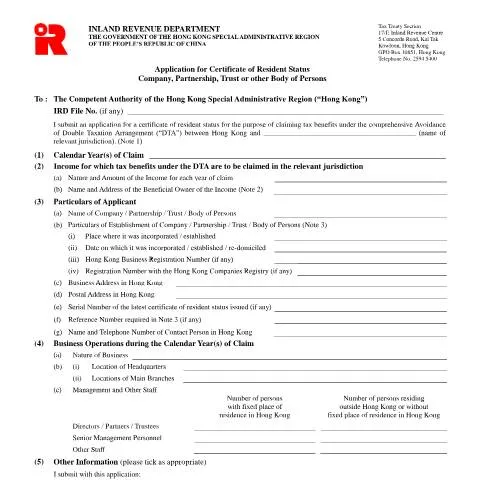
In the intricate world of international taxation, the Application for Certificate of Resident Status (Company, Partnership, Trust or other Body of Persons) — commonly referred to as IR 1313B — plays a pivotal role for entities in Hong Kong. This document is essential for businesses seeking to leverage the benefits of double taxation relief agreements (DTA) between Hong Kong and other jurisdictions. Understanding this certificate is crucial for any organization aiming to optimize its tax situation while remaining compliant with local laws.
Who Qualifies for the Certificate: Exploring Eligibility Criteria
Understanding who can apply for the Certificate of Resident Status is the first step in this process. Not every business entity qualifies; hence, it's vital to delineate the specifics surrounding eligibility.
Types of Entities Eligible for IR 1313B
- Companies: Those incorporated under the Companies Ordinance.
- Partnerships: Including limited partnerships registered in Hong Kong.
- Trusts: Entities established under the relevant trust laws.
- Other Bodies of Persons: Any organized collection of individuals meeting the criteria outlined by the Inland Revenue Department.
Conditions for Application
To be eligible, the applicant must:
- Demonstrate a substantive presence in Hong Kong.
- Provide accurate financial information regarding income for the claim years.
- Show compliance with local business regulations and tax obligations.
It is essential that applicants prepare these documents meticulously, as any discrepancies can delay the application process.
Step-by-Step Journey: How to Obtain the Certificate
Acquiring the Certificate of Resident Status involves a detailed process. Here's a breakdown of the steps required:
1. Preparation of Necessary Documents
Before submitting the application, it’s imperative to gather all required documentation:
- Certificate of Incorporation: For companies, this serves as proof of registration.
- Partnership Agreement: For partnerships, detailing the roles and contributions of each partner.
- Trust Deed: For trusts, confirming its establishment and operational guidelines.
- Financial Statements: These should reflect income generated during the claim years.
2. Completing the Application Form
The IR 1313B form requires detailed information about:
- The nature of the income and the beneficial owner.
- The particulars of the applicant including business registration number and addresses.
- Business operations that occurred during the calendar years of claim.
Each section must be filled out with precision to avoid rejection or delays.
3. Submission to the Inland Revenue Department
Once the application is completed and all documentation is attached, it must be submitted to:
- The Tax Treaty Section of the Inland Revenue Department
- Physical address: 17/F, Inland Revenue Centre, 5 Concord Road, Kai Tak, Kowloon, Hong Kong
4. Awaiting Confirmation
Upon submission, the Inland Revenue Department will review the application:
- They may request additional information if required.
- A certificate will be issued if the application meets all conditions.
The Legal Value of the Certificate: What It Confirms
The Certificate of Resident Status serves a vital purpose within the framework of international taxation and compliance. Its legal value extends beyond mere formalities.
Tax Residency Confirmation
Issuance of the certificate confirms that the entity is considered a tax resident of Hong Kong. This classification is crucial for:
- Claiming benefits under double taxation agreements.
- Establishing eligibility for reduced withholding tax rates on income such as dividends and royalties.
Implications for International Operations
For businesses operating across borders, having this certificate:
- Reduces the overall tax burden.
- Enhances credibility with foreign partners and tax authorities.
- Facilitates smoother transactions and potential negotiations for favorable tax treatment.
Post-Approval Scenarios: Handling Errors and Controversies
Once the certificate is obtained, it is essential to be prepared for possible errors or disputes.
What to Do in Case of Errors
If there are mistakes or missing information on the certificate, entities must act swiftly. The process typically involves:
- Contacting the Inland Revenue Department with the relevant details.
- Providing corrected information or documentation as required.
- Filing a formal request for correction, ensuring that such requests are made promptly to avoid compliance issues.
Disputes and Contestations
If a disagreement arises regarding the certificate’s issuance or the benefits claimed, entities should consider:
- Engaging with a tax advisor or legal practitioner specializing in Hong Kong tax law.
- Preparing to provide comprehensive evidence supporting their resident status and eligibility for deductions.
Utilizing the Certificate: Practical Applications and Requirements
The Certificate of Resident Status is not a one-time document; it serves multiple purposes throughout the business lifecycle in Hong Kong.
Common Uses of the Certificate
- Tax Filing: Required when submitting income tax returns to claim DTA benefits.
- Investment Opportunities: Necessary for attracting investments from foreign entities that require proof of tax residency.
- Financial Transactions: Helps negotiate better terms with international partners and clients.
Entities Requesting the Certificate
Various organizations may require or request proof of resident status, including:
- Foreign tax authorities when claiming tax credits.
- Banks and financial institutions for loan applications and investment evaluations.
- Business partners during contractual negotiations.
Duration and Renewal: Keeping the Certificate Current
Understanding the lifespan of the Certificate of Resident Status is crucial for maintaining compliance and benefiting from its advantages.
Validity Period
The certificate is generally valid for a specified period, often aligned with the tax years claimed. It is essential for applicants to:
- Monitor the expiration date.
- Ensure they renew it as needed to avoid lapses in residency status for taxation purposes.
Renewal Process
Renewing the certificate involves a process similar to the initial application:
- Submit a new application form (IR 1313B) with updated financial and operational details.
- Provide documentation reflecting any changes in business structure or financial status since the last issuance.
Final Thoughts: The Strategic Importance of Understanding IR 1313B
In summary, the Application for Certificate of Resident Status (IR 1313B) stands as a critical instrument for companies, partnerships, trusts, and other bodies operating within and beyond Hong Kong. Its significance extends to reducing tax burdens and establishing a firm’s credibility in the international arena.
Entities must not only understand the mechanics of obtaining this certificate but also appreciate its role in broader business strategies. By being proactive in managing their tax residency status, businesses can navigate the complexities of international taxation more effectively.
Understanding the Importance of Certificate of Resident Status in Hong Kong
The Certificate of Resident Status is crucial for entities operating in Hong Kong, as it serves as an official document confirming an organization's residency status for tax purposes. This certificate can significantly impact tax obligations, particularly in relation to Double Taxation Agreements (DTAs) that Hong Kong has with numerous countries. By establishing a company, partnership, trust, or other body of persons as a tax resident in Hong Kong, entities can benefit from reduced withholding tax rates on dividends, interest, and royalties, thereby optimizing their overall tax liabilities.
Furthermore, possessing a Certificate of Resident Status can facilitate smoother international operations and enhance credibility in the eyes of global partners and investors. For instance, foreign investors are often more inclined to engage with entities that demonstrate a clear and formal residency status, as it indicates compliance with local tax regulations and represents a level of corporate responsibility.
Moreover, organizations that are eligible for the certificate can leverage it in various financing arrangements or capital raising exercises. Lenders and financial institutions may require proof of residency to assess risk and compliance during due diligence processes. Hence, obtaining this certificate not only serves a regulatory purpose but can also be pivotal in ensuring better financial terms and access to capital opportunities.
Step-by-Step Guide to the Application Process
Applying for a Certificate of Resident Status involves a series of structured steps. Below is a detailed guide to navigating this process effectively.
- Determine Eligibility: Before proceeding with the application, ensure that your entity qualifies as a tax resident in Hong Kong. This typically entails meeting specific criteria, such as being incorporated, registered, or conducting business in the region.
- Gather Necessary Documentation: Compile all relevant documentation that supports your application. This may include your entity's registration documents, tax returns for the previous tax year, and any agreements that demonstrate the business’s operations in Hong Kong.
- Complete the Specified Form: Fill out the designated application form for the Certificate of Resident Status, known as IRD Form D. This form requires detailed information about the entity, including its registration number, nature of business, and the period for which residency is being claimed.
- Submission of Application: Submit the completed form along with all supporting documents to the Hong Kong Inland Revenue Department (IRD). Applications can be lodged in person or electronically through the IRD's e-services portal, adhering strictly to any deadlines set forth by the department.
- Await Processing: After submission, the IRD will review the application and may request additional information or clarification. It is essential to respond promptly to any inquiries to avoid delays.
- Receive Certificate: Upon approval, the Certificate of Resident Status will be issued. Ensure to check the details on the certificate for accuracy, as any discrepancies may lead to complications in the future.
It is worth noting that while the application process may seem straightforward, it can involve intricacies specific to different types of entities. Each category—be it companies, partnerships, or trusts—may have unique requirements that necessitate careful consideration and potentially specialized advice from tax professionals.
Potential Challenges and Considerations in Application
While the application for a Certificate of Resident Status may seem routine, there are various challenges that applicants may face throughout the process. Recognizing these potential hurdles can prepare applicants for a smoother journey.
One significant challenge is ensuring that all documentation is accurate and comprehensive. Incomplete or incorrect information can lead to delays or even rejection of the application. Therefore, it is advisable to conduct a thorough review of all materials before submission. Enlisting the help of a tax consultant or legal advisor can also be beneficial, as they can provide insights tailored to your specific entity type and situation.
Another consideration is the timeline for processing applications, which can vary depending on the volume of submissions at the Inland Revenue Department. Applicants should factor in potential waiting periods and plan accordingly, especially if the certificate is needed for specific time-sensitive tax benefits or compliance requirements.
Moreover, applicants must be aware of the implications of their residency status on their operations outside of Hong Kong. While the Certificate of Resident Status allows for benefits under DTAs, entities with operations in multiple jurisdictions must consider the broader tax implications and compliance requirements that may arise, especially in light of evolving international tax regulations.
In situations where an application is rejected or additional information is required, it is crucial to maintain open lines of communication with the IRD. Prompt and transparent responses can often resolve issues more swiftly and prevent further complications. Keeping detailed records of all interactions and submissions can also assist in this regard.
Lastly, applicants should stay informed about changes in tax laws or policies that may affect their residency status or the application process itself. Regularly consulting with tax advisors and monitoring updates from the Inland Revenue Department can help ensure compliance and optimize tax strategy effectively.