Unlocking the Importance of the Statement of Tax Reserve Certificates
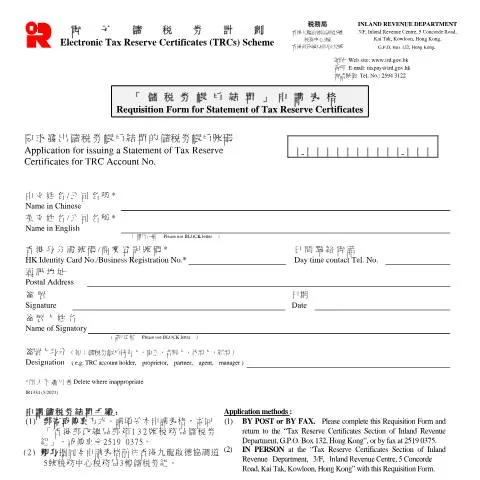
In the realm of Hong Kong's intricate tax landscape, the Statement of Tax Reserve Certificates - Requisition Form (IR 1334) plays a pivotal role. It serves as a crucial document for taxpayers, particularly for those who wish to engage with the Inland Revenue Department (IRD) in matters concerning tax reserve certificates. Understanding this form, its requisition process, and its implications can significantly impact individuals and businesses alike.
Understanding the Essentials: What Does the Statement Signify?
The Statement of Tax Reserve Certificates acts as a formal attestation issued by the IRD, confirming the issuance and balance of tax reserve certificates associated with a particular taxpayer’s TRC account. These certificates are vital for taxpayers looking to manage their taxation effectively, and they serve multiple purposes in the financial landscape of Hong Kong.
The Legal Standing of the Document
This document carries significant weight in legal and financial dealings. It validates the taxpayer’s ability to engage in various financial transactions where tax compliance is paramount. The statement is particularly required when:
- Applying for loans or credit facilities from banks.
- Negotiating contracts where tax compliance is a prerequisite.
- Proving tax standing for property transactions or investments.
As such, its legal implications cannot be overstated, making it an indispensable part of a taxpayer's documentation.
Who is Eligible to Request This Statement?
The requisition for the Statement of Tax Reserve Certificates is primarily reserved for the TRC account holders. This includes individuals and entities who have successfully registered for tax reserve certificates under the IRD's Electronic Tax Reserve Certificates Scheme. However, certain conditions must be met to ensure eligibility:
Criteria for Eligibility
- Account Holder Status: Only the official TRC account holder can apply or their authorized representatives.
- Proper Documentation: Applicants must provide complete and accurate personal and business information on the requisition form.
- Timeliness: Requests should be made within a relevant timeframe to ensure that the balance reflects current standings.
Navigating the Requisition Process
Obtaining the Statement of Tax Reserve Certificates involves a methodical approach. Here’s a detailed look at how to navigate the requisition process:
Step-by-Step Guide to the Requisition
- Complete the Requisition Form: Fill out the IR 1334 form accurately, ensuring that all fields are completed.
- Submission Methods: The form can be submitted via two primary methods:
- By Post: Send the completed form to the Tax Reserve Certificates Section of the Inland Revenue Department.
- In Person: Deliver the form directly to the Tax Reserve Certificates Section at the Inland Revenue Centre.
- Await Confirmation: Once submitted, the IRD typically processes requests swiftly, providing confirmation along with the statement.
Duration and Validity of the Statement
Once issued, the Statement of Tax Reserve Certificates is valid for a specified duration. This period can vary based on the nature of the request and the financial institutions involved. It’s noteworthy that:
Validity Periods and Extensions
| Type of Request | Validity Period | Extension Policy |
|---|---|---|
| Loan Applications | 6 months | Renewal possible upon request |
| Property Transactions | 3 months | No extensions allowed |
| Contract Negotiations | Variable, based on agreement | Review required |
It's essential to note that users are advised to apply for a new statement if the existing one is nearing expiration before any critical transactions.
Addressing Issues: What to Do in Case of Loss or Errors
In the unfortunate event of a lost statement or if discrepancies arise, it’s crucial to know the appropriate steps to rectify the situation. The IRD has established procedures to address such issues effectively.
Steps to Take for Loss or Errors
- Report the Loss: Notify the IRD immediately if the statement is lost. This can typically be done via email or phone.
- Request a Duplicate: Submit a request for a duplicate statement using the IR 1334 form again, ensuring to indicate that it is a request for a replacement due to loss.
- Dispute Resolution: If there are errors on the statement, provide supporting documentation to the IRD to clarify discrepancies. This may involve submitting additional forms or evidence related to tax filings.
Swift action can prevent complications, especially in time-sensitive situations like loan applications or property purchases.
Practical Uses of the Statement: A Gateway to Financial Opportunities
This statement is not just a piece of paper; it opens doors to various financial opportunities, and several entities require it as proof of tax compliance. Here are some typical uses:
Financial Transactions Requiring the Statement
- Banks and Financial Institutions: Many banks demand the statement for loan applications, ensuring that potential borrowers are tax-compliant.
- Real Estate Transactions: Property buyers and sellers may need to present this document to demonstrate their financial standing and tax compliance.
- Business Contracts: Companies or individuals entering into contracts may be required to furnish the statement as part of due diligence.
Understanding the practical applications of the Statement of Tax Reserve Certificates can assist taxpayers in leveraging it effectively in various financial dealings.
Engaging with Tax Authorities: Staying Informed
Maintaining open lines of communication with the IRD can facilitate a smoother process in acquiring the statement. Regularly checking updates or changes in policies can be beneficial.
Key Communication Channels
- Email: Reach out to the IRD at [email protected] for inquiries related to the statement and other tax-related questions.
- Phone: Call the IRD at +852 2594 3122 for immediate assistance or clarification regarding the requisition process.
- Website: Visit the official IRD website to access forms, guidelines, and further information regarding tax compliance matters.
Through proactive engagement, taxpayers can navigate the complexities of tax compliance more effectively and avoid potential pitfalls.
Conclusion: Maximizing the Value of Your Tax Reserve Certificate Statement
Ultimately, the Statement of Tax Reserve Certificates - Requisition Form (IR 1334) is more than a mere administrative tool; it embodies the essence of financial responsibility and compliance in Hong Kong's tax system. By understanding its significance, navigating the requisition process efficiently, and recognizing its practical applications, taxpayers can effectively leverage this document in their financial endeavors. Whether it’s for securing loans, engaging in property transactions, or entering into contracts, the statement stands as a testament to tax compliance, thus enhancing financial credibility in a complex economic environment.
Understanding the Tax Reserve Certificates System
The Tax Reserve Certificates (TRC) system in Hong Kong is an integral component of the territory's tax framework, designed to allow taxpayers to manage their tax liabilities more efficiently. Essentially, a TRC is a financial instrument issued by the Hong Kong Inland Revenue Department (IRD) that enables individuals and corporations to reserve a specific amount for future tax payments. This mechanism can be particularly beneficial for those anticipating a potential tax liability that may arise due to business profits, capital gains, or other taxable income.
Taxpayers can purchase TRCs to essentially lock in a tax payment at today's rates, protecting against potential future increases in tax rates or changes in tax policy. It also offers a systematic approach to tax payments, allowing for better cash flow management. The nuances of this system include understanding the minimum and maximum denominations of TRCs, which may vary, and how they can be redeemed against a taxpayer's liabilities upon submission of the relevant tax returns.
The process of acquiring a TRC involves filling out the requisite forms and providing necessary documentation to the IRD. Taxpayers should pay attention to the specific deadlines associated with these transactions, particularly in relation to their overall tax year which runs from 1 April to 31 March. Additionally, it is critical to keep abreast of any changes in tax legislation that may affect the availability or terms of TRCs.
Eligibility Criteria for Requisitioning Tax Reserve Certificates
While the process of requisitioning Tax Reserve Certificates may seem straightforward, understanding the eligibility criteria is essential for taxpayers wishing to utilize this financial instrument. Generally, any individual or corporation subject to taxation within Hong Kong can apply for a TRC, provided they meet certain conditions.
Entities such as sole proprietors, partnerships, and limited companies are typically eligible. However, those who have outstanding tax arrears or are currently under investigation for tax-related offenses may find themselves ineligible until those matters are resolved. Additionally, foreign entities engaged in business operations within Hong Kong must ensure that their tax status allows them to obtain TRCs. Compliance with the Basic Law of the Hong Kong Special Administrative Region is paramount, and taxpayers must provide clear documentation proving their eligibility.
Furthermore, it is crucial to consider the implications of using TRCs in tandem with other tax relief measures, such as those aimed at SMEs (Small and Medium Enterprises), as they may affect the overall tax liability and planning strategy. Engaging with a tax professional can provide clarity on how TRCs fit into one's broader tax strategy and ensure compliance with local regulations and requirements.
Common Pitfalls and Best Practices for Handling TRC Requisitions
Despite the advantages of Tax Reserve Certificates, taxpayers often encounter pitfalls that can complicate the requisition process. One such common mistake is the miscalculation of the required reserve amount. Taxpayers should take meticulous care to estimate their likely tax liabilities accurately, taking into account factors such as changes in income, capital gains, or other financial considerations that may affect their tax bracket.
Additionally, failing to submit the requisition form within the stipulated time frame can result in missed opportunities, especially if there are opportunities available to lock in lower tax rates. The IRD provides detailed guidelines on deadlines, and taxpayers are encouraged to set reminders and use e-services for timely submission.
Best practices for handling TRC requisitions include maintaining thorough records of all financial transactions and consulting with tax advisors to receive tailored advice. Utilizing potential e-services provided by the IRD can streamline the requisition process, making it easier to track submissions and manage tax liabilities effectively. By being proactive and informed, taxpayers can navigate the complexities of the TRC system more effectively, minimizing potential risks and maximizing their financial planning capabilities.