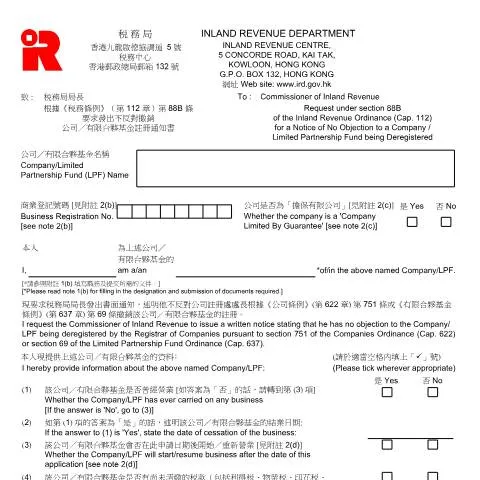
Understanding Form IR1263: A Crucial Step in Company Deregistration
In Hong Kong, companies and limited partnership funds (LPFs) may find themselves in situations where deregistration is necessary. Whether due to business cessation or strategic restructuring, the process is governed by specific legal frameworks. The Request under section 88B of the Inland Revenue Ordinance (Cap. 112) for a Notice of No Objection to a Company / Limited Partnership Fund being Deregistered, known as Form IR1263, serves as a formal request to the Commissioner of Inland Revenue (CIR) for permission to deregister.
Key Elements of Form IR1263
The form is structured to gather essential information regarding the company or LPF in question. Let's delve into the critical sections and what they entail:
- Company Information: Basic details such as the business registration number and whether the entity is a "Company Limited By Guarantee" are requested.
- Business Operations: The form requires clarification on whether the company or LPF has been operational, including the date of cessation if applicable.
- Tax Obligations: It explicitly asks if there are any outstanding tax liabilities or unfiled tax returns, highlighting the importance of clearing these before proceeding with deregistration.
- Future Operations: An inquiry regarding any intention to resume business after the application date is crucial to prevent issues post-deregistration.
Navigating the Deregistration Process: Common Misunderstandings
When considering deregistration, companies often encounter various misconceptions about the process and requirements of Form IR1263. Here are some prevalent misunderstandings:
- Assuming Automatic Approval: Many entities mistakenly believe that submitting Form IR1263 guarantees deregistration. The CIR evaluates the request based on several factors, including outstanding tax matters.
- Underestimating Tax Obligations: A common pitfall is neglecting to clear tax liabilities before application. The form clearly states that if there are outstanding dues, the request will not be processed.
- Form Completeness is Optional: Completeness is critical; applications with missing information or documents will not be processed. All items must be filled out accurately.
Interconnections with Other Documents in the Deregistration Framework
Form IR1263 does not operate in isolation. It is part of a broader regulatory landscape that includes several associated forms and legal documents. Understanding these interconnections is vital:
- Companies Ordinance (Cap. 622): This legislation governs the deregistration of companies. Form IR1263 refers to sections of this ordinance, outlining the prerequisites for deregistration.
- Limited Partnership Fund Ordinance (Cap. 637): Similar to the Companies Ordinance, this regulation applies to limited partnership funds, and the form facilitates compliance with its requirements.
- Supporting Documentation: Depending on the situation, other documents such as tax clearance certificates or statutory declarations may be required to accompany Form IR1263.
Who Needs to File Form IR1263 and Under What Circumstances?
This form is specifically tailored for companies and LPFs that are not operational or wish to cease their business activities legally. Specific scenarios warrant the filing of Form IR1263:
- Closure of Business: Entities that have ceased operations and wish to deregister must file this application.
- Strategic Business Decisions: Companies restructuring or merging may choose deregistration of one entity while retaining another, necessitating the use of this form.
Limitations and Scope of Form IR1263
While Form IR1263 is vital for initiating the deregistration process, it has its limitations that applicants must be aware of:
- Non-Refundable Fees: The application incurs a fee of $270, which is non-refundable regardless of the outcome, emphasizing the importance of ensuring all prerequisites are met before submission.
- Pending Tax Issues: If there are unresolved tax disputes or outstanding liabilities, the CIR will reject the request. The form does not allow for exceptions in this regard.
Critical Concepts Needed for Successful Deregistration
To navigate the deregistration process effectively, a comprehension of key concepts is essential:
- Deregistration vs. Liquidation: It is crucial to differentiate between deregistration and formal liquidation. Deregistration is generally simpler and applicable to companies without debts.
- Tax Clearance: Before submitting Form IR1263, ensure that all tax returns are filed, and liabilities are settled to avoid processing delays.
- Business Continuity Considerations: Reflect on future business plans and the implications of deregistration, especially if considering re-entry into the market later.
Step-by-Step Approach to Completing Form IR1263
Filing Form IR1263 involves a series of methodical steps to ensure compliance and successful deregistration:
- Gather Required Information: Collect all necessary details pertaining to the company or LPF, including business registration number and operational history.
- Assess Tax Obligations: Review outstanding tax liabilities and ensure all returns have been submitted to the Inland Revenue Department.
- Complete the Form: Accurately fill out each section of Form IR1263, ensuring all required fields are completed and documentation is attached.
- Submit the Application: Send the completed form and associated documents to the Inland Revenue Department, making sure to include the payment for the processing fee.
- Await Confirmation: After submission, monitor for communication from the CIR regarding the status of your application and address any follow-up inquiries.
Supplementary Resources and Support for Applicants
To aid in the effective use of Form IR1263, various resources are available:
- Inland Revenue Department Website: Comprehensive information, guidelines, and updates can be found on the official website.
- Consultation with Professionals: Engaging with tax consultants or legal advisors could provide clarity and bolster the application process.
- Workshops and Seminars: Many financial institutions and professional bodies offer sessions on tax compliance and deregistration processes to assist businesses.
Conclusion: Ensuring Compliance and Smooth Deregistration
Form IR1263 represents a critical aspect of the company deregistration process in Hong Kong. By understanding its requirements, common pitfalls, and the broader legal context, companies can navigate this administrative procedure with greater ease. Whether a company is winding down operations or restructuring for future growth, proper adherence to Form IR1263 will facilitate a smoother transition.
Understanding the Implications of Deregistration
Deregistration of a company or a Limited Partnership Fund in Hong Kong has significant implications, both legally and financially. Under section 88B of the Inland Revenue Ordinance (Cap. 112), the process of obtaining a Notice of No Objection from the Inland Revenue Department (IRD) is crucial before proceeding with deregistration. This section outlines the legal ramifications and the potential consequences for failing to comply with the requirements set forth by the IRD.
When a company is deregistered, all liabilities, including tax obligations, remain with the company unless formally addressed. Hence, it is vital for directors and shareholders to understand that deregistration does not absolve them from responsibilities regarding outstanding taxes or debts. Any pending tax matters, including filing of profits tax returns, must be resolved prior to applying for the Notice of No Objection.
Additionally, organizations considering deregistration should evaluate the possibility of reopening the company in the future. Once deregistration occurs, reinstating a company can be a time-consuming and complex process, which often requires a fresh incorporation cycle. Therefore, thorough consultation with legal and tax professionals is advised to ensure all angles are covered before initiating this process.
Steps to Prepare for Filing Form IR1263
The process of completing Form IR1263 (or IR1263A) requires careful preparation. Understanding the required documentation and ensuring all necessary information is included can significantly streamline the application process. Below are the crucial steps to follow when preparing to file this form:
- Gather Required Documents: Compile all necessary documents such as the latest financial statements, tax return declarations, and any correspondence with the IRD. This will aid in substantiating your application and ensuring its completeness.
- Check Tax Compliance: Before submitting your request, verify that all tax returns are filed, and any outstanding tax liabilities are settled. It's recommended to obtain a Tax Clearance Certificate if applicable, as this evidences good standing with the IRD.
- Complete the Form Accurately: Fill out the IR1263 form meticulously. Ensure that all sections are completed as per the guidelines provided in the instructions. Incorrect or incomplete information may lead to delays or rejection of your application.
- Seek Professional Advice: If there's any uncertainty regarding the information required or the implications of deregistration, consulting with tax professionals or legal advisors can be beneficial. Their expertise can help navigate complex scenarios and mitigate risks.
Common Challenges and How to Address Them
Several challenges may arise during the application process for a Notice of No Objection under section 88B of the Inland Revenue Ordinance. Below are some common issues and strategies to address them:
- Delayed Processing Times: The review process for IR1263 can sometimes be prolonged due to backlogs or incomplete submissions. To mitigate this, ensure that your application is thoroughly completed and includes all required documentation from the outset. Following up with the IRD can also help expedite the review process.
- Rejection of Application: Should your application be rejected, it is vital to understand the reasons behind the rejection. The IRD typically provides feedback outlining the deficiencies in the application. Address these concerns directly and re-submit promptly to avoid prolonged delays.
- Tax Liabilities Surface Post-Deregistration: In some instances, tax liabilities may surface after the company has been officially deregistered. Engaging tax advisors during the deregistration process can help identify any potential tax obligations that may arise, enabling preemptive action to resolve them.
Addressing these challenges proactively will not only facilitate a smoother deregistration process but also safeguard against potential legal complications in the future. Understanding the nuances of the application and compliance will empower stakeholders to navigate the complexities associated with the deregistration landscape in Hong Kong.