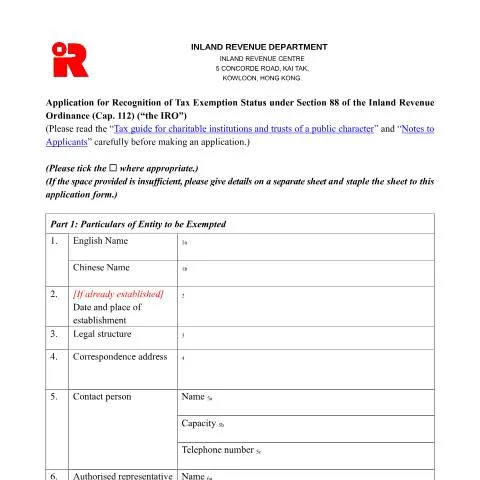
Navigating the Application for Tax Exemption Status: A Strategic Guide
The journey toward tax exemption status in Hong Kong is filled with nuances and procedural intricacies that require careful navigation. The Application for Recognition of Tax Exemption Status under Section 88 of the Inland Revenue Ordinance (Cap. 112) serves as a critical gateway for charitable entities seeking to gain this advantageous status. Understanding its nuances can make the difference between a successful application and significant delays or rejections.
Understanding the Target Audience for the Application
This application caters to various entities, including newly established charities and long-standing organizations looking to affirm their tax-exempt status. The following profiles typically engage with this process:
- New Charitable Entities: These organizations must ensure that their foundational documents align with the requirements stipulated under Section 88.
- Established Organizations Seeking Renewal: For those with prior recognition, submitting the application correctly is essential for maintaining their status.
- Entities Undergoing Structural Changes: Organizations involved in mergers or leadership changes must carefully navigate the complexities introduced by these transitions.
The Application Process: Channels of Submission
Submitting the application can be done through several channels, each with its own set of considerations:
- Online Submission: The online portal provides a streamlined experience, offering real-time updates and confirmations. It is essential to ensure that all required documents are uploaded correctly to avoid any processing delays.
- Paper Submission: While traditional, submitting a paper application may lead to longer processing times. It is advisable to send applications via registered mail to ensure they are received.
- In-Person Submission: This option allows for direct interaction with HK Inland Revenue Department officials. It is particularly beneficial for complex cases where clarification may be required immediately.
Decoding the Application Form: Key Sections Explained
The application form consists of crucial sections that require detailed information. Below is a breakdown of key components:
Part 1: Particulars of Entity to be Exempted
- Entity Identification: Here, applicants must provide the entity's name in both English and Chinese, ensuring accuracy and consistency.
- Legal Structure: The legal status of the organization must be clearly delineated, whether it is a trust, society, or company limited by guarantee.
- Contact Information: Detailed contact information for the primary point of contact is vital, including name, capacity, and telephone number.
Part 2: Governing Instrument Analysis
This section requires applicants to highlight specific clauses in their governing documents:
- Clarification of charitable purposes is essential; vague descriptions can lead to application rejection.
- Clauses limiting fund application and prohibiting income distribution among members must be clearly articulated to meet compliance standards.
Timeline and Critical Deadlines
Understanding the timing of critical milestones within the application process can significantly impact the success rate. The submission period for tax exemption applications generally aligns with the fiscal year:
| Type of Entity | Typical Timeline for Submission | Processing Duration |
|---|---|---|
| New Charitable Entities | 6 months post-establishment | 3 to 6 months |
| Existing Charities Seeking Renewal | Annually, prior to tax year end (31 March) | 2 to 4 months |
Important: Applicants must be aware of their tax obligations during processing, as any discrepancies could lead to complications in gaining exemption status.
Addressing Complications: What Happens After Submission
Post-submission, applicants may encounter various scenarios:
- Acceptance: If accepted, the entity will receive a notice confirming tax exemption status, which must be maintained by fulfilling ongoing compliance requirements.
- Requests for Additional Information: The Inland Revenue Department may reach out for further clarification or documentation, typically within the first month after submission.
- Refusal: In cases of refusal, understanding the grounds of rejection is crucial. Applicants may appeal or rectify issues before reapplying.
Dealing with Refusals and Errors: A Practical Approach
In the unfortunate event of an application refusal or documentation errors, quick and informed actions can facilitate a successful resolution:
- Review the Refusal Notice: Understand the reasons cited for denial, as this will guide necessary adjustments.
- Consult Advisory Bodies: Engaging with local legal or tax professionals specializing in charity regulations can provide critical insights.
- Documentation Corrections: Rectify highlighted errors and resubmit promptly, ensuring adherence to any specified timelines.
Unique Cases and Special Circumstances
The application process also accommodates a variety of unique situations, such as:
- Foreign Charities: These entities must provide additional documentation to verify their eligibility and align with local laws.
- Minor Organizations: For minors, appointed guardians or representatives must fulfill application requirements on their behalf.
- Complex Applications: Organizations undergoing significant changes, such as mergers, must marshal substantial documentation to clarify their new operational framework.
Conclusion: Gaining Clarity in the Complex Process
Successfully navigating the application for tax exemption status under Section 88 is not merely about filling out forms. It represents a multifaceted engagement with legal frameworks and operational standards that require keen attention to detail and strategic foresight. Each step, from understanding the prerequisites to submitting the application through the appropriate channels, is crucial. Adhering to guidelines and timelines significantly enhances the chances of a favorable outcome. As you embark on this journey, leverage available resources, and consider professional assistance to ensure compliance and success.
Understanding the Criteria for Tax Exemption Status Under Section 88
When applying for recognition of tax exemption status under Section 88 of the Inland Revenue Ordinance (Cap. 112), it is crucial to understand the specific criteria that your organization must meet. The Inland Revenue Department (IRD) assesses applications based on several factors, such as the nature of the organization, its purpose, and the activities it conducts. Below are the key criteria that must be satisfied:
- Charitable Purpose: The organization must operate exclusively for charitable purposes. This includes relief of poverty, advancement of education, advancement of religion, and other purposes beneficial to the community, as outlined under the law.
- Non-Profit Motive: The organization must demonstrate that it does not operate for profit. This means that any surplus generated must be reinvested into the organization’s charitable activities rather than distributed to members or stakeholders.
- Public Benefit: The activities conducted by the organization must serve a public benefit. It is essential to provide evidence that the organization’s work positively impacts a segment of the community and is not limited to a particular group of individuals.
- Resources and Assets: The financial resources and assets of the organization must be utilized for its charitable purposes. The IRD scrutinizes financial statements and operational reports to ensure compliance with this requirement.
To substantiate these criteria, applicants are advised to compile extensive documentation, including mission statements, activity reports, financial records, and any relevant agreements or partnerships. Providing a comprehensive overview that aligns with the criteria can significantly improve the chances of a successful application.
The Application Process: Step-by-Step Guide
Applying for recognition of tax exemption status under Section 88 can be a meticulous process, and following a structured approach can help streamline your application. Below is a step-by-step guide to assist organizations through this process:
- Preparation of Required Documents: Gather all necessary documents, such as the organization's Certificate of Incorporation, Memorandum and Articles of Association, and detailed financial statements. Ensure all documents are in bilingual formats (English and Traditional Chinese) as required by the IRD.
- Completion of Application Form: Download and complete the application form, commonly referred to as IR 56B. Ensure that all sections are accurately filled out, providing complete information regarding the organization's activities, financials, and purpose.
- Submit Your Application: Send the completed application form along with the necessary supporting documents to the IRD. You can opt for e-filing through the IRD’s online services or submit the documents via post. If submitting by post, ensure you send it through registered mail to confirm receipt.
- Respond to Queries: After submission, the IRD may reach out with further queries or requests for documentation. Respond promptly to these inquiries to avoid delays in the assessment process.
- Await Decision: The IRD will typically take several months to process the application. During this period, it is essential to monitor the status of your application. You can check your application status through the e-services provided by the IRD.
Documenting the entire process and maintaining open lines of communication with the IRD can help facilitate a smoother application experience. Understanding the timeline and setting up reminders for key dates, especially related to financial reporting and renewal applications, can also be beneficial.
Common Challenges and How to Overcome Them
Organizations often face various challenges when applying for tax exemption status under Section 88. Being aware of these challenges and preparing in advance can help mitigate potential issues. Here are some common obstacles along with strategies to overcome them:
- Incomplete Documentation: One of the most frequent reasons for application rejection is the lack of adequate documentation. Organizations should conduct a thorough checklist review of all required documents before submission to ensure completeness.
- Misalignment with Charitable Purposes: If the organization’s activities do not align perfectly with the definitions of charitable purposes as outlined in the Ordinance, the application may be denied. It is essential to clearly articulate how the organization’s activities support charitable purposes in the application.
- Financial Mismanagement: The IRD scrutinizes the financial practices of organizations seeking tax exemption. Ensure that financial records are transparent, easy to comprehend, and compliant with local accounting standards. Consider engaging a certified accountant to review financial reports before submission.
- Failure to Address IRD Queries: Delays in responding to queries from the IRD can significantly stall the application process. Organizations should designate a point person to manage communications with the IRD and ensure timely responses.
Lastly, organizations should remain proactive by seeking advice from legal or tax professionals who specialize in nonprofit and charity law in Hong Kong. Their expertise can provide invaluable guidance tailored to your organization's specific needs, ultimately increasing the likelihood of successfully obtaining tax exemption status.