Navigating the Revised Company Income Tax Self Assessment Estimate Form
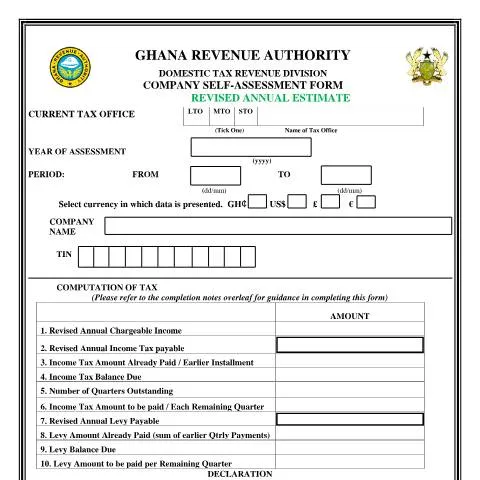
In the ever-evolving landscape of business taxation in Ghana, the Revised Company Income Tax Self Assessment Estimate Form (DT-0102A) stands as a critical instrument for corporate entities. This document is not merely a formality; it serves as a pivotal mechanism through which companies calculate their tax obligations and ensure compliance with the regulations set forth by the Ghana Revenue Authority (GRA).
The Significance of the DT-0102A in Corporate Taxation
Understanding the role of the DT-0102A is imperative for any business operating within Ghana’s legal framework. This form is designed for companies to revise their annual tax estimates, thus aligning their tax liabilities with their actual income. The importance of this form can be summarized in several key aspects:
- Accuracy in Reporting: It compels businesses to evaluate their financial performance and adjust their tax estimates accordingly.
- Legal Compliance: Submitting an accurate self-assessment form helps avoid legal penalties and ensures adherence to the Ghanaian tax laws.
- Financial Planning: By revising estimates, companies can better manage their cash flow and allocate resources effectively.
Who Is Required to Submit the DT-0102A?
The obligation to complete and submit the Revised Company Income Tax Self Assessment Estimate Form falls upon any registered corporate entity in Ghana that is liable to pay income tax. This includes:
- Private limited companies
- Public limited companies
- Partnerships and sole proprietorships registered as companies
However, certain exemptions may apply. For instance, companies with taxable income below the threshold set by the GRA may not be required to file this estimate. It's essential for businesses to consult with tax advisors to determine their specific obligations.
Step-by-Step Guide to Completing the DT-0102A
Filling out the DT-0102A requires attention to detail and accuracy. Below is a comprehensive guide to aid in the completion of this form:
1. Current Tax Office Information
Indicate the appropriate tax office assigned to your business. This is critical as it determines where your submission will be processed.
2. Year of Assessment
Clearly state the financial year for which the estimate is being filed. This should correlate with your accounting period.
3. Reporting Period
Specify the start and end dates of your accounting period in the format of dd/mm.
4. Company Name and TIN
Provide the legally registered name of the company without abbreviations, alongside the eleven-character Taxpayer Identification Number (TIN).
5. Income Computations
This section requires you to compute the following:
- Revised Annual Chargeable Income: Reflects your anticipated income for the year.
- Revised Annual Income Tax Payable: This is the calculated tax based on your revised income.
- Income Tax Amount Already Paid: Include all prior payments.
- Income Tax Balance Due: Calculate as the difference between tax payable and tax already paid.
- Number of Quarters Outstanding: This indicates how many payment periods remain in the financial year.
- Income Tax Amount to be Paid Each Remaining Quarter: Divide the balance due by the number of quarters remaining.
6. Levy Computations
Similar to the income computations, this section pertains to any additional levies payable:
- Revised Annual Levy Payable: Estimate of annual levies due.
- Levy Amount Already Paid: Total of previously paid levies.
- Levy Balance Due: The remaining balance that needs to be settled.
- Levy Amount to be Paid Each Remaining Quarter: This will be calculated in the same manner as income tax amounts.
7. Declaration
The final step involves signing the form, which typically requires the responsible officer’s full name, designation, and date of submission. This declaration solidifies the veracity of the information provided.
Submission Process: Where and How?
Once completed, the form must be submitted to the designated tax office that corresponds to your business location. It is advisable to keep a copy for your records and consider sending the form via registered mail if submitting physically, or ensure the online submission is acknowledged if using digital platforms.
Awareness of Critical Deadlines
Timing is of the essence when it comes to tax submissions. The GRA typically sets specific deadlines for the filing of revised estimates:
- Annual submissions are generally required within the first quarter following the end of the financial year.
- Quarterly payments are due on specific dates that are outlined in the GRA’s tax calendar, which businesses should familiarize themselves with to avoid late submission penalties.
Failing to meet these deadlines can result in significant penalties, including interest on unpaid amounts, so proactive planning is crucial.
Understanding the Consequences of Non-compliance
The implications of not submitting the DT-0102A form accurately or on time can be severe. Businesses may face:
- Financial Penalties: These can accumulate quickly and may include a percentage of the unpaid tax amount.
- Legal Repercussions: Continued non-compliance can lead to legal actions by the GRA.
- Reputation Damage: A company’s standing in the business community can suffer, affecting relationships with stakeholders.
It is essential for companies to understand these risks and to take the necessary steps to ensure compliance.
Comparative Analysis: DT-0102A vs. Other Tax Documents
In navigating the tax landscape, it’s important to distinguish the DT-0102A from other forms, such as the Company Tax Return form and the Quarterly Tax Payment forms:
| Form | Purpose | Frequency of Submission |
|---|---|---|
| DT-0102A | Revised annual tax estimate | Annual or as circumstances dictate |
| Company Tax Return | Final tax liability assessment | Annual |
| Quarterly Tax Payment Form | Payments against estimated tax | Quarterly |
This table underscores the distinct roles that each form plays within the broader tax compliance framework, enabling businesses to understand where and when to take action.
Key Considerations for Different Business Profiles
Different types of businesses may have unique considerations when completing the DT-0102A:
Small Enterprises
Small businesses often have less complex financials, yet they must still engage with this form to ensure compliance. They should focus on accurate income estimation to avoid significant adjustments later on.
Large Corporations
For larger entities, engaging tax professionals can be beneficial. The complexity of their financial operations means that errors in estimations can lead to substantial financial ramifications.
Start-ups
New businesses often struggle with estimating their income accurately during their initial years. Utilizing past performance and realistic growth projections is critical. They should remain in close contact with their tax advisors.
Non-Profits
Entities structured as non-profits still must consider whether they have taxable income and how the DT-0102A applies to them, as specific income thresholds may dictate filing requirements.
Final Thoughts on the Importance of the DT-0102A
The Revised Company Income Tax Self Assessment Estimate Form is much more than a mere formality; it is a crucial component of responsible financial management for any business in Ghana. By diligently completing and submitting this form, organizations not only fulfill their legal obligations but also promote a culture of transparency and accountability within their operations.
As businesses prepare to navigate the complexities of their financial responsibilities, understanding the nuances of the DT-0102A will empower them to manage their tax liabilities effectively and maintain compliance with Ghana’s tax laws.
Understanding the Revised Company Income Tax Self Assessment Estimate Form
The Revised Company Income Tax Self Assessment Estimate Form, often referred to as Form CIT-01, serves as a critical tool for corporations operating within Ghana's tax landscape. Understanding the nuances of this form is essential for businesses aiming to remain compliant with the Ghana Revenue Authority (GRA) regulations while optimizing their tax obligations. The structure of this form allows companies to estimate their taxable income for the year, which aids in determining their provisional tax liability. This proactive approach not only simplifies tax calculations but also aligns with the GRA's push for transparency and accountability in financial reporting.
When filling out Form CIT-01, businesses must provide specific details regarding their expected income, deductions, and any applicable tax credits. It is recommended that companies utilize the most recent financial data and forecasts to ensure accuracy. Moreover, understanding the deductions that are allowable under the Income Tax Act of 2015 (Act 896) is crucial. These deductions may include operational expenses, capital allowances, and any other relevant costs that can legitimately reduce taxable income.
Additionally, it is vital for businesses to be aware of the deadlines associated with submitting Form CIT-01. Typically, this form must be submitted by the end of the second month of the financial year, alongside the payment of the first provisional tax installment. Failure to meet these deadlines could result in penalties or interest charges, further emphasizing the importance of adhering to the stipulated timelines. Businesses should also keep a close watch on any changes to tax regulations or rates, as these can directly impact their estimated tax obligations.
Common Challenges in Completing the Self Assessment Estimate Form
Completing the Revised Company Income Tax Self Assessment Estimate Form can present various challenges for businesses, particularly for those that are new to the tax system in Ghana. One common issue arises from the estimation of taxable income. Many companies may struggle to accurately predict their revenue, especially in volatile market conditions. This uncertainty can lead to either overestimating or underestimating their tax obligations, resulting in potential financial repercussions.
Another challenge is understanding the requirements for documentation and record-keeping. The GRA mandates that businesses maintain comprehensive records to support the figures reported in their tax returns. Failure to present adequate documentation during audits can lead to adjustments in reported income and subsequent penalties. Therefore, companies must establish robust accounting systems and ensure that they regularly reconcile their accounts to provide accurate financial reporting.
Moreover, many businesses may not fully understand the complexities surrounding allowable deductions. The process of identifying eligible expenses can be daunting, particularly for companies without dedicated tax personnel. To mitigate this challenge, it is advisable for businesses to seek professional tax advice or attend GRA-sponsored workshops that delve into the intricacies of the tax system. Connecting with tax consultants who have a thorough understanding of Ghana's tax laws can also be beneficial in ensuring compliance and minimizing tax liabilities.
The Role of Technology in Simplifying Tax Compliance
As Ghana continues to embrace digitalization, technology plays an increasingly important role in simplifying tax compliance for businesses. The GRA has initiated various digital platforms to facilitate the submission of tax forms, including the Revised Company Income Tax Self Assessment Estimate Form. These innovations not only enhance efficiency but also promote transparency in the tax administration process.
One of the key benefits of using digital solutions is the ability to streamline data entry and minimize human error. Businesses can utilize accounting software that is compliant with GRA standards to automatically calculate their estimated tax liabilities, integrating this data into Form CIT-01 with ease. Additionally, electronic submission of the form directly through the GRA's online portal allows companies to receive instant confirmation of their submissions, further reducing the anxiety associated with manual filing.
Furthermore, technology aids in better record-keeping practices. Cloud-based accounting systems enable businesses to store financial documents securely while allowing for real-time access. This ensures that all necessary documentation is readily available should the company be selected for an audit. Additionally, utilizing analytical tools can help firms monitor their financial performance and adjust their tax estimates proactively, thereby mitigating the risk of underpayment or overpayment of taxes.
In conclusion, embracing technology not only simplifies tax compliance for Ghanaian businesses but also positions them for sustainable growth in an increasingly competitive marketplace. The integration of digital tools into tax processes reflects a progressive approach that aligns with the government's vision of creating a more efficient tax system.