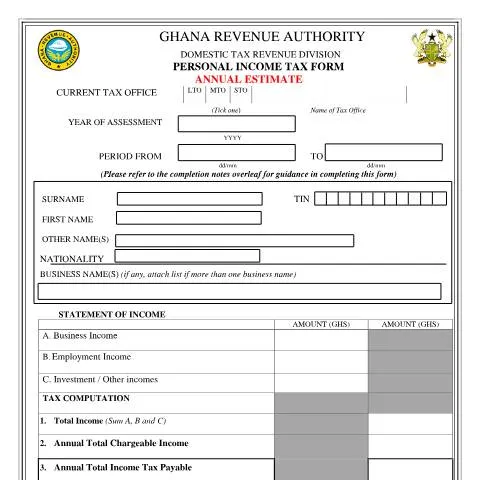
Navigating the Personal Income Tax Self Assessment Estimate Form (DT-0104)
Understanding the intricacies of tax forms can be daunting, especially when it comes to personal income tax in Ghana. The Personal Income Tax Self Assessment Estimate Form (DT-0104) plays a crucial role for taxpayers, serving as a cornerstone in the tax estimation process. This document is not merely a formality; it's a proactive step towards compliance with tax obligations that can significantly impact an individual or business’s financial health.
The Essentials of Filling Out DT-0104
Filling out the DT-0104 requires attention to detail. It is essential for taxpayers to ensure that every section of the form is accurately completed, as inaccuracies can lead to penalties or increased scrutiny from the Ghana Revenue Authority (GRA).
- Current Tax Office: Identify the tax office assigned to you. This is crucial for record-keeping and correspondence.
- Year of Assessment: Clearly state the financial year that this estimate pertains to. This should reflect the current or upcoming tax year.
- Period: Indicate the period for which income is being reported. This typically ranges from the first day of January to the last day of December.
Income Declaration: A Comprehensive Overview
The form requires a declaration of various income streams, categorized into business income, employment income, and other investments. Here’s how to approach each component:
- Business Income (A): Enter the total income derived from your business operations. This is critical for accurate tax computation.
- Employment Income (B): Report any income earned from employment. This is particularly important in case of changes in employment status during the year.
- Investment and Other Income (C): Include any income from investments or other sources not covered above.
Understanding the Tax Computation Section
Once the income sections are filled, the next step is to calculate the total income. This section is vital for estimating your tax liability correctly. Accurate tax computation involves:
| Tax Calculation Component | Description |
|---|---|
| Total Income | This is the sum of Business, Employment, and Other Income (A + B + C). |
| Annual Total Chargeable Income | The estimated total income less deductions that are subject to tax. |
| Annual Total Income Tax Payable | The estimated tax amount to be paid to the GRA based on the assessment year. |
| Quarterly Income Tax Payable | This represents the annual income tax payable less employment income divided by 4. |
Submission Channels for the DT-0104
Once the form has been completed, the next crucial step is submission. Taxpayers have multiple avenues for filing their DT-0104, each with its own nuances:
- Online Submission: Utilizing the GRA's digital platforms allows for quick processing and confirmation of submission. It’s convenient for those who are tech-savvy and prefer digital records.
- In-Person at Tax Offices: For those who prefer face-to-face interactions, submitting the form at designated tax offices ensures that you receive immediate feedback or clarification on any queries.
- Postal Submission: While less common, sending the form via postal services is an option. However, keep in mind the potential delays involved.
Regardless of the method chosen, ensuring that the form is submitted before the deadlines set forth by the GRA is non-negotiable. Late submissions can incur penalties and complicate future tax dealings.
After Submission: What Happens Next?
After submitting the DT-0104, taxpayers may wonder about the subsequent steps in the tax assessment process. Here’s a breakdown:
- Processing Time: The GRA typically processes submissions within a specified timeframe. However, delays can occur, especially during peak submission periods.
- Feedback: Taxpayers should expect to receive acknowledgment of their submission. This could be in the form of an official communication from the GRA.
- Assessment and Compliance Checks: The GRA may conduct assessments to verify the accuracy of the submitted information. This can involve requests for additional documentation or clarification.
Preparing for Documentation and Justification
Documentation is key in substantiating the income reported on the DT-0104. Taxpayers must gather necessary documents prior to filling out the form:
- Income Statements: Collect all relevant statements and records showing business profits, employment income, and any investment returns.
- National Identification: Ensure that your Ghana Card is updated and reflects your current details.
- Taxpayer Identification Number (TIN): This is mandatory for all filings. Ensure that it is accurately noted on the form.
By preparing these documents in advance, taxpayers streamline the process, making it easier to fill out the form accurately and thoroughly.
Special Considerations: Unique Taxpayer Situations
Every taxpayer's situation is unique, and some may face complexities not addressed in standard procedures. Here are a few scenarios that may require special attention:
- Non-resident Foreign Nationals: Foreign nationals earning income in Ghana must adhere to specific regulations. It's advisable to consult with tax professionals to ensure compliance.
- Minors: For minors earning income, guardians or parents may need to fill out the DT-0104 on their behalf. Proper documentation regarding guardianship and the minor’s income should accompany the submission.
- Complex Financial Situations: Individuals with multiple income streams or complex financial portfolios should consider seeking assistance from tax consultants to navigate the form accurately.
Urgency and Deadline Awareness
Understanding deadlines is critical. Taxpayers should be aware of key dates related to their filing obligations, which are typically outlined in GRA communications. Missing a deadline can lead to unnecessary penalties or complications.
The Regulatory Framework Surrounding DT-0104
The Personal Income Tax Self Assessment Estimate Form is backed by the regulatory framework set out in the 1992 Constitution of Ghana and subsequent parliamentary enactments. This framework establishes the legal parameters within which the GRA operates, ensuring compliance and transparency in tax collection.
Additionally, the Domestic Tax Revenue Division plays a pivotal role in implementing tax laws and ensuring that taxpayers are informed of their obligations, contributing to a fair and equitable tax system.
Conclusion: Empowering Taxpayers Through Knowledge
Understanding the nuances of the Personal Income Tax Self Assessment Estimate Form (DT-0104) equips taxpayers with the knowledge to navigate their tax obligations with confidence. By being thorough in their preparation, vigilant in their submissions, and proactive in their compliance, taxpayers contribute to their own financial well-being and to the collective development of Ghana's economy.
Understanding the Ghana Personal Income Tax Self-Assessment System
The Personal Income Tax Self-Assessment system in Ghana was established to encourage taxpayers to take responsibility for reporting their income accurately and timely. This self-assessment mechanism promotes transparency and compliance while reducing the administrative burden on the Ghana Revenue Authority (GRA). The system allows taxpayers to estimate their income tax liabilities based on their earnings and submit their estimates to the GRA.
Under the current framework, taxpayers are required to evaluate their annual income, which includes salaries, business profits, and any other sources of income. The self-assessment process typically involves estimating one's income, applying the appropriate tax rates, and determining the total tax payable. Taxpayers must provide accurate information to avoid penalties, which can range from fines to an increase in the assessed tax liability.
Engagement with the GRA is facilitated through various online platforms, where taxpayers can access resources to guide their self-assessment. Each individual or entity is encouraged to maintain records of income and expenses, as these documents may be needed in the event of an audit or review by GRA officials.
Key Considerations for Taxpayers: Estimation Accuracy and Reporting Obligations
When completing the Personal Income Tax Self-Assessment Estimate Form, taxpayers must focus on accuracy to ensure compliance with local tax laws. The GRA stipulates that any discrepancies or underestimations may lead to penalties, which can vary based on the amount of tax owed. Therefore, it is crucial to consult the latest tax laws and guidelines to understand the various income brackets and applicable tax rates.
Moreover, taxpayers should be aware of the reporting timelines associated with the self-assessment process. Typically, the tax year in Ghana runs from January 1 to December 31, and taxpayers are expected to submit their self-assessment forms by the end of April the following year. Failure to meet this deadline may result in late fees or other penalties enforced by the GRA.
In addition to the regular income tax obligations, taxpayers should consider any tax relief provisions they may qualify for, such as deductions for educational expenses, contributions to pension schemes, or charitable donations. These can significantly impact the final tax liability, and appropriate documentation must be provided to substantiate any claims made on the self-assessment form.
Utilizing Technology for Enhanced Tax Compliance
The integration of technology into tax administration in Ghana has transformed how taxpayers engage with the GRA. The e-Government platform, accessible via ghana.gov.gh, allows individuals to file their Personal Income Tax Self-Assessment Estimate Form online, making the process more efficient and user-friendly. Taxpayers are encouraged to create a user account, which will facilitate easy access to their tax information and history.
Additionally, taxpayers can leverage various digital resources provided by the GRA, including tax calculators, guidelines, and FAQs, which simplify the estimation process. This technological advancement not only increases accessibility but also helps to minimize errors typically associated with manual submissions.
Moreover, taxpayers can sign up for notifications regarding changes in tax laws or deadlines, ensuring they remain informed about their obligations. Utilizing these digital tools can enhance tax compliance and contribute positively to national revenue generation.