Understanding the Financial Impact of Jury Service on Employment
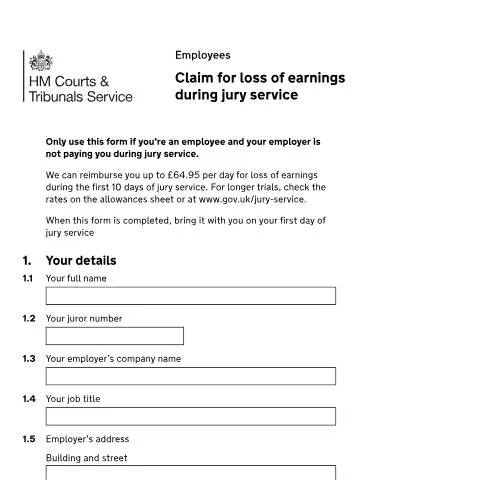
When the brown envelope bearing the jury summons arrives through your letterbox, it marks the beginning of a civic duty that could significantly impact your daily earnings. For employees whose employers do not maintain full pay during jury service, Forms 5223C and 5223D serve as the gateway to claiming compensation for lost earnings from HM Courts & Tribunals Service. These forms recognise that fulfilling jury obligations shouldn't leave citizens financially disadvantaged, providing a structured mechanism to recover up to £64.95 per day for the first ten days of service.
The distinction between the two forms reflects different employment circumstances: Form 5223C caters to self-employed individuals, whilst Form 5223D specifically addresses employees whose employers are unable or unwilling to continue salary payments during jury service. This targeted approach acknowledges that not all employers can absorb the financial impact of extended jury service, particularly smaller businesses or those operating on tight margins.
Navigating the Two-Week Earnings Assessment Framework
Form 5223D operates on a sophisticated earnings assessment model that requires detailed documentation of your typical fortnightly earnings pattern. The employer must complete a comprehensive section detailing your net daily earnings across a representative two-week period, capturing the reality of modern employment where daily earnings may fluctuate significantly.
| Week | Monday | Tuesday | Wednesday | Thursday | Friday |
|---|---|---|---|---|---|
| Week 1 | Net daily amount | Net daily amount | Net daily amount | Net daily amount | Net daily amount |
| Week 2 | Net daily amount | Net daily amount | Net daily amount | Net daily amount | Net daily amount |
The emphasis on net earnings is crucial—this represents your actual take-home pay after income tax, National Insurance contributions, and any other deductions such as pension contributions or student loan repayments. This calculation method ensures that the compensation reflects your genuine financial loss rather than gross salary figures that don't represent actual spending power.
Importantly, the form explicitly excludes weekends and bank holidays from compensation calculations, as courts do not sit on these days. This practical limitation means that jury service beginning on a Tuesday will not generate claims for the preceding weekend, even though your employer may have ceased paying you from the moment you received your summons.
Employer Flexibility Considerations
A particularly nuanced aspect of Form 5223D addresses workplace flexibility during jury service. Employers must indicate whether employees can return to work under various scenarios: full days when not required at court, half days when released early, or any time before the end of the two-week assessment period. This flexibility clause recognises that jury service rarely follows a predictable nine-to-five pattern, with jurors sometimes dismissed early or told not to attend on specific days.
This flexibility assessment directly impacts compensation calculations. If your employer confirms you can return to work when not required at court, you may not be eligible for loss of earnings compensation on those specific days, even if you were originally summoned. The court system expects reasonable accommodation between civic duty and employment obligations.
The Critical Timing of Form Submission
Form 5223D must be completed and brought with you on your first day of jury service—a requirement that demands forward planning between employee and employer. This timing is not arbitrary; it allows court staff to verify your circumstances immediately and establish your compensation eligibility before service begins.
Late submission can create significant complications. If you arrive without the completed form, court staff may be unable to process your claim retrospectively, potentially leaving you without compensation for days already served. The administrative burden of processing late claims also means that payments could be substantially delayed, creating cash flow problems for employees already struggling with reduced income.
The employer's signature and declaration carry legal weight, with the form explicitly warning that prosecution may follow if false or misleading information is provided. This creates a compliance obligation for employers who must ensure accuracy in earnings calculations and flexibility assessments, as HM Courts & Tribunals Service may contact them directly to verify submitted information.
Compensation Limits and Extended Service Implications
The £64.95 daily limit for the first ten days of jury service represents a significant consideration for higher earners. Employees whose net daily earnings exceed this amount will experience an unavoidable financial shortfall that cannot be recovered through the official compensation scheme. This cap reflects the balance between providing reasonable compensation and managing public expenditure on jury service support.
For trials extending beyond ten days, compensation arrangements change substantially. The form directs claimants to check current rates on the allowances sheet or the GOV.UK website, acknowledging that longer trials may warrant different compensation structures. Extended jury service can span several weeks or even months in complex cases, making these extended arrangements crucial for participants' financial stability.
Employees considering whether to seek deferral or excusal from jury service often weigh these compensation limits against their actual earnings. While civic duty remains paramount, the financial reality of extended service at reduced compensation rates can create genuine hardship, particularly for those supporting families or managing significant financial commitments.
Self-Employment Versus Employment Distinctions
The separation between Forms 5223C and 5223D reflects fundamental differences in how self-employed individuals and employees experience financial loss during jury service. Employees have verifiable earnings records through payslips and P60 certificates, making loss assessment relatively straightforward. Self-employed individuals face more complex calculations involving variable income patterns and business expenses.
Employees who also undertake self-employed work may need to consider which form best represents their primary income source. The forms cannot be combined, so individuals must choose the route that reflects their main source of earnings during the jury service period. This choice can significantly impact compensation levels, as self-employment calculations may produce different daily loss figures than employee assessments.
Administrative Processing and Payment Mechanisms
Once submitted, Form 5223D enters the court's administrative processing system, where staff verify the information against jury attendance records and calculate appropriate compensation. The process involves cross-referencing your actual attendance days with the earnings information provided by your employer, ensuring compensation only covers days when you were genuinely required at court and unable to work.
Payment processing typically occurs after jury service concludes, though interim payments may be available for extended trials. The administrative burden of calculating daily entitlements, verifying attendance, and processing payments means that compensation rarely arrives immediately upon completion of service. Employees should plan for this delay when managing their finances during and immediately after jury service.
HM Courts & Tribunals Service may contact employers directly to verify submitted information, particularly if earnings figures appear unusual or inconsistent with typical employment patterns. Employers should be prepared to provide supporting documentation such as payslips, employment contracts, or wage records if requested. This verification process can extend processing times but ensures the integrity of the compensation system.
Record-Keeping and Documentation Requirements
Maintaining accurate records throughout jury service supports both the initial claim and any subsequent queries from court administration. Employees should retain copies of the completed form, any correspondence with their employer regarding jury service arrangements, and records of days actually spent at court. These documents become crucial if discrepancies arise or if additional verification is required.
Employers bear responsibility for maintaining accurate earnings records that support the information provided on Form 5223D. The potential for prosecution for false information creates a compliance obligation that extends beyond simple form completion. Employers should ensure their calculations reflect genuine earnings patterns and that any flexibility arrangements are accurately documented.
Managing Employment Relationships During Extended Service
Form 5223D necessarily involves employers in the jury service process, creating potential tensions between civic obligations and business needs. The form's flexibility assessments require honest evaluation of whether employees can realistically return to work when not required at court, balancing operational needs with legal obligations to support jury service.
Employers cannot legally prevent employees from fulfilling jury service, but the financial arrangements documented on Form 5223D may influence how both parties approach extended service. Employees whose employers continue full pay during jury service do not need Form 5223D, creating an incentive for employers to maintain salary payments rather than navigate the compensation claim process.
The requirement for employer contact details on Form 5223D acknowledges that court staff may need to verify information or clarify arrangements during service. Employers should designate appropriate contacts and ensure they remain available throughout the jury service period, as delays in responding to court queries can impact compensation processing.
Practical Considerations for Complex Employment Arrangements
Modern employment arrangements often involve multiple jobs, variable hours, or complex payment structures that complicate Form 5223D completion. Employees working for multiple employers must consider which employment relationship to declare, as the form addresses single-employer scenarios. Those with primary and secondary employment may need to focus on their main source of income while accepting that secondary earnings losses cannot be claimed through this route.
Shift workers, zero-hours contract employees, and those with seasonal employment patterns face particular challenges in demonstrating typical earnings over a two-week period. The form's structure assumes relatively consistent employment patterns, potentially disadvantaging those with irregular work arrangements who may struggle to establish representative earnings figures.
Commission-based employees or those receiving performance bonuses must consider whether their two-week assessment period accurately reflects typical earnings. Seasonal variations, annual bonus payments, or irregular commission structures may mean that the assessment period either over or understates normal earnings, affecting compensation entitlement.
Form 5223D represents more than administrative paperwork—it embodies the state's recognition that civic participation should not create financial hardship. By requiring detailed employer involvement and comprehensive earnings assessment, the form ensures that jury service compensation reflects genuine financial impact whilst maintaining the integrity of the public compensation system. The balance between civic duty and financial protection remains delicate, but Form 5223D provides a structured pathway for employees to fulfil their jury obligations without bearing unreasonable personal financial cost.
Understanding the Two-Form System: When to Use 5223C vs 5223D
The distinction between Forms 5223C and 5223D reflects the different circumstances under which jurors may experience financial hardship during their civic duty. Understanding which form applies to your situation is crucial for ensuring your claim is processed correctly and without unnecessary delays.
Form 5223C is specifically designed for employed individuals who continue to receive their regular salary or wages from their employer during jury service but incur additional expenses or face reduced earnings due to overtime restrictions, commission losses, or performance-related pay reductions. This form also covers self-employed individuals whose business operations are directly affected by their absence for jury duty.
For employed jurors, the form captures scenarios where employers provide basic pay but cannot compensate for lost opportunities such as weekend work, evening shifts with enhanced rates, or commission-based earnings that would normally be achieved during the jury service period. HMCTS recognises that modern employment often includes variable elements beyond basic salary, and Form 5223C addresses these complexities.
Form 5223D serves those who face complete loss of income during jury service. This typically includes zero-hours contract workers whose employers are not obligated to pay during jury duty, casual workers without guaranteed hours, and individuals whose employers explicitly refuse to maintain salary payments during the service period.
The form also covers benefit recipients who may face reductions or suspensions in their Universal Credit, Jobseeker's Allowance, or Employment and Support Allowance due to their unavailability for work-seeking activities or mandatory appointments during jury service. The DWP has specific protocols for handling benefit claims during jury duty, and Form 5223D helps coordinate these arrangements.
Carers claiming Carer's Allowance who must arrange alternative care arrangements may also use Form 5223D if their caring responsibilities are temporarily transferred to paid care providers, resulting in both loss of allowance and additional care costs.
Both forms require different supporting documentation. Form 5223C typically needs employer statements detailing normal variable pay patterns, commission structures, or overtime opportunities, alongside evidence of actual losses during the jury service period. Form 5223D requires proof of complete income cessation, benefit suspension letters from DWP, or employer confirmations of unpaid leave policies.
Special Circumstances and Vulnerable Juror Provisions
HMCTS recognises that certain jurors face unique challenges during service that may not fit standard loss of earnings categories. The court system has developed specific provisions for vulnerable individuals and those with exceptional circumstances that affect their ability to serve without significant financial or personal hardship.
Parent and carer provisions extend beyond simple childcare costs. Single parents who rely on informal family support networks may find these arrangements unavailable during extended jury trials. The courts can consider additional compensation for professional childcare even when family members usually provide free care, recognising that jury service duration and timing may exceed what informal arrangements can reasonably accommodate.
Foster carers face particular complexities as their caring responsibilities are both a source of income (through fostering allowances) and a legal obligation that cannot be temporarily suspended. Forms 5223C and 5223D can accommodate claims for specialist respite care that exceeds normal fostering support, particularly for children with additional needs who require qualified care providers.
Medical and disability considerations may significantly impact jury service costs. Jurors with ongoing medical appointments may need to reschedule private healthcare consultations, potentially incurring cancellation fees or paying premium rates for alternative appointment slots that fit around court schedules.
Those receiving disability benefits may face assessment delays if jury service conflicts with scheduled DWP medical evaluations or work capability assessments. The administrative complexity of rescheduling these crucial appointments can result in benefit suspensions that extend beyond the actual jury service period.
Business continuity issues for self-employed individuals often extend beyond simple daily rate calculations. Professional service providers may need to engage locum staff or subcontractors to maintain client relationships during extended trials. These arrangements typically cost more than the individual's normal daily earnings, creating a net loss that standard compensation rates may not fully address.
Seasonal workers or those in project-based employment may find that jury service coincides with critical earning periods that cannot be recovered later in the year. Agricultural workers during harvest periods, retail staff during peak seasons, or construction workers with weather-dependent schedules may face disproportionate annual income impacts from relatively short jury service periods.
The courts maintain discretion to consider exceptional hardship cases that fall outside standard compensation frameworks. Documentation supporting these circumstances should be comprehensive, including professional letters from healthcare providers, social services, or business advisors who can verify the specific impacts of jury service on the individual's situation.
Administrative Process and Timeline Management
The administrative journey for claiming loss of earnings during jury service involves multiple stages, each with specific requirements and potential complications that jurors should anticipate. Understanding this process helps ensure claims are submitted correctly and processed efficiently.
Pre-service preparation begins immediately upon receiving your jury summons. Contact your employer's HR department or payroll team to clarify their jury service policy, as practices vary significantly between organisations. Some employers pay full salary and reclaim the court's daily allowance, others provide only statutory minimums, and some may not pay at all for certain categories of workers.
Self-employed individuals should begin documenting their normal earning patterns immediately, gathering recent invoices, contracts, and bank statements that demonstrate typical daily or weekly income. The court requires evidence of established earning patterns rather than projected or potential income, so historical data spanning several months provides the strongest foundation for claims.
Benefit recipients should notify their work coach or benefits office about the jury summons as soon as possible. The DWP has specific procedures for handling claimant availability during jury service, and early notification can prevent automatic benefit suspensions that might otherwise occur when normal job-seeking or appointment attendance becomes impossible.
During-service documentation requires meticulous record-keeping throughout the jury service period. Daily attendance records provided by the court must be retained as they form the basis for all compensation calculations. Any additional costs incurred, from parking fees to meal expenses beyond the standard allowance, should be documented with receipts and linked to specific jury service dates.
Communication with employers during service is crucial for maintaining accurate records of any continued payments, deductions, or adjustments made to normal salary arrangements. Some employers may initially continue standard payroll processes before adjusting for jury service impacts, creating potential confusion in compensation calculations.
Post-service submission should occur promptly after jury service concludes, as delays can complicate verification processes and potentially affect payment timelines. The court administration team processes claims more efficiently when all documentation is complete and clearly organised.
HMCTS typically processes straightforward claims within 10-15 working days of receiving complete documentation, though complex cases involving multiple income sources or exceptional circumstances may require additional verification time. Claims submitted with incomplete documentation or unclear supporting evidence may face significant delays as administrative staff seek clarification.
Payment methods vary depending on the total amount and local court administrative arrangements. Smaller amounts may be processed through BACS transfer directly to the juror's bank account, while larger or complex claims might require cheque payments that take additional time to process and post.
Appeals and queries about compensation decisions should be directed to the court's jury administration team rather than general enquiry lines, as specialist staff handle these matters with greater expertise and authority to resolve disputes or clarify calculation methods.