The Critical Renewal Window for Commercial Boatmasters
Every five years, thousands of Boatmasters' Licence (BML) holders across the UK face a pivotal moment in their maritime careers. Unlike many professional certifications that simply expire and require complete retraining, the Maritime and Coastguard Agency's revalidation process offers a streamlined pathway to maintain commercial vessel operation privileges—provided specific conditions are met within strict timeframes.
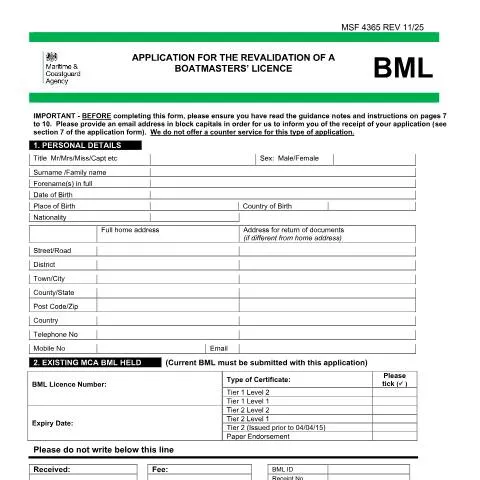
The MSF 4365 application form serves as the gateway to this revalidation process, but its apparent simplicity masks complex requirements that vary dramatically based on the holder's age, operational experience, and specialist endorsements. For commercial operators working everything from Thames passenger services to North Sea supply vessels, understanding these nuances can mean the difference between seamless licence renewal and costly operational downtime.
The stakes are particularly high given that self-certification of service is explicitly prohibited, meaning every day of claimed experience must be independently verified through formal testimonials. This requirement alone has caught numerous experienced mariners off-guard, leading to delayed applications and potential gaps in operational capability.
Navigating the Tier System and Service Requirements
The revalidation framework operates on a tiered structure that directly impacts both the complexity of applications and the qualifying service time (QST) requirements. Understanding your specific tier classification is essential before completing the MSF 4365 form.
Tier Classifications and Their Implications
| Licence Type | Operational Scope | QST Requirements | Additional Considerations |
|---|---|---|---|
| Tier 1 Level 2 | Unlimited commercial operations | 180 days within 5 years | Endorsement revalidation options |
| Tier 1 Level 1 | Limited commercial scope | 120 days within 5 years | Potential upgrade pathways |
| Tier 2 Level 2 | Restricted operational areas | 90 days within 5 years | Area-specific requirements |
| Tier 2 Level 1 | Basic commercial operations | 60 days within 5 years | Entry-level maintenance |
The qualifying service time must fall within the five years immediately preceding your application, creating a rolling window that requires careful planning. This isn't simply about accumulating days at sea—the service must be relevant to your licence category and properly documented through the MSF 4366 work record form.
Specialist Operations and Local Knowledge Endorsements
For Tier 1 licence holders, the revalidation process extends beyond basic operational competency to encompass specialist endorsements that may be crucial to specific career paths. The form's Section 4 addresses these additional qualifications, each carrying distinct requirements:
- General Passenger Operations: Essential for ferry services, tourist vessels, and scheduled passenger transport
- Large Passenger Vessel: Required for vessels carrying substantial passenger loads
- Oil/Chemical/Liquefied Gas: Critical for tanker operations and hazardous cargo transport
- Towing and Pushing: Necessary for tugboat operations and barge handling
- Fast Craft: Required for high-speed commercial vessels
- Ro-Ro Operations (Tidal waters): Essential for roll-on/roll-off ferry services
Local knowledge endorsements present particular complexity, as they're often tied to specific ports, waterways, or operational areas. These endorsements require detailed specification in the application and may necessitate additional documentation from relevant harbour authorities or pilotage services.
Medical Certification Thresholds and Age-Related Requirements
The medical fitness component of BML revalidation operates on an age-stratified system that significantly impacts application complexity and cost. This framework reflects the Maritime and Coastguard Agency's risk-based approach to commercial vessel safety.
Under 45: Self-Declaration Pathway
Licence holders under 45 years benefit from a streamlined medical assessment process, requiring only a signed declaration confirming no significant changes in health that would affect their abilities as a Boatmaster. This self-certification pathway recognises the lower statistical risk profile of younger mariners while maintaining accountability through the legal framework—false declarations carry penalties up to £5,000.
However, this apparent simplicity comes with important caveats. Any material change in health status, regardless of age, triggers the requirement for formal medical certification. Common conditions that would necessitate professional assessment include:
- Cardiovascular conditions affecting stamina or decision-making
- Visual impairments beyond standard correction
- Hearing loss that could impact radio communication
- Neurological conditions affecting coordination or consciousness
- Mental health conditions requiring ongoing medication
45 and Above: Mandatory Professional Assessment
The 45-year threshold triggers mandatory professional medical assessment, reflecting increased health risks associated with advancing age in safety-critical roles. Acceptable medical evidence includes:
ML5 Medical Report and Certificate: The maritime-specific standard designed for commercial vessel operations, addressing the unique physical and mental demands of boatmaster duties.
ENG1 Seafarer Medical Certificate: The broader maritime medical standard, acceptable for BML revalidation but originally designed for merchant navy personnel.
For licence holders aged 65 and above, the same medical certificate requirements apply, but the assessment frequency typically increases, reflecting heightened safety considerations for senior mariners in commercial operations.
Documentation Assembly and Verification Protocols
The MSF 4365 form serves as the central coordination point for a complex documentation package, each element subject to specific formatting, timing, and verification requirements. The checklist in Section 7 provides the framework, but successful applications depend on understanding the nuances behind each requirement.
The Critical Work Record Component
The MSF 4366 work record form functions as the primary evidence base for qualifying service time, but its completion requires careful attention to detail and supporting documentation. Each entry must specify:
- Vessel name and type/class designation
- Exact rank or capacity held during service
- Owner or operating company details
- Specific operational areas and water categories
- Precise service periods with day-accurate dating
The prohibition on self-certification means each service period requires independent verification through testimonials from vessel owners, port authorities, or recognised maritime employers. These testimonials must be submitted on company letterhead and include specific details about the applicant's duties and competency during the stated periods.
Timing Considerations and Document Validity
Medical certificates must remain valid throughout the application processing period, creating potential complications for applications submitted close to medical certificate expiry dates. The Maritime and Coastguard Agency recommends ensuring medical documentation has at least three months remaining validity at the time of submission to avoid processing delays.
Similarly, the existing BML must be submitted with the application, meaning licence holders operate without physical certification during processing. For active commercial operators, this requires careful coordination with employers and insurance providers to ensure continued operational capability.
Processing Pathways and Digital Integration
The MSF 4365 revalidation process reflects the Maritime and Coastguard Agency's broader digital transformation initiatives, particularly evident in the mandatory online payment system and email communication preferences.
Fee Structure and Payment Mechanisms
The current £31 revalidation fee must be paid exclusively through the Gov.uk Pay platform, eliminating traditional cheque or postal order options. This digital-first approach streamlines processing but requires applicants to have access to online banking or card payment facilities.
The specified payment link provided in the form documentation ensures secure transaction processing while integrating with the Maritime and Coastguard Agency's internal tracking systems. Payment confirmation generates automatic receipts that serve as essential tracking references for application status enquiries.
Communication Protocols and Application Tracking
The emphasis on email address provision in block capitals reflects the agency's commitment to digital communication throughout the revalidation process. This electronic communication pathway enables:
- Automated receipt confirmation upon application submission
- Progress updates during document verification phases
- Notification of any additional documentation requirements
- Completion confirmation and licence dispatch notifications
The explicit statement that no counter service is available for BML revalidations underscores the mandatory postal submission requirement, necessitating careful packaging and tracking of original documentation.
Data Protection and Information Sharing Framework
Section 6 of the MSF 4365 form addresses critical data protection considerations that extend beyond simple form completion to encompass broader statutory obligations and inter-agency cooperation protocols.
Statutory Data Sharing Provisions
The declaration explicitly authorises data sharing with other statutory bodies or organisations to enable them to meet their statutory obligations, reflecting the interconnected nature of maritime safety oversight. This sharing encompasses:
- Applicant name and licence number for verification purposes
- Licence expiry dates for compliance monitoring
- Local and specialist operations endorsements for operational oversight
- Statistical data for research and policy development
These provisions align with the Data Protection Act 2018 and UK GDPR requirements, ensuring lawful processing while supporting broader maritime safety objectives through coordinated regulatory oversight.
Privacy Statement Integration and Consent Frameworks
The reference to detailed privacy statements in the guidance notes reflects the Maritime and Coastguard Agency's compliance with transparency obligations under current data protection legislation. Applicants consent to processing activities that may include:
- Identity verification through cross-referencing with other maritime databases
- Authenticity checks on submitted documentation and testimonials
- Ongoing compliance monitoring throughout the licence validity period
- Statistical analysis for policy development and safety trend identification
Strategic Timing and Career Planning Implications
Successful BML revalidation requires strategic planning that extends well beyond the immediate application process, particularly for mariners operating in specialised sectors or considering career transitions.
The Five-Year Service Window Challenge
The rolling five-year qualifying service time requirement creates particular challenges for mariners who have experienced career breaks, industry transitions, or shifts between maritime and land-based roles. Unlike fixed qualification periods, this rolling window means that service completed six years ago becomes invalid for revalidation purposes, regardless of its relevance or quality.
This requirement particularly impacts:
- Maritime professionals returning from extended shore-based assignments
- Seasonal operators in tourism or fishing industries
- Mariners transitioning between different operational sectors
- Those recovering from extended illness or injury periods
Endorsement Strategy and Operational Flexibility
For Tier 1 licence holders, the revalidation process presents strategic opportunities to add or maintain specialist endorsements that enhance operational flexibility and career prospects. However, each endorsement carries specific maintenance requirements that must be factored into long-term planning.
Local knowledge endorsements, in particular, require ongoing operational engagement with specific waterways or ports. Mariners operating across multiple jurisdictions must carefully document their service to maintain these valuable qualifications, as re-establishing local knowledge endorsements through fresh assessment can be significantly more complex than maintaining them through revalidation.
Signature Requirements and Document Authentication
The MSF 4365 form concludes with specific signature requirements that carry particular significance beyond simple identity verification. The instruction to sign in the centre of the space opposite, in BLACK BALL POINT PEN reflects technical requirements for licence production processes.
This signature becomes part of the physical licence document, requiring precision and legibility that will remain consistent with the holder's identification practices throughout the licence validity period. The emphasis on black ballpoint pen ensures optimal reproduction quality in the licence manufacturing process while maintaining durability over the licence's five-year validity period.
The warning that failure to comply with signature instructions will invalidate the application underscores the non-negotiable nature of these technical requirements. Applications with incorrect signature placement or implement choice face automatic rejection, necessitating complete resubmission with associated delays and potential complications for time-sensitive revalidations.
For commercial operators managing multiple licence holders, establishing standardised procedures for MSF 4365 completion can prevent costly processing delays while ensuring consistent compliance with Maritime and Coastguard Agency requirements across their workforce.
Documentation and Evidence Requirements for Revalidation
The Maritime and Coastguard Agency requires comprehensive documentation to support your boatmaster licence revalidation application. The evidence you must provide varies significantly depending on your licence category, operational area, and the length of time since your last revalidation.
For commercial endorsement holders, you'll need to submit detailed service records covering your qualifying sea time. These records must be authenticated by your employer or vessel operator and include specific details such as vessel name, official number, gross tonnage, area of operation, and your capacity aboard. The MCA accepts service records in various formats, but they must be signed and stamped by an authorised person – typically the vessel's master, marine superintendent, or harbour master.
Medical fitness certificates present particular requirements depending on your age and licence category. Boatmasters under 65 typically need an ML5 medical certificate issued within the past two years, whilst those over 65 require annual medical renewals. The examining doctor must be approved by the MCA and familiar with maritime medical standards. Some medical conditions may require specialist assessments – for instance, cardiovascular conditions often necessitate cardiologist reports, whilst diabetes requires evidence of stable glucose control.
Training certificates and competency assessments must be current and relevant to your operational requirements. STCW certificates, if applicable, must show compliance with the five-year revalidation cycle. Personal survival techniques, fire prevention and fire fighting, elementary first aid, and personal safety and social responsibilities certificates all have specific validity periods that must align with your revalidation timeline.
For those operating in specific geographical areas, additional documentation may be required. Pilots operating in particular ports or harbours often need local knowledge assessments or endorsements from relevant harbour authorities. Similarly, those working in offshore wind farm areas may require specific competency certificates related to dynamic positioning or crew transfer vessel operations.
Special Circumstances and Exemptions in the Revalidation Process
The MCA recognises that certain circumstances may prevent boatmasters from meeting standard revalidation requirements, and several exemption categories exist to address these situations. Understanding these provisions can be crucial if you've experienced career interruptions, medical issues, or other qualifying circumstances.
Military service exemptions apply to Royal Navy personnel and those serving in other recognised naval forces. If you've been actively serving in a maritime capacity within the Armed Forces, this service may count towards your revalidation requirements, even if it doesn't strictly meet civilian commercial vessel criteria. You'll need to provide detailed service records from your commanding officer, specifying your duties, vessel types, and operational areas.
Medical exemptions are available for boatmasters who've experienced significant health issues that prevented them from maintaining active service. The MCA may accept reduced sea time requirements if you can demonstrate that medical circumstances beyond your control prevented normal operations. This typically requires comprehensive medical documentation from treating physicians and may involve an extended assessment period.
Academic and training roles can sometimes qualify for alternative revalidation pathways. Maritime lecturers, training instructors, and those involved in maritime education may be able to demonstrate continued competency through their teaching activities, provided they maintain current knowledge of maritime developments and regulations. This often requires evidence of continuing professional development and may include practical assessments to ensure hands-on skills remain current.
Force majeure circumstances – such as global pandemics, economic downturns affecting the maritime industry, or significant regulatory changes – may result in temporary modifications to revalidation requirements. During the COVID-19 pandemic, for example, the MCA implemented temporary measures allowing extensions to certain certificates and modified training requirements where practical assessments were not possible.
Geographic exemptions exist for boatmasters operating in specific regions where standard commercial opportunities are limited. Those working in remote Scottish islands, for instance, may have different pathways available if conventional commercial vessel opportunities are scarce. Similarly, those involved in specialist operations such as marine research, conservation work, or emergency services may have alternative demonstration methods for maintaining competency.
Technology Integration and Digital Transformation in Licence Management
The maritime industry's digital transformation has significantly impacted how boatmaster licence revalidation is managed, from application submission to ongoing competency monitoring. Understanding these technological developments is essential for navigating the modern revalidation landscape effectively.
Electronic logbooks and digital service records are increasingly accepted by the MCA, provided they meet specific authentication and security standards. Modern vessels often employ integrated bridge systems that automatically log operational data, including position, weather conditions, and operational parameters. These systems can provide compelling evidence of active service, though they must be properly certified and include appropriate audit trails to prevent tampering.
Simulator-based assessments are becoming more sophisticated and may form part of revalidation requirements, particularly for complex vessel operations or specific competency areas. Full mission bridge simulators can assess decision-making skills, emergency response capabilities, and adherence to collision regulations in ways that weren't previously possible. However, the MCA maintains strict standards for simulator facilities, requiring approval and regular calibration to ensure realistic operational conditions.
Digital competency management platforms allow continuous monitoring of professional development activities, training completions, and competency maintenance. These systems can track mandatory refresher training, alert users to approaching certificate expiries, and maintain comprehensive records of all professional activities. Some platforms integrate with vessel management systems to automatically record qualifying sea time and operational experience.
Remote assessment technologies have expanded possibilities for practical evaluations, particularly valuable for boatmasters in remote locations or those with mobility limitations. Video-based assessments, virtual reality training systems, and remote proctoring of theoretical examinations can supplement traditional assessment methods, though they cannot entirely replace hands-on practical evaluations for safety-critical competencies.
Blockchain technology is being explored for certificate verification and fraud prevention. Immutable digital certificates could significantly reduce administrative burdens whilst improving security and verification processes. Several international maritime organisations are piloting blockchain-based certification systems that could eventually integrate with UK revalidation processes.
Artificial intelligence and machine learning applications are beginning to influence competency assessment and revalidation decision-making. These technologies can analyse patterns in operational data, identify areas where additional training might be beneficial, and even predict potential safety risks based on historical performance data. However, human oversight remains essential, particularly for complex cases involving discretionary decisions or unusual circumstances.