When Medical Conditions Force Difficult Decisions Behind the Wheel
Every year, thousands of UK drivers face a profound personal moment: recognising that their medical condition has compromised their ability to drive safely. Whether it's deteriorating eyesight, the onset of epilepsy, or the progression of dementia, the realisation often comes gradually—missed road signs, delayed reactions, or concerned comments from passengers. The Declaration of Surrender for Medical Reasons represents the formal mechanism through which drivers can voluntarily relinquish their entitlement to drive when they acknowledge that continuing would pose risks to themselves and others.
This document, processed by the Driver and Vehicle Licensing Agency's Drivers Medical Group in Swansea, serves as both a legal safeguard and a pathway back to driving when circumstances improve. Unlike licence revocations imposed by the DVLA following medical investigations, voluntary surrenders demonstrate personal responsibility and often facilitate smoother reinstatement procedures when medical standards are subsequently met.
The Legal Framework Underpinning Voluntary Medical Surrender
The declaration operates within the broader medical fitness framework established under the Road Traffic Act 1988, which places a continuous duty on licence holders to notify the DVLA of any medical condition that might affect their driving ability. However, the voluntary surrender mechanism recognises that drivers themselves are often best placed to assess when their condition has deteriorated to the point where driving becomes unsafe.
The Drivers Medical Group processes these declarations as part of their broader remit to assess medical fitness for driving. This specialised unit handles approximately 600,000 medical cases annually, ranging from routine notifications to complex fitness assessments. The voluntary surrender represents a proactive approach that can prevent the need for formal medical investigations and potential prosecution for driving whilst medically unfit.
Crucially, voluntary surrender does not constitute an admission of unfitness at any previous point—it simply acknowledges current inability to meet medical standards. This distinction can prove important for insurance purposes and any subsequent licence applications.
Distinction from Formal Revocation Procedures
The voluntary declaration differs significantly from formal DVLA revocation procedures. When the DVLA revokes a licence following medical investigation, the decision is recorded differently on driving records and typically requires more extensive medical evidence for reinstatement. Voluntary surrenders, by contrast, demonstrate responsible self-assessment and often result in more straightforward reinstatement processes when medical standards are subsequently met.
Critical Timing Considerations and Legal Obligations
The timing of voluntary surrender carries significant legal and practical implications. Drivers remain legally obligated to notify the DVLA immediately upon becoming aware of any medical condition that affects their driving ability. Continuing to drive whilst knowing of such a condition constitutes an offence under Section 94 of the Road Traffic Act 1988, potentially resulting in prosecution and fines up to £1,000.
The declaration should ideally be submitted before any deterioration reaches the point where driving becomes dangerous. This proactive approach demonstrates responsible behaviour and can influence how insurance companies and the DVLA view any subsequent applications. However, the practical challenge lies in determining precisely when this threshold is crossed.
| Condition Type | Typical Surrender Timing | Key Considerations |
|---|---|---|
| Progressive conditions (dementia, macular degeneration) | When symptoms begin affecting driving tasks | Early surrender often facilitates easier reinstatement if condition stabilises |
| Sudden onset conditions (stroke, cardiac events) | Immediately following medical event | Temporary surrender pending medical clearance often appropriate |
| Episodic conditions (epilepsy, blackouts) | Following any episode or medication change | Specific seizure-free periods required for reinstatement |
| Mental health conditions | When judgement or concentration significantly impaired | Medical evidence of stability required for reinstatement |
The Six-Month Rule and Its Implications
Many medical conditions affecting driving carry specific time-based requirements for reinstatement. For instance, following a single epileptic seizure, drivers must typically remain seizure-free for twelve months before reapplying. Understanding these timeframes before surrendering helps plan for potential reinstatement and ensures appropriate medical monitoring during the interim period.
Navigating the Declaration Form: Section-by-Section Requirements
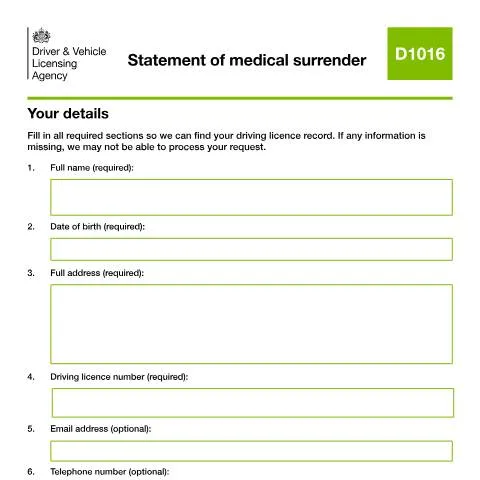
The declaration form, despite its apparent simplicity, requires careful completion to ensure proper processing and avoid delays. Each field serves specific administrative and legal purposes within the DVLA's medical assessment framework.
Personal Identification Requirements
The full name field must match exactly the name on the current driving licence. Any discrepancies can cause processing delays whilst the DVLA verifies identity. Names should be entered in capital letters as specified, including all middle names or initials shown on the licence. Recent name changes due to marriage or deed poll should be accompanied by supporting documentation.
The driver number is the unique identifier found on the plastic photocard licence—a combination of letters and numbers that enables the DVLA to locate the correct driving record immediately. This 16-character code includes encoded information about the licence holder's name and date of birth, serving as a verification check during processing.
Address Considerations and DVLA Records
The address entered must reflect the licence holder's current registered address with the DVLA. If the address has changed since the licence was issued, this presents an opportunity to update records simultaneously. However, failure to have previously notified address changes may result in additional administrative requirements or potential penalties, as licence holders are legally required to inform the DVLA of address changes within specified timeframes.
Medical Diagnosis Documentation
The diagnosis field requires careful consideration of both accuracy and completeness. Whilst detailed medical terminology is not essential, the entry should clearly identify the condition prompting surrender. Generic terms like "medical condition" or "health problems" may result in requests for additional information, potentially delaying processing.
For conditions with multiple contributing factors—such as diabetes with associated vision problems—it may be appropriate to list the primary condition whilst noting secondary effects. This approach helps the Drivers Medical Group understand the full scope of medical concerns when processing any future reinstatement application.
Physical Licence Return: Procedures and Special Circumstances
The requirement to return the physical driving licence alongside the declaration serves multiple purposes: it prevents continued use of the licence, enables the DVLA to update their records immediately, and provides verification that the surrender is genuine rather than fraudulent.
Lost or Stolen Licence Complications
When licences have been lost or stolen, the surrender process becomes more complex but remains feasible. Ticking the appropriate box triggers additional verification procedures within the DVLA system. Lost licences may require statutory declarations or police crime reference numbers, particularly if theft is suspected. These additional requirements can extend processing times by several weeks whilst verification checks are completed.
For stolen licences, providing the police crime reference number expedites processing and helps prevent fraudulent use of the licence details. The DVLA maintains systems to flag stolen licence numbers, but formal notification through the surrender process ensures comprehensive record updates.
Damaged or Defaced Licences
Licences that have been damaged through normal wear, washing machine incidents, or other accidents should still be returned with the declaration. The "Other" category covers these circumstances, and a brief explanation helps DVLA staff understand why the licence may appear damaged or partially illegible. Attempting to replace a damaged licence before surrender can create administrative confusion and delays.
Processing Pathways and Administrative Handling
Once received by the Drivers Medical Group in Swansea, declarations follow established processing pathways designed to update records efficiently whilst maintaining audit trails for potential future applications. The processing typically involves several distinct stages, each serving specific administrative and legal purposes.
Initial Registration and Record Updates
Upon receipt, declarations are logged into the DVLA's driver record system, creating a timestamp for the surrender and updating the licence status to reflect voluntary relinquishment for medical reasons. This immediate update prevents any automated renewal notices or enforcement actions that might otherwise be triggered for licence holders with medical conditions.
The driver's record is flagged to indicate voluntary medical surrender, distinguishing it from other types of licence cessation such as revocation following investigation or administrative cancellation. This distinction proves crucial for insurance purposes and future reinstatement applications.
Medical Assessment Team Review
Experienced medical assessment officers review each declaration to identify patterns or conditions that might require specific monitoring during any reinstatement process. This review doesn't constitute a formal medical assessment but ensures that appropriate procedures are flagged for future applications.
For certain conditions—particularly those with established medical standards like epilepsy or diabetes—the review may identify specific requirements that will apply to any subsequent reinstatement application. This forward planning helps streamline future processes and ensures applicants receive appropriate guidance about medical evidence requirements.
Reinstatement Pathways: Planning Your Return to Driving
The declaration explicitly acknowledges the possibility of future reinstatement "when able to meet the medical standards for driving." This provision recognises that many medical conditions are temporary, treatable, or may stabilise sufficiently to permit safe driving under appropriate medical supervision.
Condition-Specific Reinstatement Requirements
Different medical conditions carry distinct reinstatement pathways, each reflecting clinical evidence about fitness to drive safely. Understanding these requirements before surrender helps plan appropriate medical monitoring and evidence gathering during the interim period.
Cardiovascular conditions typically require evidence of stable condition following treatment, often including exercise tolerance tests or cardiologist reports. The specific requirements vary according to licence category, with higher standards applied to vocational drivers.
Neurological conditions such as stroke or brain injury may require comprehensive neuropsychological assessment demonstrating adequate cognitive function, visual field testing, and specialist neurologist reports. Recovery timescales vary significantly between individuals and condition severity.
Mental health conditions require evidence of stability and appropriate management, typically including psychiatrist or clinical psychologist reports. The assessment focuses on insight, compliance with treatment, and functional capacity rather than specific diagnostic categories.
Building Medical Evidence During Surrender Period
The period between surrender and reinstatement application provides opportunities to build comprehensive medical evidence supporting fitness to drive. Regular monitoring by appropriate specialists, compliance with treatment regimens, and documented stability all strengthen subsequent reinstatement applications.
Maintaining detailed records of medical appointments, test results, and functional improvements can significantly expedite reinstatement processing. Many successful applicants find it helpful to discuss their intention to reapply with their medical team, ensuring appropriate monitoring and documentation throughout the surrender period.
Administrative Aftermath: Records, Insurance, and Practical Considerations
Voluntary surrender creates lasting changes to driving records that extend beyond the immediate cessation of driving privileges. Understanding these implications helps manage practical consequences and plan for potential reinstatement.
Insurance Notification and Premium Implications
Current motor insurance policies typically require immediate notification of licence surrender. Failure to notify insurers can void coverage and create complications for any vehicles that remain registered to the licence holder. Most insurers will cancel policies following surrender, potentially triggering refunds of unused premium periods.
Future insurance applications will require disclosure of the surrender period, but voluntary medical surrender is generally viewed more favourably than revocation following DVLA investigation. Many insurers have specific procedures for licence holders who surrender voluntarily and subsequently regain fitness to drive.
Vehicle Registration and Taxation Considerations
Vehicle ownership and registration can continue during licence surrender periods, but practical considerations around vehicle maintenance, MOT testing, and road tax require careful planning. Vehicles may need alternative arrangements for necessary journeys such as MOT appointments or maintenance visits.
The DVLA's vehicle taxation system operates independently of driver licensing, meaning road tax obligations continue regardless of the owner's ability to drive. However, Statutory Off Road Notification (SORN) may be appropriate for vehicles that will not be used during extended surrender periods.
The declaration represents more than administrative paperwork—it embodies a responsible approach to road safety that prioritises public welfare over personal convenience. For many drivers, completing this form marks the end of decades of independent mobility, but it also opens pathways to potential reinstatement when medical circumstances permit. The process, whilst emotionally challenging, provides structured mechanisms to ensure that any return to driving is based on objective medical assessment rather than wishful thinking or external pressure.