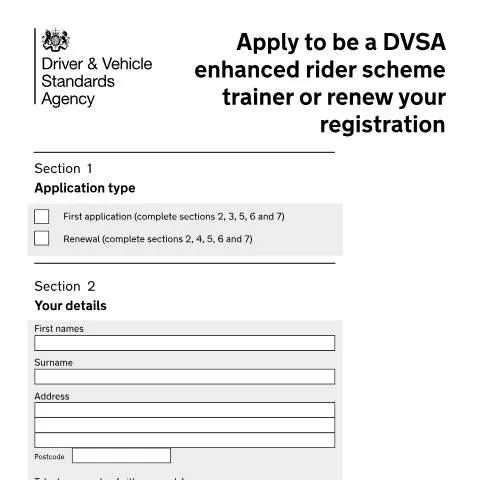
The Enhanced Rider Scheme Trainer Registration: Gateway to Advanced Motorcycling Instruction
For motorcycle enthusiasts seeking to elevate their role from skilled rider to professional instructor, the DVSA Enhanced Rider Scheme (ERS) represents a prestigious pathway into advanced motorcycling education. The ERS1 form serves as your formal application to join this elite cadre of trainers, positioning you to guide fellow motorcyclists towards achieving gold and silver standard advanced riding qualifications. This registration process, overseen by the Driver and Vehicle Standards Agency, demands not only exceptional riding credentials but also impeccable character standards and ongoing commitment to professional development.
The scheme operates within a carefully regulated framework where trainers deliver enhanced rider training to motorcyclists seeking to advance beyond basic licensing requirements. Unlike standard CBT instructors or even DAS instructors, ERS trainers specialise in post-test development, working with riders who already hold full motorcycle licences but aspire to achieve recognised advanced riding standards through organisations such as the Institute of Advanced Motorists, RoSPA, or the British Motorcyclists Federation.
Dual-Track Application Process: New Registrations versus Renewals
The ERS1 form accommodates two distinct application pathways, each with tailored documentation requirements. First-time applicants must navigate sections 2, 3, 5, 6, and 7, providing comprehensive personal details, qualification evidence, character declarations, registration preferences, and formal declarations. This extensive process reflects DVSA's commitment to maintaining rigorous standards for new entrants to the scheme.
Renewal applicants follow a streamlined route, completing sections 2, 4, 5, 6, and 7. The key difference lies in section 4, where existing trainers simply provide their current DVSA enhanced rider scheme trainer registration number rather than demonstrating initial qualification credentials. However, renewal applicants must still undergo the same character scrutiny and maintain their advanced riding qualifications throughout their registration period.
| Application Type | Required Sections | Key Documentation | Processing Focus |
|---|---|---|---|
| First Application | 2, 3, 5, 6, 7 | Advanced qualification certificates, DAS status confirmation | Comprehensive vetting |
| Renewal | 2, 4, 5, 6, 7 | Current registration number, updated character details | Continued eligibility verification |
Advanced Qualification Requirements: The Foundation of Expertise
Section 3 of the ERS1 form addresses the cornerstone of trainer eligibility: advanced riding qualifications. DVSA recognises five specific pathways to demonstrate the requisite expertise level. The BMF Blue Riband rider award (gold or silver grade) represents one of the most challenging civilian motorcycle assessments, demanding precision riding skills across varied road conditions and traffic scenarios.
The DVSA special test option acknowledges the agency's own advanced assessment standards, available in both gold and silver grades. This route often appeals to riders with professional driving backgrounds or those seeking direct alignment with DVSA's assessment methodologies. Meanwhile, the IAM Advanced Rider Course provides a structured pathway through systematic training modules, culminating in a comprehensive road-based assessment.
RoSPA advanced riding tests (gold or silver grade) offer another recognised route, with RoSPA's reputation for rigorous safety-focused assessment making this qualification particularly valued within commercial and emergency service riding communities. The Diamond advanced or elite motorcycle test rounds out the recognised qualifications, representing a newer entrant to the advanced riding qualification landscape.
Direct Access Scheme Instructor Exemption
Qualified DAS instructors benefit from streamlined qualification requirements, acknowledging their existing professional standing within motorcycle instruction. However, this exemption applies specifically to the training course requirement rather than the advanced riding qualification itself. DAS instructors must still demonstrate possession of one of the five recognised advanced qualifications, ensuring that ERS trainers maintain expertise beyond basic licensing instruction.
Character Assessment: The Professional Standards Framework
Section 5 of the ERS1 form implements a comprehensive character assessment process, recognising that ERS trainers serve as ambassadors for advanced motorcycling standards. The six-year motoring conviction disclosure period reflects DVSA's understanding that minor infractions may occur even among skilled riders, but patterns of behaviour or serious offences warrant careful consideration.
The four-year disqualification disclosure requirement targets more serious contraventions of road traffic law, recognising that disqualification typically results from accumulated points, serious single offences, or court-imposed sanctions. Applicants facing this disclosure requirement should provide comprehensive context, including circumstances leading to disqualification and evidence of subsequent behaviour improvement.
Non-motoring offence declarations extend the character assessment beyond road-related conduct, acknowledging that ERS trainers interact with vulnerable road users and must maintain broader professional standards. This requirement covers all criminal convictions, regardless of perceived relevance to motorcycle instruction, allowing DVSA to make informed decisions about trainer suitability.
Pending Proceedings: Transparency During Legal Uncertainty
The requirement to declare pending court proceedings reflects DVSA's commitment to maintaining scheme integrity even during periods of legal uncertainty. Applicants awaiting trial or sentencing face complex decisions about application timing, as approval may be subject to proceedings outcomes. However, transparency during application often proves more beneficial than delayed disclosure following registration approval.
Registration Duration and Financial Considerations
ERS trainers choose between one-year and four-year registration periods, each offering distinct advantages depending on individual circumstances. Annual registration suits trainers uncertain about long-term commitment or those preferring lower initial financial outlay. This option also benefits trainers anticipating significant life changes that might affect their instruction capacity.
Four-year registration typically offers better value for committed trainers, reducing administrative burden and providing extended operational certainty. However, this longer commitment requires confidence in maintaining qualification standards and character requirements throughout the extended period. Registration fees, while not specified on the form itself, vary according to chosen duration and must be confirmed through current DVSA fee schedules.
Payment methods accommodate diverse preferences, with debit or credit card payments processed through direct DVSA contact, ensuring secure transaction handling. Cheque or postal order payments, made payable to 'Driver and Vehicle Standards Agency', suit applicants preferring traditional payment methods or lacking suitable payment cards.
Digital Identity and Public Visibility Preferences
Modern ERS registration incorporates digital identity elements that extend beyond traditional paperwork. The option to utilise photocard driving licence photographs for trainer badges streamlines the identification process while maintaining professional presentation standards. Trainers declining this option or holding paper driving licences must provide two passport-style photographs, adding complexity and cost to their application.
The public directory inclusion option represents a significant business decision for prospective trainers. Choosing visibility on the GOV.UK trainer directory provides direct access to potential clients seeking advanced instruction, effectively creating a government-endorsed referral system. However, this visibility brings obligations to maintain professional standards and respond appropriately to public enquiries.
Trainers declining public directory inclusion often operate through established training schools, personal networks, or prefer to manage their client acquisition independently. This choice doesn't affect registration validity but may influence business development opportunities within the enhanced rider training market.
Ongoing Obligations and Professional Responsibilities
ERS registration extends far beyond initial approval, creating ongoing obligations that registered trainers must understand and maintain. The seven-day notification requirement for address changes ensures DVSA maintains accurate trainer records and can fulfil its regulatory oversight responsibilities. This requirement covers both residential addresses and business premises used for instruction purposes.
Conviction notification obligations continue throughout the registration period, requiring trainers to report motoring offences, fixed penalties, and non-motoring convictions within seven days of occurrence. This ongoing disclosure requirement reflects the dynamic nature of character assessment and DVSA's commitment to maintaining scheme standards throughout registration periods rather than solely at approval points.
Standards checks conducted during normal working hours represent quality assurance measures that registered trainers must accommodate. These assessments evaluate both technical instruction capabilities and adherence to DVSA standards, with outcomes potentially affecting continued registration eligibility. Trainers should anticipate these checks as routine professional development opportunities rather than punitive measures.
Legal Framework and Compliance Implications
The ERS1 form operates within a robust legal framework that extends significant penalties for deliberate false statements. The £2,500 maximum fine for fraudulent applications reflects the serious consequences of attempting to circumvent registration requirements. This penalty provision underscores DVSA's commitment to maintaining scheme integrity and protecting public confidence in enhanced rider training standards.
Data protection considerations align with current UK GDPR requirements, with DVSA processing personal data specifically for registration assessment and ongoing scheme administration. The agency's privacy policy, accessible through gov.uk/dvsa/privacy, provides detailed information about data handling practices, retention periods, and individual rights regarding personal information processing.
Potential data sharing arrangements encompass criminal investigations and fraud prevention activities, reflecting DVSA's cooperation with law enforcement agencies and other regulatory bodies. Applicants should understand that registration involves entering a regulated environment where information sharing may occur under specific legal circumstances, though routine commercial sharing remains prohibited.
Professional Standards Integration
ERS trainer registration integrates with broader motorcycle training regulation, creating professional pathways that complement existing instructor qualifications while addressing specific advanced training needs. This integration ensures that enhanced rider training maintains consistency with DVSA's overall approach to motorcycle education while recognising the specialised nature of post-test development work.
The registration system's emphasis on ongoing compliance reflects modern regulatory approaches that prioritise continuous professional standards rather than one-time approval processes. This approach benefits both trainers, who receive ongoing support and quality assurance, and riders, who can be confident in the continuing competence of their instructors throughout training relationships that may extend over several months or years.
Understanding the Assessment Criteria and Performance Standards
The DVSA evaluates enhanced rider scheme trainer applications against stringent performance benchmarks that reflect the agency's commitment to road safety excellence. These criteria encompass both technical riding competency and instructional capability, with assessments conducted by qualified DVSA examiners who specialise in motorcycle training standards.
Your practical riding assessment will cover advanced manoeuvres including controlled emergency stops from various speeds, slow-speed precision handling through tight spaces, and demonstration of proper cornering techniques on both left and right-hand bends. Examiners pay particular attention to your ability to maintain perfect road positioning whilst simultaneously providing clear, safety-focused commentary that trainee riders can easily follow and replicate.
The instructional component requires you to demonstrate lesson planning skills, risk assessment capabilities, and the ability to adapt your teaching style to accommodate different learning preferences. You'll need to show competence in identifying and correcting common rider errors such as inappropriate gear selection, poor observation techniques, or inadequate hazard perception. DVSA expects trainers to deliver structured feedback that builds confidence whilst addressing safety concerns constructively.
Communication skills form a critical assessment element, particularly your ability to explain complex riding concepts using clear, jargon-free language. Examiners will evaluate how effectively you break down advanced techniques into manageable steps, ensuring trainees can progress safely through increasingly challenging scenarios. Your ability to maintain calm, professional demeanour under pressure—such as when dealing with nervous or overconfident riders—will also be scrutinised.
Documentation and record-keeping standards require meticulous attention to detail. You must demonstrate familiarity with DVSA's training record requirements, including accurate completion of progress reports and incident documentation. Any gaps in your paperwork or failure to follow prescribed procedures could result in assessment failure, regardless of your riding ability.
Navigating the Registration Renewal Process and Continuing Professional Development
Enhanced rider scheme trainer registration operates on a fixed-term basis, requiring periodic renewal to maintain active status. The renewal timeline typically begins approximately three months before your current registration expires, with DVSA sending notification letters to registered trainers at their correspondence address. Missing these renewal deadlines can result in immediate suspension of your training authority, potentially disrupting ongoing courses and affecting your professional reputation.
Renewal applications demand evidence of continued professional development activities undertaken since your last registration period. DVSA expects trainers to participate in refresher courses, attend safety seminars, or complete additional motorcycle-related qualifications that enhance their instructional capabilities. Acceptable CPD activities might include advanced riding courses with recognised organisations, first aid certification updates, or specialised training in areas such as defensive riding techniques or motorcycle maintenance awareness.
The renewal process includes a comprehensive review of your training delivery statistics and any feedback received from course participants or DVSA monitoring visits. Trainers with consistently high pass rates and positive participant feedback typically experience streamlined renewal procedures, whilst those with concerning performance indicators may face additional scrutiny or requirements for remedial training before approval.
Administrative requirements for renewal mirror the initial application process but often include additional documentation such as updated insurance certificates, revised risk assessments for training locations, or evidence of equipment upgrades. Any changes to your training venue, contact details, or operational procedures must be declared and may trigger site visits or additional assessments.
DVSA maintains the right to impose conditions on renewed registrations, particularly where previous performance indicators suggest areas for improvement. These conditions might include mandatory observation sessions, restricted trainee numbers, or requirements for additional supervision until performance standards improve to acceptable levels.
Managing Training Operations and Regulatory Compliance Requirements
Operating as a DVSA-registered enhanced rider scheme trainer involves navigating complex regulatory frameworks that extend far beyond basic riding instruction. Your training operations must comply with health and safety legislation, data protection requirements, and consumer protection standards that govern commercial training provision across the United Kingdom.
Health and Safety Executive (HSE) regulations require comprehensive risk assessments for all training activities, covering everything from motorcycle mechanical condition to weather-related hazards and trainee medical fitness. You must maintain detailed records of safety briefings, equipment inspections, and incident reporting procedures that could be scrutinised during regulatory inspections or following any training-related accidents.
Data protection compliance under UK GDPR and the Data Protection Act 2018 demands careful handling of trainee personal information, including contact details, medical declarations, and training progress records. You must implement appropriate security measures for both physical and electronic records, ensure trainees understand how their data will be used, and maintain audit trails for information sharing with DVSA or other authorised bodies.
Insurance requirements extend beyond basic public liability coverage to include professional indemnity protection and specific motorcycle training activity coverage. Standard motor trade policies may not provide adequate protection for training activities, potentially leaving you exposed to significant financial liability in the event of accidents or professional negligence claims.
Consumer protection legislation requires clear, accurate advertising and transparent pricing structures for your training services. Any claims about pass rates, course effectiveness, or qualification outcomes must be substantiated with verifiable evidence. Misleading advertising could result in Trading Standards investigations and potential enforcement action that might affect your DVSA registration status.
Equipment maintenance and safety standards demand regular inspection schedules for training motorcycles, protective equipment, and communication systems. DVSA may conduct unannounced inspections to verify compliance with prescribed standards, and any deficiencies could result in immediate suspension of training activities until remedial action is completed.
Financial record-keeping requirements support both tax obligations and potential DVSA audits of your training operations. Accurate documentation of course fees, equipment expenses, and professional development costs ensures compliance with HMRC self-assessment requirements whilst providing evidence of legitimate business operations should questions arise about your training activities.