Understanding the Keeper's Certificate for Heavy Goods Vehicles
When navigating the complexities of operating Heavy Goods Vehicles (HGVs) in the UK, the Keeper's Certificate is a crucial document that every operator must secure. Imagine a scenario where a transport company needs to establish ownership and responsibility for a fleet of lorries. This certificate plays a pivotal role in solidifying that authority, enabling operators to comply with transport regulations while enhancing operational efficiency. Below, we delve into the intricate details surrounding this essential certificate.
Key Aspects of the Keeper's Certificate
The Keeper's Certificate, issued by the Driver and Vehicle Standards Agency (DVSA), serves as an official recognition of the individual or entity responsible for the HGV. This certificate is not merely a formality; it carries significant legal weight and is often requested by various regulatory bodies. Understanding its implications and requirements is vital for any operator in the transport sector.
Duration and Renewal of the Certificate
The validity of the Keeper's Certificate typically aligns with the ownership of the vehicle. However, there may be specific conditions regarding renewal:
- Initial Validity: The certificate remains valid as long as the vehicle is owned by the keeper and is in compliance with DVSA regulations.
- Renewal Process: If a vehicle is sold or transferred, a new Keeper's Certificate must be applied for by the new owner. The previous owner cannot transfer the existing certificate.
Operators should ensure that any changes in ownership are promptly reported to avoid legal complications. Failure to do so may result in penalties or disruptions in operations.
Navigating the Application Process
Applying for a Keeper's Certificate requires careful attention to detail. The DVSA has outlined a structured process to ensure that applications are handled efficiently. Here’s a step-by-step guide:
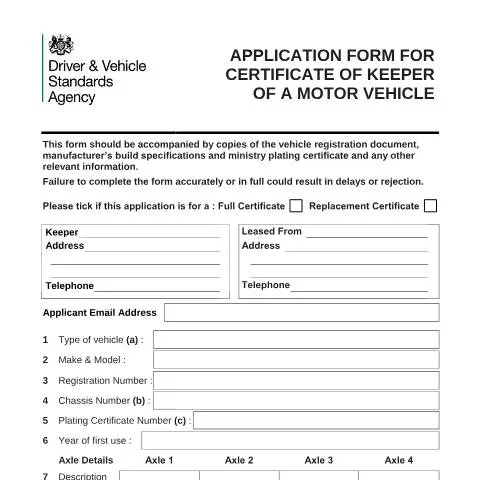
- Gather Necessary Documents: Before initiating the application, ensure that you have the following documents ready:
- Vehicle Registration Document
- Manufacturer's Build Specifications
- Ministry Plating Certificate
- Complete the Application Form: Fill out the application form (DVSA 0233) accurately, providing all required details about the vehicle, including make, model, chassis number, and weight specifications.
- Submission: Send the completed application form along with the required documentation to the DVSA. Applications can be submitted by post, and the payment method must be clearly indicated.
- Response Time: Typically, you can expect to receive the certificate within a few weeks, depending on the DVSA’s processing queue.
Ensuring every detail is correct will help avoid delays or rejections, thereby streamlining the process.
Eligibility Criteria for Applicants
Not everyone can apply for a Keeper's Certificate; eligibility is predominantly determined by ownership or leasing agreements. Here’s a breakdown of who can apply:
- Ownership: Individuals or companies who own the HGV can apply for the certificate. Proof of ownership must be included in the application.
- Leasing Agreements: If the HGV is leased, the lessee must provide appropriate documentation indicating their authority to apply on behalf of the vehicle.
- Delegated Authority: If an agent is applying on behalf of the keeper, an official delegation letter must accompany the application.
This eligibility ensures that only responsible parties can claim ownership and accountability, enhancing compliance with transport regulations.
Practical Applications and Regulatory Requirements
The Keeper's Certificate is not merely a bureaucratic formality; it has significant practical applications across various sectors. Here are some scenarios where this certificate is essential:
- Transport Compliance: Regulatory bodies such as the DVSA, local councils, and the police may require the certificate during inspections or investigations.
- Insurance Verification: Insurance companies often request the Keeper's Certificate to validate claims related to vehicle ownership or incidents involving the HGV.
- Legal Proceedings: In disputes regarding ownership or responsibility for accidents, the Keeper's Certificate serves as a crucial piece of evidence.
Understanding these applications underscores the certificate's importance in day-to-day operations and legal contexts.
Clarifying the Legal Standing of the Keeper's Certificate
The Keeper's Certificate possesses substantial legal validity in the UK. It serves not only as proof of ownership but also as an official document that outlines the responsibilities of the keeper. Here’s why its legal standing is significant:
- Liability: The certificate makes the keeper liable for any infringements, accidents, or violations involving the vehicle. This accountability is crucial in maintaining road safety and compliance.
- Proof of Ownership: In legal disputes, the Keeper's Certificate stands as a significant document to prove ownership and the associated rights and responsibilities.
- Regulatory Compliance: Maintaining a valid and up-to-date Keeper's Certificate is essential for complying with UK transport laws, preventing potential fines or legal issues.
Thus, the legal implications of holding a Keeper's Certificate extend far beyond mere ownership; they encompass a range of responsibilities that must be managed diligently.
Addressing Issues: Loss, Errors, or Disputes
Mishaps regarding the Keeper's Certificate can occur, whether through loss, errors in details, or disputes over ownership. Knowing how to address these issues is essential for maintaining compliance:
In Case of Loss
If the Keeper's Certificate is lost or damaged, follow these steps:
- Immediate Reporting: Report the loss to the DVSA as quickly as possible to prevent fraudulent use of the certificate.
- Application for Replacement: Complete the application for a replacement certificate, providing necessary details to justify the request.
- Documentation: Include any prior documentation that verifies your previous ownership or the issuance of the initial certificate.
Handling Errors
Errors in the Keeper's Certificate can lead to serious implications. If you discover any inaccuracies:
- Contact DVSA: Reach out to the DVSA immediately to report the error.
- Provide Supporting Documentation: Be prepared to submit documentation that proves the correct information.
- Request Corrections: Officially request that the DVSA amend the details on the certificate.
Disputes Over Ownership
In cases of contested ownership:
- Gather Evidence: Compile all documentation that supports your claim of ownership.
- Seek Legal Advice: Depending on the complexity of the dispute, consider consulting with a legal expert to understand your rights and obligations.
- Mediation: Sometimes, mediation can resolve disputes efficiently without resorting to legal action.
Acting quickly and maintaining thorough documentation will help you navigate any challenges to your Keeper's Certificate effectively.
Payment Process for Applications
When applying for the Keeper's Certificate, understanding the payment options is essential for a smooth application process. Here are the accepted methods to settle the necessary fees:
| Payment Method | Description |
|---|---|
| Cheque/Post Order | Payable to the Driver and Vehicle Standards Agency (DVSA). Only acceptable with postal applications. |
| Credit/Debit Card | Payment arranged after the receipt of your application; details will be provided via email. |
| Pre-Funded Account | Available for regular users; the signatory must be an authorized delegate. |
Be aware that each payment method may have specific processing times, especially cheques, which can take longer to clear. It is advisable to choose the method that best suits your urgent needs.
Conclusion: The Keeper's Certificate in Practice
The Keeper's Certificate for Heavy Goods Vehicles is an indispensable document that carries significant responsibilities and legal implications. For operators in the transport industry, understanding the application process, maintaining the validity of the certificate, and knowing how to navigate potential issues are crucial for successful operations. Keeping thorough records and staying informed about regulatory requirements will enhance compliance and operational efficiency. Ensuring all details are accurately reported and promptly addressed will safeguard against potential legal challenges, making the Keeper's Certificate a cornerstone of responsible vehicle management.
Understanding the Keeper's Certificate for HGVs
In the context of Heavy Goods Vehicles (HGVs), the keeper's certificate holds significant importance. It acts as a formal document that identifies the vehicle's registered keeper and serves crucial purposes such as ensuring accountability for the vehicle's usage, tax, and compliance with road traffic regulations. The keeper is oftentimes not the owner of the vehicle, highlighting the need for clarity in responsibilities and liabilities associated with the HGV.
When applying for a keeper's certificate, it is essential to understand that the definition of a 'keeper' can vary based on the operational structure of the vehicle. In commercial settings, the keeper might be a fleet manager or a logistics company, while for private use, the keeper is often the individual who regularly uses the vehicle. The implications of this distinction can affect how liabilities are assigned, particularly if the HGV is involved in an incident or if there are issues regarding tax compliance.
Documentation Required for a Keeper's Certificate Application
Applying for a keeper's certificate requires careful attention to the accompanying documentation. Applicants must ensure they provide accurate and complete information regarding the vehicle and its operational context. Key documents typically required include:
- Proof of Identity: A valid photo ID such as a passport or driver's license.
- Vehicle Registration Document: This document, often referred to as the V5C, proves that you are the registered keeper of the HGV.
- Insurance Certificate: Evidence of valid insurance coverage for the HGV, which should be comprehensive to cover third-party liabilities.
- Commercial Use Declaration (if applicable): If the vehicle is used for commercial purposes, you may need to provide a declaration that outlines the nature of that use.
In certain cases, additional documentation may be required. For instance, if the vehicle is leased or financed, the leasing agreement can also be necessary to validate your position as the keeper. It's important to ensure all documents are up-to-date and meet the requirements set forth by the Driver and Vehicle Licensing Agency (DVLA).
Common Pitfalls to Avoid When Applying
While the application process for a keeper's certificate is straightforward, there are several common pitfalls to avoid to ensure a smooth experience:
- Incorrect Information: Providing inaccurate personal or vehicle information can delay the processing of your application. Double-check for errors before submission.
- Missing Documents: Failure to include all necessary documentation can lead to a rejection of your application. Create a checklist before you apply, ensuring that you have everything required.
- Ignoring Deadlines: There may be specific deadlines connected to the application process, especially if there are changes in keeper status. Be aware of these timelines to avoid penalties.
- Not Keeping Records: Always maintain copies of submitted applications and correspondence with the DVLA. This can be crucial if disputes arise regarding your keeper status.
By navigating these potential pitfalls proactively, applicants can enhance their chances of a successful application and maintain compliance with UK regulations concerning HGVs.