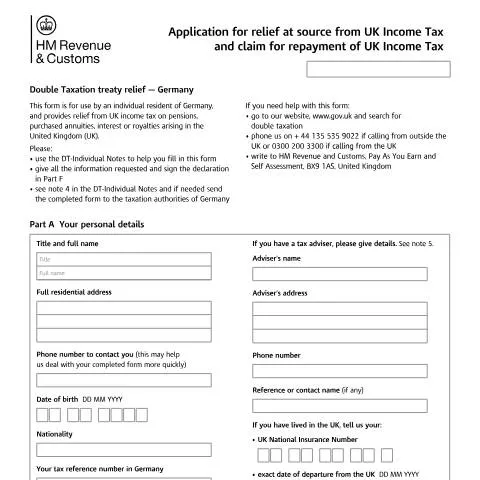
Understanding the DT-Individual Germany Form: Your Gateway to UK-Germany Tax Treaty Benefits
For German residents receiving UK-sourced income, navigating the complexities of double taxation can transform a straightforward pension or royalty payment into a bureaucratic maze. The DT-Individual (Germany) form serves as your official application to HMRC for relief under the UK-Germany Double Taxation Treaty, ensuring you don't pay tax twice on the same income. This document becomes particularly crucial when you're receiving UK pensions after relocating to Germany, earning royalties from UK intellectual property, or collecting interest from UK sources whilst maintaining German tax residency.
The form's significance extends beyond simple tax relief—it establishes your legal standing under international tax agreements and creates an official record with HMRC of your cross-border tax position. Understanding when and how to use this form correctly can mean the difference between paying appropriate tax rates and facing unnecessary financial burdens that breach treaty provisions.
Who Must Navigate the DT-Individual Germany Process
The primary users of this form fall into distinct categories, each with specific circumstances triggering the need for treaty relief. German tax residents receiving UK pensions represent the largest group, particularly those who worked in the UK under PAYE systems before relocating to Germany for retirement. These individuals often discover that UK pension providers automatically deduct UK income tax at source, creating double taxation when Germany also taxes the same pension income.
Recent UK departures form another significant category. If you've left the UK within the current or previous tax year and established German residency, the form helps clarify your tax position under the Statutory Residence Test. This timing proves crucial—departures mid-tax year may qualify for split-year treatment, affecting how much UK tax relief you can claim.
Intellectual property holders represent a more specialised group. German residents earning royalties from UK sources—whether from literary works, patents, or licensing agreements—must use this form to access reduced withholding tax rates. The complexity increases when you're not the original creator but have acquired rights through assignment or licensing.
Business owners operating across borders also require this form when they have UK income but conduct their primary business from Germany. The treaty provides specific relief for those without a UK permanent establishment, but proving this status requires careful documentation through the DT-Individual process.
Special Circumstances Requiring Enhanced Documentation
Certain situations demand additional scrutiny and documentation. If you maintain UK property whilst resident in Germany, HMRC requires detailed explanations about rental arrangements and your intentions regarding the property. Similarly, those receiving special tax benefits in Germany that reduce their German tax liability must disclose these arrangements, as they can affect treaty relief eligibility.
The Form's Role Within HMRC's Double Taxation Framework
The DT-Individual (Germany) form operates within a broader ecosystem of international tax relief mechanisms. Unlike general tax return amendments or standard HMRC correspondence, this form specifically invokes treaty provisions negotiated between the UK and German governments. It serves dual purposes: requesting prospective relief at source for future payments and claiming repayment of tax already deducted incorrectly.
HMRC processes these applications through specialised teams familiar with treaty interpretation and cross-border tax issues. The form creates an official record that can influence future UK tax treatments and may be referenced in subsequent dealings with both UK and German tax authorities. This institutional memory proves valuable when circumstances change or when you need to demonstrate your historical tax position.
The document also serves as a communication bridge between tax systems. Part A includes a section specifically for German tax authority certification, creating a formal link between your German tax status and your UK treaty claim. This certification process varies depending on German regional procedures, with some Finanzämter sending forms directly to HMRC whilst others return certified forms to taxpayers for submission.
Chronological Journey: From Income Recognition to Treaty Relief
The treaty relief process typically begins when you first recognise UK-sourced income whilst maintaining German tax residency. For pension recipients, this moment often arrives with the first UK pension payment that includes unexpected UK tax deductions. The realisation that you're potentially subject to double taxation triggers the need for formal relief.
Initial assessment phase involves determining your eligibility under both UK departure rules and German residency requirements. If you left the UK during the current tax year, you must first establish whether you qualify for split-year treatment under the Statutory Residence Test. This determination affects both the timing of your application and the scope of relief available.
Form completion follows a logical sequence, with Part A establishing your basic credentials and Part B probing deeper into your tax circumstances. The questions in Part B1 serve as HMRC's gateway test—your answers determine whether treaty benefits apply and in what form. Questions about UK property ownership, business activities, and remittance patterns help HMRC assess the genuineness of your German residence and the appropriateness of treaty relief.
Processing Timeline and HMRC Response Patterns
Once submitted, HMRC typically acknowledges receipt within two to three weeks, though processing times vary significantly based on case complexity. Straightforward pension cases with clear German residency often resolve within six to eight weeks. More complex situations involving business income or property ownership may require additional correspondence and extend processing to twelve weeks or longer.
| Application Type | Typical Processing Time | Common Delays |
|---|---|---|
| UK pension relief | 6-8 weeks | Missing German tax certificate |
| Royalty relief | 8-12 weeks | Licensing documentation queries |
| Interest relief | 4-6 weeks | Source verification requirements |
| Complex business cases | 12-16 weeks | Permanent establishment assessments |
Mastering the Documentation Requirements
Success with the DT-Individual (Germany) form depends heavily on providing appropriate supporting documentation from the outset. German tax residency evidence forms the foundation of any application. While the form includes space for German tax authority certification, you should also prepare additional residency evidence including German tax registration documents, local authority registration (Anmeldung), and evidence of German address establishment.
UK departure documentation proves equally crucial for recent emigrants. HMRC requires precise departure dates and evidence supporting your non-resident status under the Statutory Residence Test. This includes flight tickets, removal company invoices, UK property disposal documentation, and evidence of severing UK ties such as closing bank accounts or ending memberships.
Income source documentation varies by payment type but generally requires official statements from UK payers. Pension providers should supply annual statements showing gross payments and tax deductions. For royalties, you need licensing agreements, copyright assignments, and payment schedules. Interest relief applications require bank statements and investment documentation proving the UK source of payments.
Preparing for Complex Scenarios
Property-related complications require comprehensive documentation. If you maintain UK property whilst claiming German residency, prepare rental agreements, property management contracts, and evidence of rental income treatment in your German tax returns. HMRC particularly scrutinises cases where UK property remains available for personal use, requiring detailed explanations of access arrangements and usage patterns.
Business activity documentation becomes critical when you maintain any UK commercial connections. This includes client contracts, office lease agreements, and evidence of where you perform work activities. The permanent establishment threshold determines treaty eligibility, making precise documentation of your business arrangements essential.
Distinguishing DT-Individual Germany from Alternative Relief Routes
The DT-Individual (Germany) form represents just one pathway to UK-Germany treaty relief, and choosing the correct route significantly impacts both processing times and outcomes. Many taxpayers incorrectly assume this form applies to all UK-Germany tax issues, when in fact it specifically targets individual income recipients rather than companies or trustees.
Corporate treaty relief requires entirely different procedures through HMRC's specialist corporate teams. Similarly, trust-related income involves distinct forms and processes that don't overlap with individual relief applications. Understanding these boundaries prevents misdirected applications and associated delays.
The form also differs from general non-resident tax relief applications. While both may result in reduced UK tax, the DT-Individual process specifically invokes treaty provisions with their associated benefits and restrictions. Treaty relief often provides more favourable tax rates but requires meeting specific residency and source requirements that don't apply to general non-resident relief.
Self Assessment amendments represent another frequently confused alternative. Some taxpayers attempt to claim treaty relief through normal Self Assessment procedures, but this approach lacks the formal treaty invocation that ensures appropriate relief rates and may result in HMRC rejecting claims or applying incorrect tax rates.
Coordination with German Tax Obligations
The DT-Individual process must coordinate with German tax reporting requirements. German residents receiving UK treaty relief must typically report this income in their German tax returns, often requiring specific forms and calculations to prevent double taxation from the German side. This coordination becomes particularly complex when German tax benefits or special regimes affect your overall tax position.
Strategic Timing Considerations and Annual Cycles
Timing your DT-Individual (Germany) application strategically can significantly impact both the relief available and the administrative burden involved. The UK tax year structure (6 April to 5 April) creates specific opportunities and constraints that don't align with German calendar year taxation, requiring careful coordination.
New German residents should ideally submit applications before receiving their first UK payments, allowing HMRC to arrange relief at source rather than requiring subsequent repayment claims. This prospective approach prevents cash flow issues and reduces administrative complexity. However, the form also accommodates retrospective claims for up to four years, providing flexibility for those discovering treaty relief opportunities after the fact.
Annual review timing proves crucial for ongoing treaty relief. Changes in German residency status, UK property ownership, or business activities may affect treaty eligibility, requiring updated applications or notifications to HMRC. The form includes provisions for reporting such changes, but proactive communication often prevents complications.
UK departure timing within the tax year creates specific strategic considerations. Those leaving the UK early in the tax year (April to September) often benefit from split-year treatment, potentially reducing UK tax liability on pre-departure income. However, this benefit requires meeting specific conditions and may affect subsequent treaty relief applications.
Managing Multiple Income Sources and Payment Schedules
Complex cases involving multiple UK income sources require coordinated application strategies. Different income types (pensions, royalties, interest) may qualify for different treaty relief rates and have varying processing requirements. Submitting separate applications for each income type, whilst more administrative burden, often results in clearer outcomes and faster processing for each element.
Quarterly or monthly payment schedules create ongoing management requirements. Once HMRC approves treaty relief, they typically issue guidance to UK payers about appropriate tax deduction rates. However, monitoring actual deductions and addressing discrepancies requires ongoing attention, particularly when payer systems don't immediately implement HMRC instructions.
Post-Submission Management and Long-term Compliance
Successful DT-Individual (Germany) submission marks the beginning rather than the end of your UK-Germany treaty relationship. HMRC's approval creates ongoing obligations and opportunities that require active management to maintain compliance and optimise tax outcomes.
Monitoring actual tax deductions becomes essential once relief takes effect. UK payers should implement HMRC's relief instructions, but system errors, staff changes, or administrative oversights can result in continued inappropriate deductions. Regular review of payslips and payment statements helps identify problems early, when correction proves simpler.
Changes in circumstances trigger notification requirements that many taxpayers overlook. Returning to UK residency, disposing of German property, or changes in business activities can all affect treaty eligibility. HMRC expects proactive notification of such changes, and failure to comply can result in retrospective tax assessments and penalties.
The form creates a formal relationship with HMRC that extends beyond the immediate relief application. Your file becomes a reference point for future UK tax matters, including potential inheritance tax issues, capital gains tax on UK assets, or complications arising from subsequent UK visits or property transactions.
Building Long-term Cross-border Tax Strategy
Successful treaty relief application often reveals opportunities for broader tax planning optimisation. Understanding your established tax position under UK-Germany treaty provisions can inform decisions about investment structures, pension planning, and property ownership arrangements. However, such planning should always consider both UK and German tax implications, as treaty relief in one jurisdiction may affect tax treatment in the other.
Documentation retention becomes crucial for long-term compliance. HMRC may review treaty relief applications years after initial approval, particularly if circumstances change or if they identify systematic issues with particular types of relief. Maintaining comprehensive records of your German residency, UK income sources, and treaty relief applications provides protection against future challenges and supports any necessary amendments or updates to your tax position.