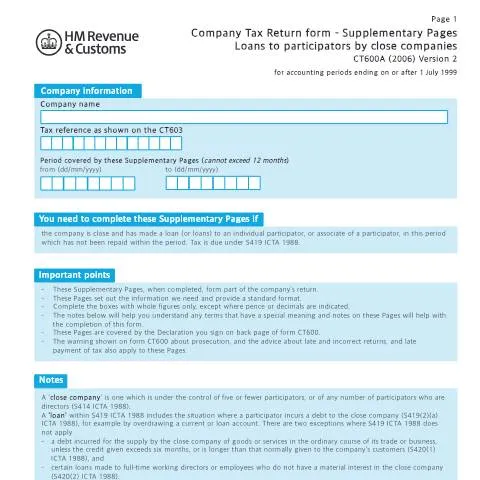
Understanding the Importance of CT600A: Loans to Participators
The landscape of corporate finance in the UK is intricate and crucial for maintaining compliance with tax regulations. Among the documents that businesses must navigate, the CT600A form stands out, particularly for close companies making loans to participators. Understanding this document is vital for ensuring that both the company and its directors adhere to the tax obligations established by HM Revenue & Customs (HMRC). This article delves into the specifics of the CT600A form, guiding you through its significance, the responsibilities of those involved, and the processes associated with it.
Who Needs to File the CT600A?
The primary focus of the CT600A form is on close companies, defined under the Income Tax Act 1988. A "close company" is typically one that is controlled by either five or fewer participators or by any number of participators who are also directors. The ramifications of this classification are significant when it comes to tax liabilities, particularly under Section 419 of the Income and Corporation Taxes Act 1988.
Identifying Participators and Associates
A participator doesn't solely refer to shareholders; it includes anyone with a financial interest in the company. This could encompass loan creditors as well. Associates of participators extend the definition further, covering relatives, partners, and trustees of settlements associated with participators. Understanding who qualifies as a participator or an associate is crucial for determining the scope of loans that necessitate reporting on the CT600A.
Navigating the Loan Reporting Process
When a close company extends loans to participators or their associates, the CT600A must be completed if those loans remain unpaid by the end of the accounting period. To report accurately, organisations should follow this structured process:
Step-by-Step Completion
Gathering Relevant Information: Before diving into the form, collect data on all loans made during the accounting period. This includes:
- Names of the participators or associates.
- Amounts borrowed and details of repayments if any.
- Dates of any transactions related to these loans.
Completing Part 1: This section details outstanding loans made during the accounting period. Each participator's or associate's loan account must be detailed. It's important to accurately calculate the total debit entries minus any credit entries.
Filling Out Part 2 for Relief Claims: If a loan was repaid, released, or written off after the end of the accounting period but before nine months and one day from it, you need to fill out Part 2. This allows the company to claim relief on the tax liability associated with these loans.
Timing: Crucial Dates and Deadlines
The timing of your submissions is critical, as any deviations may result in penalties or interest on unpaid taxes. The accounting period for which the CT600A is completed cannot exceed 12 months, and the tax year runs from 6 April to 5 April the following year. Companies must submit their Corporation Tax returns, including the CT600A, by the Self Assessment deadline of 31 January following the end of the accounting period.
Understanding What's Next
After submission, it's essential to know what happens next:
- Assessment by HMRC: HMRC will review the submitted forms alongside other Corporation Tax returns. They may request additional documentation or clarification regarding the loans reported.
- Potential Penalties: If HMRC identifies discrepancies or if a company fails to submit the form on time, penalties can be severe. Understanding the importance of accurate reporting helps mitigate these risks.
Unique Aspects: Distinguishing CT600A from Other Forms
While the CT600A shares the landscape with other Corporation Tax-related forms, it has unique distinctions that set it apart:
- Focus on Loans: Unlike the main CT600 form, which covers overall Corporate Tax obligations, the CT600A specifically addresses loans to participators, ensuring that the tax implications of these transactions are adequately captured.
- Conditions for Exemption: Certain loans may not require reporting on the CT600A, such as those for goods or services provided in the ordinary course of business, as long as the terms do not exceed six months. Understanding these exceptions is crucial for accurate reporting.
Dealing with Issues: What If Errors Arise?
Mistakes in the completion of the CT600A can lead to significant issues, from penalties to a reassessment of taxes owed. Here’s how to navigate potential pitfalls:
Steps to Take in Case of Errors
Identifying the Error Promptly: As soon as you become aware of an error—be it in calculations, missing loans, or incorrect participator information—address it immediately.
Amending the Submission: HMRC allows for amendments to be made to Corporation Tax returns. You can submit a correction using the appropriate method outlined by HMRC, including your valid reasons for the amendments.
Keeping Detailed Records: Maintain thorough records of all communications with HMRC, along with the original and amended forms. This will provide essential proof of compliance in case of future questions.
The Role of CT600A in Your Company's Financial Health
The CT600A is more than just a bureaucratic requirement; it serves as a critical instrument in managing a company’s financial health. By accurately reporting loans to participators, companies can avoid unnecessary tax liabilities and maintain transparency with HMRC, which is essential for fostering trust and ensuring compliance.
Long-Term Implications of Proper Reporting
Improved Tax Management: By adhering to the regulations set forth with the CT600A, companies can better manage their tax obligations, leading to improved cash flow and financial planning.
Avoiding Legal Issues: Ensuring compliance with the Corporation Tax obligations associated with close companies prevents potential legal challenges from HMRC, safeguarding the company’s reputation.
Enhancing Stakeholder Confidence: Accurate and timely reporting enhances the confidence of stakeholders, including investors, employees, and directors, in the company’s governance practices.
Conclusion: The Importance of the CT600A in Corporate Governance
In summary, the CT600A form is an indispensable element of a close company's corporate governance framework. It serves the dual purpose of ensuring compliance with tax laws and protecting the company's financial integrity. Staying informed about the requirements, processes, and implications of this form not only aids in legal adherence but also promotes sound financial practices within the organisation. Each participant in the process, from directors to accountants, plays a crucial role in ensuring that the completion and submission of the CT600A are handled with diligence and accuracy, fostering a culture of accountability and transparency in corporate financial practices.
Understanding Loans to Participators: Definitions and Implications
In the context of UK Corporation Tax, it is vital to understand what constitutes a 'participator.' A participator refers to a shareholder or a person with an interest in the company, which can include directors and their family members. This definition is crucial as it extends the tax implications of loans made by close companies to individuals who may not be formal shareholders but have significant influence over the company’s operations.
When a close company lends money to a participator, it triggers specific tax implications under the Corporation Tax framework. If the loan exceeds £10,000, it must be reported on the CT600A form, and the company may be subject to additional tax liabilities, particularly if the loan is not repaid by the end of the accounting period. Furthermore, the company may need to pay additional tax at a rate of 32.5% on the amount of the loan outstanding. Understanding the nuances of these definitions and implications is essential for ensuring compliance and optimizing financial strategies.
Exceptions and Reliefs Available for Close Companies
Close companies should be aware that certain exceptions and reliefs might apply to loans to participators. For instance, if a loan is made and repaid within nine months after the end of the accounting period, the company might avoid the additional tax charge altogether. This provision allows close companies some flexibility in managing cash flow and ensuring that they remain compliant with tax regulations.
Furthermore, if a loan is made to a participator for the purpose of acquiring shares in the company, and the shares are ultimately acquired, there may be reliefs available under specific conditions. It is crucial for companies to maintain comprehensive records of all transactions related to loans to participators, as this documentation will support their claim for any reliefs or exceptions when filing the CT600A.
It's advisable for close companies to consult tax professionals to explore the potential of these exceptions and to ensure they are well-informed about their obligations and rights under current tax law.
Impacts of Non-Compliance: Financial Penalties and Legal Consequences
Failure to comply with reporting requirements regarding loans to participators can have serious consequences for close companies. If a loan is not reported on the CT600A form, the company might face significant penalties, including fines assessed by HM Revenue & Customs (HMRC). Additionally, the company could be liable for the additional tax charge on the outstanding loan amount, which could substantially affect its financial position.
Moreover, repeated non-compliance may trigger an investigation by HMRC into the company's financial affairs, leading to a comprehensive audit. If discrepancies are found, the company could face not only financial penalties but potential legal ramifications as well, which could jeopardize the company's operations and reputation.
To avoid these pitfalls, it is essential for close companies to maintain accurate and detailed records of all loans to participators and ensure timely submission of the CT600A form. Engaging with tax professionals can also provide valuable insights and guidance, helping companies navigate the complexities of Corporation Tax obligations effectively.