Navigating the Corporation Tax: A Practical Guide to Completing the CT600 (2007) Version 2
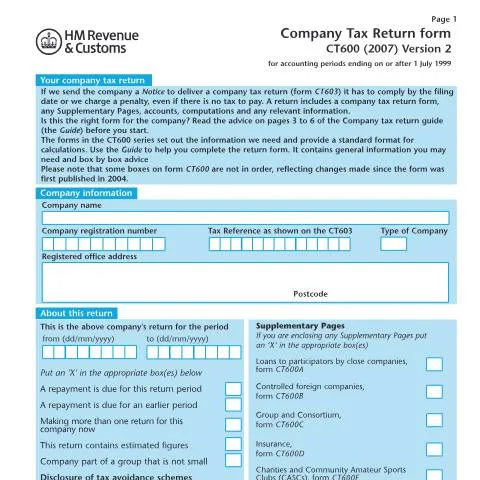
Completing a Corporation Tax return can be daunting for many businesses, particularly if they are new to the process. The CT600 (2007) Version 2 form serves as the official return for UK companies, detailing their income, profits, and tax liability for the accounting period. Failing to submit this form by the deadline may lead to significant penalties, regardless of whether there is tax to pay. Understanding the ins and outs of this form is critical for compliance and for unlocking the potential benefits available to compliant companies.
The Implications of Filing the CT600
When a company receives a Notice to deliver a Corporation Tax return (CT603), it can feel like a heavy weight on their shoulders. However, it's essential to understand what is at stake:
- Financial Penalties: If the return is not submitted by the deadline (typically 12 months after the end of the accounting period), you may incur fines that escalate over time.
- Tax Repayments: Filing the CT600 opens up avenues for any tax repayments or relief that your company may be entitled to. This could be crucial for cash flow management.
- Reputational Risk: Non-compliance can damage a company's reputation with stakeholders, including investors, suppliers, and customers.
Thus, timely and accurate completion of the CT600 is not just a legal obligation; it is a crucial aspect of maintaining a healthy business.
Understanding Specific Scenarios: Who Needs to File?
While many companies are required to file a CT600 form, several specific scenarios could necessitate additional considerations:
- Foreign Companies: If your business is based outside the UK but operates within it, specific rules apply. Foreign companies may need to file a CT600 if they have a UK permanent establishment.
- Small vs. Large Companies: There are differences in tax rates and relief options available depending on whether the company is classified as small or large. Small companies often benefit from lower tax rates.
- Group Companies: If your company is part of a group, the tax return may involve additional forms (e.g., CT600C for Group and Consortium). Understanding the group relief options is crucial to optimize tax positions.
A Step-by-Step Breakdown of the CT600 Form
Filling out the CT600 is not just about providing figures; it requires a comprehensive understanding of each section. Below is a detailed breakdown of the form:
1. Company Information
Begin by providing essential details: your company's name, registration number, and tax reference. Accuracy is crucial, as any discrepancies can delay processing.
2. Accounting Period
The accounting period must align with your company’s financial year. Any return submitted must relate to a period ending on or after 1 July 1999. Incorrect dates can lead to confusion and potential penalties.
3. Income and Profits
This is one of the most critical sections, where you report:
- Turnover: Total income generated through trading activities.
- Profits: Include net trading, professional profits, and any non-trading profits. Ensure you are capturing all relevant income streams accurately.
4. Deductions and Reliefs
This section allows for important deductions which can reduce your taxable profits. Be sure to include:
- Capital Allowances: Claim back tax on eligible capital expenditures.
- Losses: If you have carried forward losses from previous periods, ensure you provide the necessary details for these deductions.
5. Tax Calculation
The tax calculation section is where you determine your corporation tax liability. Accuracy is paramount:
- Base Tax Rate: Familiarize yourself with the current corporate tax rates as they may vary yearly.
- Final Amount: Be cautious with each calculation, as mistakes can lead to underpayment or overpayment.
6. Supplementary Pages
Depending on your company's specific activities, you may need to attach supplementary pages such as CT600A for loans to participators or CT600D for insurance. Each requires careful consideration, as omitting these can lead to incomplete filings.
Preparation of Supporting Documents
Before submitting your CT600, it’s vital to gather the necessary supporting documents. This includes:
- Financial Statements: Ensure your accounts are prepared and audited if necessary, as HMRC may request them to verify the figures submitted in the CT600.
- Tax Computations: Keep a detailed calculation of your tax liability to substantiate your figures in case of an audit.
- Other Relevant Documentation: Depending on your activities, this could include contracts, loan agreements, and records of any tax reliefs claimed.
Submitting the CT600: What to Expect
Once your CT600 is completed, it’s time to submit it. Here’s a quick outline of the process:
- Filing Method: The CT600 can be filed electronically or via paper, but electronic filing is encouraged for efficiency and to reduce the likelihood of errors.
- Deadline Awareness: Keep in mind the submission deadline—12 months after the end of the accounting period. Missing this date incurs penalties.
- Follow-Up: After submission, you'll receive acknowledgment from HMRC. If you do not, it is prudent to follow up to ensure your return has been received and is being processed.
Post-Submission: Monitoring Your Tax Return
After you’ve filed the CT600, monitoring its status is essential:
- Check for Correspondence: HMRC may contact you for clarification or additional information. Responding promptly can expedite processing.
- Appealing Decisions: If your return is challenged, you have the right to appeal. Ensure you understand the process for disputing HMRC's decisions.
- Tax Compliance: Maintain good records for future reference, as this can simplify the filing process for subsequent years.
Managing Complex Situations
Some companies may face unique challenges that complicate the CT600 filing process. Here are a few to consider:
- Change in Accounting Period: If your company changes its accounting period, you may need to file a return covering a short accounting period, which has specific guidelines.
- International Transactions: For companies engaged in international trade, transfer pricing rules may apply, which require additional disclosures.
- Tax Avoidance Schemes: Companies involved in tax avoidance must disclose their activities and may need to include specific supplementary pages in their return.
Conclusion: A Commitment to Compliance
The process of completing and submitting the CT600 (2007) Version 2 is an essential responsibility for UK companies. Understanding the nuances of the form, keeping accurate records, and being aware of deadlines can make this task manageable. By prioritising compliance, companies not only mitigate the risk of financial penalties but also position themselves for tax efficiencies.
Understanding the Corporation Tax Process in the UK
Navigating the Corporation Tax process in the UK can initially seem daunting, but understanding its fundamental components can simplify the journey for businesses of all sizes. Corporation Tax applies to the profits of limited companies, foreign companies with UK branches, and certain organisations such as clubs and societies. The key to successfully managing your Corporation Tax obligations lies in grasping the timeline and process surrounding the CT600 Company Tax Return.
The tax year runs from 1 April to 31 March, differing from the personal tax year, which runs from 6 April to 5 April. Businesses must file their CT600 tax return within 12 months of the end of their accounting period. If your accounting period ends on 31 March, for example, your CT600 must be submitted by the following 31 March. However, if your accounting period runs for a longer duration, you need to bear in mind that you can only submit a tax return covering a maximum of 12 months of profits.
One vital aspect to consider is the interaction between deadlines and financial reporting. Companies often prepare their financial statements before submitting their CT600. Keeping your accounting records up-to-date and ensuring that your financial forecasts take tax liabilities into consideration can help mitigate the risk of unexpected tax payments. This is especially important for small businesses that may not have dedicated financial departments.
Common Mistakes When Filing the CT600: How to Avoid Pitfalls
Filing the CT600 can lead to various common errors, which may result in penalties or delayed processing of your tax return. Being aware of these potential pitfalls can save your business significant time and money.
One frequent mistake is failing to correctly calculate the taxable profits. Many companies forget to account for all allowable deductions, such as business expenses and capital allowances. It is crucial to maintain meticulous records of all expenses related to your business, as they can significantly lower your taxable profit. Misclassifying expenses can also lead to issues; ensure that you categorise expenses accurately in line with HMRC guidelines.
Another common error arises from incorrect submissions of supplementary pages. Depending on your company's specific circumstances, you may need to complete additional pages alongside your CT600. For instance, if your company has capital gains, you must complete the 'Company Tax Return: Capital Gains' supplementary pages.
Pay close attention to the deadlines associated with these supplementary submissions as well. Not filing the required supplementary pages on time can result in penalties or interest charges. Moreover, it can lead to an incorrect assessment of your tax liability, potentially triggering the need for an unnecessary self-assessment process.
Additionally, businesses must ensure that they use the correct version of the CT600 form. The form has undergone various updates, and using an outdated version can lead to complications during the submission process. Always check the HMRC website for the most recent version of the CT600 before filing your tax return.
Finally, be vigilant about the accuracy of your company’s details, such as its registered address and contact information. Any discrepancies could cause delays in communication from HMRC, leading to further complications in your Corporation Tax obligations.
Planning for Corporation Tax: Strategies for Minimising Liability
Effective tax planning is an essential aspect of running a successful business in the UK. Understanding your obligations and developing strategies to minimise your Corporation Tax liability can contribute significantly to your company's overall financial health.
One common strategy is to make use of available reliefs and allowances. The Annual Investment Allowance (AIA) allows companies to deduct the full value of qualifying expenditure on plant and machinery from their pre-tax profits. This can significantly reduce your taxable profit. Companies may also benefit from Research and Development (R&D) tax relief, which allows for enhanced deductions for companies undertaking qualifying R&D activities.
Moreover, consider the timing of your expenses. If you can defer income or accelerate deductible expenses, you may be able to lower your tax liability for a given accounting period. This requires strategic planning and an understanding of cash flow dynamics, but it can be a useful tool for managing your tax responsibilities effectively.
Additionally, consider consulting with a tax professional or accountant who can offer tailored advice based on your company’s unique situation. They can help you navigate the complexities of Corporation Tax and facilitate compliance with HMRC regulations, ensuring that you take advantage of all available reliefs and incentives.
Finally, staying informed about changes in legislation is crucial. Tax laws and regulations are subject to change, and new reliefs or grants may become available that could benefit your business. Regularly reviewing your tax position and adapting your strategy accordingly will help you remain compliant while optimising your tax obligations.