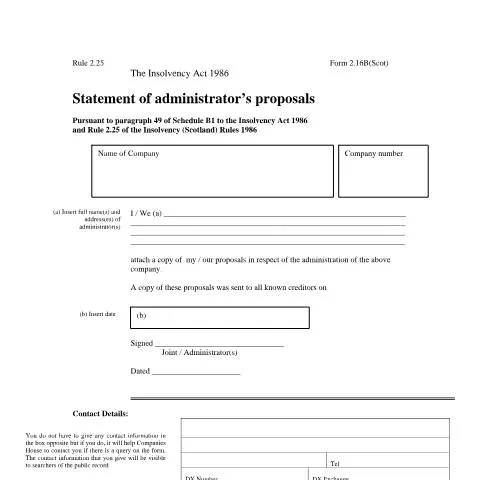
Understanding the Statement of Administrator’s Proposals: Form 2.16B (Scotland)
When a company in Scotland enters administration, a structured and transparent process is essential for both the company and its creditors. At the heart of this process lies the Statement of Administrator’s Proposals: Form 2.16B, which serves a pivotal role in setting out the course of action for the administration. This document not only outlines the administrator's plans but also provides a comprehensive framework to ensure that all stakeholders are well-informed and engaged in the proceedings.
The Legislative Framework Surrounding Administration
The origins of this form can be traced to the Insolvency Act 1986, which establishes the legal basis for company administration in the UK, particularly in Scotland. The need for such a framework arises from the complexity and potential upheaval that companies face during insolvency. The Insolvency (Scotland) Rules 1986 further delineate the procedural requirements necessary for effective administration, including the stipulations outlined in Rule 2.25.
- Insolvency Act 1986: Provides the structure for the administration process.
- Insolvency (Scotland) Rules 1986: Details procedural rules, including the submission of administrator proposals.
- Schedule B1: Introduces the framework for administration, ensuring creditor interests are safeguarded.
The legal framework mandates that administrators provide a comprehensive statement of proposals to all known creditors, ensuring transparency and allowing creditors to assess the proposed course of action. This document is crucial not just for the administration of the company but also for the protection of creditors' rights and interests.
Who Is Responsible for Submission?
The Form 2.16B is typically prepared and submitted by the appointed administrator. This individual is responsible for managing the company’s affairs during the administration process and must have the necessary expertise in insolvency matters. The administrator's responsibilities include:
- Collecting and reviewing financial data pertaining to the company.
- Engaging with creditors and stakeholders to communicate the proposals effectively.
- Formulating a strategy for the company's future, which may include restructuring, sale, or liquidation.
It is essential for the administrator to have a thorough understanding of the company’s financial position and to prepare the proposals in a manner that addresses the interests of creditors while also considering the viability of the company’s recovery.
Completing the Form: Key Components and Considerations
Filling out the Form 2.16B requires careful attention to detail. The form includes several key sections that need to be accurately completed to ensure compliance with legal requirements and to facilitate the administration process:
Basic Information
Every Form 2.16B must begin with the basic identification details:
- Name of the Administrator(s): Include full names and addresses.
- Company Name and Number: The full official name and the registered number of the company in administration.
Proposals Overview
The core of the form is the statement of proposals, which outlines the planned course of action. This section should clearly explain:
- The rationale behind the proposed actions.
- The expected outcomes for the creditors and the company.
- The timeframes for the proposed actions.
Communication with Creditors
As mandated, a copy of the proposals must be sent to all known creditors. This communication is vital as it allows creditors to prepare for any potential meetings and to raise objections if necessary. It is advisable to maintain a record of all communications for transparency and legal accountability.
Navigating the Submission Process
Once the form is correctly filled out, it must be submitted to the Registrar of Companies at Companies House. The submission process involves several key steps:
- Review: Ensure all sections of the form are completed accurately.
- Signature: The form must be signed by the administrator(s) to validate the proposal.
- Submission: Send the completed form to the designated address: Companies House, 4th Floor, Edinburgh Quay 2, 139 Fountainbridge, Edinburgh, EH3 9FF.
It is crucial to note the importance of the receipt date indicated on the form, as it marks the official submission and may influence the timeline for further proceedings.
Potential Outcomes Following Submission
Upon receipt of the Form 2.16B, several paths may unfold, influenced by the contents of the proposals and the responses from creditors. Key outcomes include:
- Approval of Proposals: If the creditors approve the proposals, the administrator can move forward with the outlined plan.
- Modification of Proposals: Creditors may request changes to the proposals, necessitating further negotiation and adjustments by the administrator.
- Rejection: If proposals are rejected, alternative solutions must be explored, which may include further restructuring or transitioning to liquidation.
A Comparative Look: Form 2.16B vs. Other Related Documents
It is essential to distinguish the Form 2.16B from other documents in the insolvency process, as this can help administrators and creditors avoid confusion. A few notable comparisons include:
| Document | Purpose | Key Differences |
|---|---|---|
| Form 2.16B | Outlines proposals for administration | Specifically for administrator proposals in insolvency |
| Form 2.16A | Informs creditors of the appointment of an administrator | Not a proposal document; serves as notice |
| Form P1 | Used for voluntary liquidation proposals | Different context; applies when a company elects liquidation |
Understanding these differences is vital for ensuring appropriate documentation is used throughout the insolvency process.
Unique Challenges and Considerations for Administrators
Administrators may face unique challenges when preparing and submitting the Form 2.16B, particularly in complex scenarios such as:
- Foreign Creditors: If the company has international creditors, communication and compliance with various jurisdictions may complicate the process.
- Complex Corporate Structures: Companies with subsidiaries or complex ownership structures may necessitate additional disclosures and considerations in the proposals.
- Urgent Situations: In cases where timely action is critical, the administrator must balance the need for swift action with comprehensive proposal preparation.
Each of these scenarios requires careful navigation to ensure that the interests of all stakeholders are adequately represented while adhering to regulatory requirements.
Final Steps and Ongoing Responsibilities of Administrators
After the proposals are filed and approved, the administrator’s responsibilities continue. They must diligently work towards implementing the approved proposals while maintaining open lines of communication with creditors. Regular updates and transparency are essential in managing the administration process effectively.
Failure to adhere to the outlined proposals or to keep stakeholders informed can lead to a loss of trust and potential legal ramifications for the administrator.
Document Retention and Future Implications
It's recommended that administrators retain copies of the Form 2.16B and all accompanying documents for a minimum of six years following the completion of the administration process. Proper record-keeping is essential not only for compliance but also for addressing any future inquiries or disputes that may arise.
In conclusion, the Statement of Administrator’s Proposals: Form 2.16B plays an integral role in the administration process in Scotland. By understanding its purpose, properly completing the form, and navigating the submission process, administrators can effectively manage the complexities of insolvency while ensuring that the rights and interests of all creditors are preserved. As the landscape of corporate insolvency continues to evolve, staying informed and prepared is crucial for success in the role of an administrator.
Understanding the Statement of Administrator’s Proposals: Form 2.16B
The Statement of Administrator’s Proposals, commonly referred to as Form 2.16B in Scotland, is a pivotal document in the insolvency process, particularly under the Insolvency Act 1986. This form serves as a communication tool from the appointed administrator to the creditors and stakeholders involved in the administration of a company. Essentially, it outlines the proposed course of action the administrator intends to take, providing a strategic framework for addressing the company’s outstanding debts and obligations.
The form must detail several key components, including a summary of the financial situation, the restructuring proposals, and the anticipated timelines for the proposed actions. Understanding these elements is crucial for stakeholders as they assess whether to support the administrator's proposals.
One of the noteworthy aspects of Form 2.16B is that it ensures transparency in the administration process. This is particularly important in maintaining the trust of creditors, who will be keen to understand how their interests are being handled. The form also invites feedback and comments from creditors, fostering a participatory approach to the decision-making process. The administrator is obliged to consider the feedback received, which could potentially influence the final proposals presented to creditors.
Key Considerations When Completing Form 2.16B
Completing Form 2.16B requires meticulous attention to detail, as inaccuracies or omissions can lead to significant consequences for both the administrator and the creditors. Here are some critical considerations to keep in mind:
Thorough Financial Analysis: Administrators must provide a comprehensive overview of the company’s financial status. This includes up-to-date information on assets, liabilities, and an analysis of cash flow. It’s crucial to present this data clearly, as creditors rely on these figures to make informed decisions regarding the proposals.
Realistic Proposals: The proposals outlined in Form 2.16B must be realistic and actionable. Administrators should avoid overly optimistic projections, as failing to meet proposed timelines could result in loss of credibility. Instead, setting achievable goals and timelines helps build trust and increases the likelihood of acceptance among creditors.
Engagement with Stakeholders: Prior to submitting Form 2.16B, it is advisable for administrators to engage with key creditors and stakeholders. This can provide valuable insights into their perspectives, allowing administrators to tailor their proposals accordingly. Open communication can often resolve potential objections before they arise during the formal proposal stage.
Compliance with Legal Standards: Adhering to the legal requirements set forth in the Insolvency Act 1986 is non-negotiable. Any deviation from these legal standards can jeopardize the whole administration process and may even result in the dismissal of the administrator. Familiarity with the legal intricacies surrounding Form 2.16B ensures compliance and protects the interests of all parties involved.
Impact of the Data Protection Act: Under the Data Protection Act 2018 and UK GDPR, administrators must ensure that any personal data included in Form 2.16B complies with data protection regulations. This means safeguarding sensitive information about creditors and the company. Being transparent about data processing in the context of this form not only ensures compliance but also reassures stakeholders regarding their privacy and data security.
Potential Outcomes Following the Submission of Form 2.16B
Once Form 2.16B is submitted, the next steps involve a range of outcomes that can significantly impact the company's fate and the interests of its creditors. Understanding these potential outcomes is vital for all parties involved.
Creditor Approval: If the proposals outlined in Form 2.16B receive majority approval from creditors, the administrator can proceed with the proposed actions. This might include restructuring the company, selling assets, or other strategies aimed at maximizing returns for creditors. Approval often manifests during a creditors’ meeting, where stakeholders can discuss the proposals and vote.
Modification of Proposals: Following feedback from creditors, the administrator may need to adjust the proposals. This could involve revising financial forecasts, altering timelines, or incorporating additional creditor suggestions. A flexible approach can often lead to a better reception of the proposals, increasing the chances of achieving a favorable outcome.
Rejection of Proposals: In some cases, creditors may reject the proposals presented in Form 2.16B. This rejection can have severe consequences, leading to the potential for liquidation if the administration process fails to gain traction. Administrators must thus be prepared for this possibility and have contingency plans in place to navigate the next steps if proposals are not accepted.
Impact on Creditors’ Rights: The acceptance or rejection of proposals can directly impact the rights of creditors. Approved proposals typically outline a clear path for debt recovery, while rejected proposals may leave creditors uncertain about their prospects. It is essential for creditors to be aware of their rights and the implications of the administrator's proposals, particularly regarding how it affects their claims and the ranking of payments.
Legal Challenges: Occasionally, there may be grounds for legal challenges against the administrator’s decisions or proposals. Creditors dissatisfied with the outcome of the vote or the conduct of the administrator might seek to legally contest the proposals. In such instances, it is critical that the administrator ensures all actions are well-documented and compliant with legal precedents to defend against potential challenges.
By understanding these potential outcomes, both administrators and creditors can better navigate the complexities of the insolvency process, ensuring that they are prepared for every eventuality that could arise following the submission of Form 2.16B.