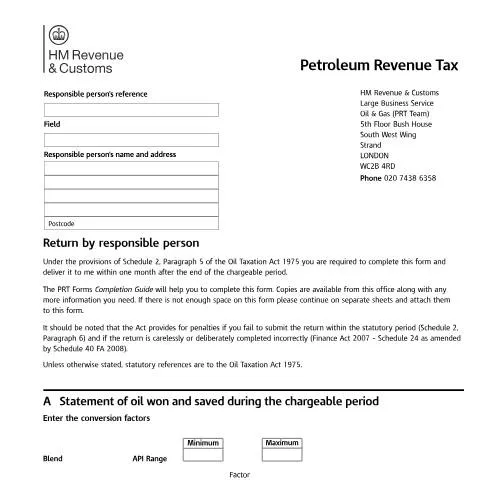
Understanding the Petroleum Revenue Tax Return: A Comprehensive Exploration
The Petroleum Revenue Tax (PRT) return plays a pivotal role in the UK oil and gas sector. It is a regulatory requirement for those involved in petroleum extraction, ensuring that the government collects the appropriate taxes from industry participants. This intricate form, properly titled "File a Petroleum Revenue Tax return on behalf of a participator," serves not only as a tax return but also as a vital instrument for reporting and compliance in the oil and gas industry. Understanding its nuances can prove essential for those who must complete it.Who Needs to File: Profiles and Scenarios
While the PRT return may seem directed toward a narrow segment of the population, the reality is quite different. This form is essential for a variety of stakeholders in the oil and gas supply chain, specifically those classified as "participators."Identifying a Participator
A "participator" in the context of the Petroleum Revenue Tax is generally defined as any entity or individual involved in the production of oil and gas who has a direct interest in the production activity. This can include:- Oil and Gas Companies: Major entities operating extraction sites.
- Joint Ventures: Partnerships between companies pooling resources for extraction.
- Private Investors: Individuals or firms with financial stakes in oil extraction.
Sub-cases and Exceptions
It's important to note that not all participators are liable to file the PRT return under every circumstance. Specific sub-cases or exceptions may apply, such as:- Small Operators: Those whose operations yield minimal revenue may not meet the threshold for filing.
- Decommissioned Fields: Participators involved in fields that are no longer producing oil may have different obligations.
- Foreign Entities: Companies based outside the UK with limited operations within the country may have unique filing requirements.
The Role of the PRT Return within Regulatory Frameworks
The filing of the PRT return is not only a standalone requirement but also part of a larger regulatory ecosystem governing the oil and gas industry. Understanding where this form fits into the broader landscape can help participants navigate their obligations more effectively.Connecting with the Oil Taxation Act
At the heart of the PRT return requirements is the Oil Taxation Act 1975. The stipulations within this act mandate that participators must report their production activities and profits. Key points include:- Submission Timeline: The form must be submitted within one month after the end of the chargeable period.
- Penalties for Non-compliance: Failing to submit the form or submitting it inaccurately can lead to financial penalties.
Interdependencies with Other Forms
Participators may also need to engage with various other forms and documents, including:- Self-Assessment Tax Return (SA100): Individuals may have to declare their earnings from petroleum participation.
- Corporation Tax Returns: For companies, income generated from oil extraction would often need to be reported here.
Navigating the Intricacies of Form Completion
Filling out the PRT return is no small feat, given the complexity involved. Each section requires careful attention to detail to avoid potential pitfalls.Breaking Down the Form: Section-by-Section Analysis
The return comprises several critical sections, each with its own specific requirements:- Responsible Person’s Reference: Ensure the correct details of the person accountable for the submission are entered.
- Statement of Oil Won: This section necessitates an accurate record of crude oil and associated products extracted within the chargeable period.
- Tariff Receipts Allowance: This determines allowable expenses and must differentiate between contracts made before and after key dates.
Common Pitfalls in Completing the Form
Errors in the PRT return can lead to costly penalties, so vigilance is crucial. Some common missteps include:- Incorrectly entering figures or measurement units (e.g., bbls vs. metric tonnes).
- Omitting the necessary conversion factors, leading to discrepancies in reported data.
- Failing to separate quantities attributable to different contract types, which can confuse the revenue calculation.
Addressing the Aftermath: What Happens Post-Submission?
Once the PRT return is submitted, participants must be prepared for various outcomes and subsequent actions.Expected Correspondences from HMRC
After submission, HMRC typically reviews the return and may send notifications pertaining to:- Acknowledgment of Receipt: Confirmation that your return has been received and is under review.
- Requests for Additional Information: If HMRC finds discrepancies or has questions, they may require further documentation.
Dealing with Acceptance or Rejection
If the return is accepted, participants can breathe a sigh of relief. However, if HMRC rejects it, participants will need to act swiftly:- Address any issues highlighted by HMRC.
- Resubmit the corrected form within the stipulated timeframe to avoid penalties.
Rectifying Mistakes and Missing Information
Mistakes made during the filing process can happen, even with the most diligent efforts. Knowing how to rectify these concerns is crucial for compliance.Steps to Take in Case of Errors
If you discover an error in your PRT form after submission, you should:- Contact HMRC immediately to inform them of the issue.
- Prepare a revised return, clearly indicating corrections.
- Explain the nature of the error and provide supporting documentation if necessary.
Handling Missing Documentation
In cases where supplementary information or documents are missing at the time of submission:- Submit the incomplete return along with a cover letter outlining the missing information and a timeline for when it will be provided.
- Maintain open communication with HMRC to facilitate the review process.
Penalties and Enforcement: Consequences of Non-compliance
The stakes are high when it comes to submissions related to the Petroleum Revenue Tax. HMRC takes compliance seriously, and thus understanding potential repercussions of erroneous submissions or late filings is paramount.Understanding Financial Penalties
Penalties can vary considerably depending on the nature of the infraction:- Late Submission: A fixed penalty may apply for failing to meet the deadline.
- Inaccurate Information: Submissions deemed carelessly or deliberately erroneous can attract higher penalties as per the Finance Act 2007.
Appeal Process for Disputed Penalties
If HMRC imposes a penalty you believe is unjust, an appeal process is available. Steps include:- Submit a written appeal within the statutory timeframe outlined in HMRC communications.
- Clearly articulate your reasons and provide any supporting evidence.
The Importance of Staying Informed: Resources and Updates
The landscape of tax regulation is ever-evolving, and staying abreast of changes is crucial for compliance and smooth operations.Utilizing HMRC Resources
HMRC provides various resources to assist participators in fulfilling their obligations effectively. These include:- PRT Forms Completion Guide: A detailed manual that provides step-by-step instructions.
- Contact Information: Direct lines to specialists who can address specific inquiries related to the PRT.
Seeking Professional Guidance
In complex cases, it may be beneficial to engage with a tax professional who specializes in oil and gas taxation. This can provide added assurance that all aspects of your PRT filing are handled appropriately. In conclusion, comprehending the intricacies of the Petroleum Revenue Tax return can significantly impact compliance and the financial health of participators within the oil and gas sector. Taking proactive steps—from understanding filing requirements to seeking out resources—can pave the way for a smoother, more efficient process.Understanding Petroleum Revenue Tax (PRT) Obligations
Petroleum Revenue Tax (PRT) is a significant component of the UK taxation framework, specifically aimed at the oil and gas industry operating in the UK Continental Shelf (UKCS). Established under the Oil Taxation Act 1975, PRT is charged on the profits from oil extraction activities. As a participator, the responsibility to file a PRT return lies primarily with the parties involved in the extraction process, particularly when the participator holds an interest in the production of oil. It is crucial for participators to understand their obligations under PRT regulations, including the relevant calculations, allowable expenses, and deadlines.
Each participator must maintain comprehensive records of their income and expenditures related to oil extraction. This includes keeping track of production volumes, operating costs, and any investment allowances that may apply. Since PRT is assessed on a field-by-field basis, ensuring accuracy in reporting is vital to avoid penalties imposed by HM Revenue & Customs (HMRC) for inaccuracies or late submissions. Participators should also keep abreast of any changes in legislation or tax rates that could affect their obligations, as these can occur with little notice.
Key Considerations for Filing a PRT Return
When filing a Petroleum Revenue Tax return on behalf of a participator, there are several key considerations to keep in mind. The filing process involves submitting a PRT return (form PRT1) that details the profits derived from petroleum extraction, along with the applicable deductions. It is essential to understand the components of the return, which include gross income, capital allowances, and any adjustments for previous years.
One of the most critical aspects of filing is determining the correct period for reporting. The accounting periods for PRT can differ from the standard tax year, and participators must ensure that they are aligning their accounts accordingly. PRT returns are generally due 12 months after the end of the accounting period to which they relate, and any associated tax payments must be made promptly to avoid accruing interest and late payment penalties.
Moreover, participators should consider whether they’re entitled to any reliefs or allowances. For instance, enhanced oil recovery (EOR) allowances may be applicable if specific conditions are met, thereby reducing the taxable profits. Understanding these intricacies can lead to significant cost savings and ensure compliance with HMRC regulations.
Dealing with HMRC: Communication and Compliance
Maintaining a proactive relationship with HMRC is essential for participators in the oil and gas sector. In cases where there are uncertainties or disputes regarding the PRT return, it is advisable to engage with HMRC early to seek clarification or resolution. Participators should ensure that all communications are documented, detailing the nature of the inquiry and the advice received. This can provide a paper trail that may be useful in case of future audits.
Furthermore, compliance with the Data Protection Act 2018 and UK GDPR regarding the handling of personal and financial data is paramount. When submitting a PRT return or communicating with HMRC, participators must ensure that sensitive information is adequately protected. This means employing appropriate security measures when transmitting data electronically and ensuring that any records are stored securely.
Lastly, participators should keep abreast of regular updates from HMRC regarding PRT regulations and guidance. This includes attending relevant training sessions, webinars, or consultations that HMRC may offer to improve understanding of the tax system. By staying informed, participators can better navigate their obligations and mitigate potential risks associated with non-compliance.