Navigating the Cross-Field Allowance for Petroleum Revenue Tax
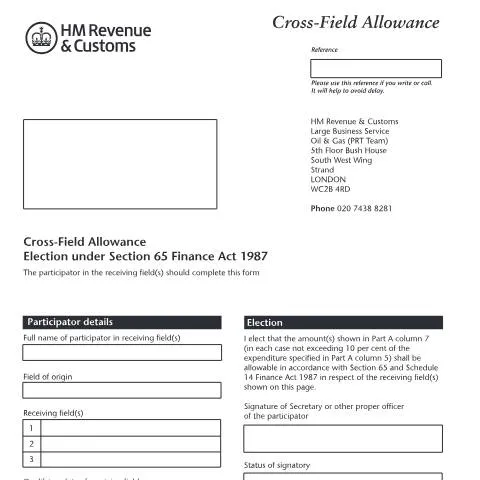
For stakeholders in the UK oil and gas sector, understanding the nuances of the Elect a Cross-Field Allowance for Petroleum Revenue Tax form is crucial. This form allows for strategic financial planning regarding petroleum revenue tax (PRT) and aids in optimizing tax liabilities across multiple fields. The intricacies of this document can have a significant impact on a company's tax position, especially when considering the complex interplay of allowances.
Understanding Your Role as a Participator
At the core of this process is the definition of a participator. A participator is any entity or individual that has a stake in the oil and gas field and thus possesses the authority to submit this election form. It's essential to ensure that the participating entity is properly registered and recognized by HM Revenue & Customs (HMRC).
- Registered Companies: If your company is registered in the UK and holds interests in oil and gas operations, you are eligible to complete this form.
- Joint Ventures: In cases where multiple entities collaborate, the consortium or lead participant typically submits the election on behalf of all stakeholders.
- Foreign Entities: Non-UK companies can also be participators, provided they have a registered presence or specific operations in the UK.
The Procedural Framework: Filling Out the Form
Completing the form requires careful attention to detail. Each section is designed to capture specific information necessary for the election under Section 65 of the Finance Act 1987.
Part A: Claims and Decisions
In this section, you will provide details about the claims and final decisions regarding the supplements related to your elected amounts:
- Field of Origin: Specify the field from which the expenditure arose.
- Qualifying Date: Enter the date when the qualifying expenditure occurred.
- Final Decision Date: Record the date of the final decision on the claim.
| Field of Origin | Claim Date | Final Decision Date | Elected Amount Allowable |
|---|---|---|---|
| Field A | 01/01/2023 | 15/02/2023 | £500,000 |
| Field B | 01/03/2023 | 10/04/2023 | £300,000 |
Ensure to provide accurate amounts that do not exceed 10% of the qualifying expenditure specified.
Common Pitfalls and Specific Considerations
While filling out the form, many participators face challenges that can lead to incorrect submissions. Awareness of these issues can mitigate the risk of delays or rejections.
Documentation and Evidence
Each claim should be substantiated with appropriate documentation. The following are critical:
- Expenditure Invoices: Ensure that all invoices related to the claimed expenditure are accurate and legible.
- Final Decision Notices: Keep copies of any correspondence regarding the final decisions of supplementary claims.
- Previous Elections: If applicable, refer to any prior Cross-Field Allowance elections which may influence current claims.
Filing Methods: Online vs. Paper Submission
Participants have options when it comes to filing their election. Understanding these channels can save time and reduce complications.
Online Submission
Utilizing HMRC's online system is often the quickest method. Benefits include:
- Immediate Confirmation: Receive real-time acknowledgment of your submission.
- Reduced Processing Time: Online submissions are typically processed faster than paper forms.
Paper Submission
For those who prefer traditional methods, mailing the form is a valid option. Keep in mind:
- Longer Processing Times: Allow for additional time for postal delivery and processing.
- Documentation Copies: Always send copies of documents and keep originals for your records.
Post-Submission: What to Expect
Once the form has been submitted, there are several potential outcomes, and understanding these can help participants prepare for next steps.
Processing Timeline
Typically, HMRC will take a few weeks to review the submission. You may receive:
- Approval: The requested allowance is granted, and you will receive a confirmation.
- Request for Additional Information: HMRC may seek further details, which you must provide in a timely manner.
- Rejection: If the election is denied, it’s crucial to understand the reasons provided for this decision.
Handling Rejections and Amendments
In the unfortunate event of a rejection, knowing how to respond can help recover your position.
Steps After a Rejection
- Review the Feedback: Carefully consider the reasons for rejection outlined by HMRC.
- Gather Additional Evidence: If the rejection is based on a lack of documentation, compile the necessary paperwork.
- Submit an Appeal: If you believe the decision was erroneous, you may appeal through the procedures set by HMRC.
The Calendar: Key Dates and Responsibilities
Finally, keeping track of important dates related to the Cross-Field Allowance is vital for compliance and tax planning:
- Election Submission Deadline: Ensure your submission aligns with the relevant tax year timelines. Generally, elections should be submitted within a specific window after the qualifying expenditure occurs.
- Review Period: After submission, anticipate a processing period, during which you may need to remain responsive to HMRC queries.
- Future Elections: Be mindful of how this election might affect future claims and elections.
By maintaining good records and being proactive in addressing any issues, participators can effectively manage their tax responsibilities and optimize their financial position.
Understanding Petroleum Revenue Tax Allowances
The Petroleum Revenue Tax (PRT) is a specific tax applied to oil and gas production in the UK, particularly in the North Sea. Companies engaged in exploration and production are subject to this tax, which is designed to capture a portion of the profits generated by the extraction of these natural resources. One significant aspect of PRT is the availability of allowances that companies can elect to use against their taxable profits. Understanding these allowances can be crucial for effective tax planning.
The cross-field allowance system allows companies to utilise losses from one oil field to offset gains from another. This can be particularly beneficial in a sector characterized by fluctuating oil prices and varying field profitability. By electing the cross-field allowance, companies can effectively mitigate some of their tax liabilities, making it a strategic component of their overall financial management.
Eligibility Criteria for Electing Cross-field Allowances
Not all companies or circumstances qualify for the election of cross-field allowances. To be eligible, a company must hold a valid license for exploration and production activities. Additionally, the losses claimed must relate specifically to PRT liabilities. Furthermore, the company must adhere to the deadlines set by HM Revenue & Customs (HMRC) for electing to apply these allowances. Generally, elections must be made within 12 months of the end of the accounting period in which the loss occurred.
It’s worth noting that companies should maintain comprehensive records of their production and expenses to substantiate their claims for losses. Such documentation may include detailed accounts of operational costs, investment in exploration, and historical data on oil production levels. Regular audits by HMRC can occur, and companies must be prepared to justify their allowance claims with clear, accurate records to avoid potential disputes or penalties.
Impact of Cross-field Allowances on Financial Reporting and Business Strategy
The ability to elect cross-field allowances has implications beyond the immediate tax benefits for companies engaged in oil and gas production. Financial reporting can be significantly impacted, as the timing of recognizing profits and losses may shift based on tax strategies. Companies might choose to report their financial situation in a manner that reflects the use of these allowances, which could influence investor perceptions and market performance.
Moreover, the strategic decision to elect cross-field allowances can inform broader business strategies. For instance, if a company is aware that it can offset losses from less productive fields against more lucrative operations, it may make different investment decisions regarding new exploration projects. This could also affect partnerships and joint ventures, as companies may collaborate with entities that have complementary production profiles to maximize the benefits of cross-field allowances. Thus, understanding and leveraging these allowances can play a pivotal role in the long-term viability and success of companies operating within the UK’s petroleum sector.