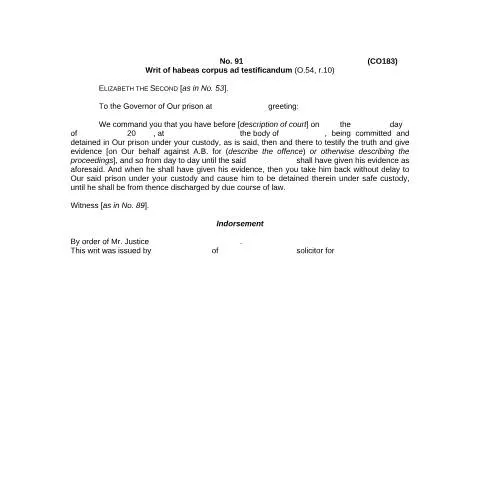
Understanding the Writ of Habeas Corpus Ad Testificandum
When an individual is summoned to appear in court from prison to provide testimony, a specific legal mechanism is employed—the writ of habeas corpus ad testificandum. This writ, delineated under Practice Form No. 91, serves as a critical tool within the UK's legal system, facilitating justice by ensuring that necessary witnesses are present in court to give evidence.
Who Initiates the Writ and Why?
The initiation of this writ is typically the responsibility of a solicitor representing a party in legal proceedings. The solicitor requests the writ to ensure that an incarcerated individual can testify. Such situations often arise in criminal cases where the prisoner’s testimony is vital to the case at hand, whether it concerns the prosecution or the defense.
The Legal Framework Surrounding the Writ
The application for the writ is governed by legal stipulations outlined in Order 54, Rule 10 of the Civil Procedure Rules. Solicitors must navigate these regulations carefully to ensure compliance and validity of the writ. Understanding the legal jargon and requirements is crucial for anyone involved in this process.
Breaking Down the Sections of the Writ
The writ consists of several key sections, each requiring precise information to avoid delays or complications. Below is a breakdown of its pivotal components:
- Court Description: Specifies the name of the court where the testimony is required.
- Date: Clearly states the date on which the individual must appear in court.
- Identity of the Inmate: Full name and identification details of the prisoner.
- Offence Description: Details the nature of the case or offence related to the testimony.
- Signature of Justice: The writ must be signed by an appropriate legal authority, typically a judge.
Common Pitfalls When Completing the Writ
Accuracy is paramount when completing the writ. Below are common mistakes that can lead to complications:
- Omitting the correct date, leading to confusion about when the testimony is expected.
- Failure to include sufficient identification details of the accused person.
- Inaccurate descriptions of the offence, which can undermine the validity of the writ.
Submission Channels: Where and How to File the Writ
There are several methods for submitting the writ of habeas corpus ad testificandum, each with its own procedural nuances:
- Online Submission: Many courts offer web-based filing systems that provide a streamlined process. Ensure you have the necessary digital documentation ready.
- Postal Submission: Sending the completed writ via post is common, but it can introduce delays due to mail processing times.
- In-Person Submission: Courthouses typically allow for personal delivery, where solicitors can present the writ directly to court clerks.
Comparative Analysis of Submission Methods
| Method | Pros | Cons |
|---|---|---|
| Online Submission | Speedy process; immediate confirmation | Requires digital literacy; potential technical issues |
| Postal Submission | Traditional method; allows for careful review before sending | Risk of delays; no immediate confirmation |
| In-Person Submission | Direct communication with court clerks; immediate feedback | Time-consuming; may involve waiting in lines |
Timelines: Key Dates and Next Steps
Understanding timeframes is essential when dealing with legal documents. After submitting the writ, there are crucial timelines to keep track of:
- Submission Date: The date you file the writ determines subsequent timelines.
- Court Appearance: The writ specifies the court date, which must be adhered to strictly.
- Return to Prison: After testifying, the individual must be returned to prison immediately to avoid any legal complications.
What Happens After the Writ is Issued?
Once the writ is issued and the testimony is provided, the process is not yet complete. The individual is returned to prison, but the court may follow up with additional proceedings based on the testimony provided. Legal representatives should remain engaged throughout this process to ensure all necessary follow-up actions are taken.
Special Considerations: Unique Cases and Complex Situations
There are instances where the application of the writ may require additional considerations:
- International Cases: If the prisoner is foreign, additional diplomatic channels may need to be navigated.
- Minor Testimonies: Special provisions exist for minors, including safeguarding measures during the testimony process.
- Emergency Situations: In urgent circumstances, expedited processes may apply to ensure timely attendance.
Addressing Refusals and Missing Documentation
In cases where the writ is refused, or if there are missing documents, it is critical to understand the appeals process. Legal counsel should be engaged to evaluate the reasons for refusal, as well as to identify and rectify any issues related to documentation or claims made within the writ.
Connecting the Writ to Broader Legal Processes
The writ of habeas corpus ad testificandum is part of a larger framework of legal documentation and actions that ensure fair trial rights. Understanding how this writ fits into the broader context of court procedures is vital for solicitors, defendants, and the justice system alike.
This writ's role extends beyond the immediate court appearance; it is integral to the integrity of the judicial process, ensuring that all necessary voices are heard in the pursuit of justice. Legal representatives must ensure every detail is addressed, from the initial application to any follow-up actions after the testimony is provided.
Recap of Best Practices for Handling the Writ
To navigate the complexities of the writ effectively, consider the following best practices:
- Maintain accurate records of all communications and submissions.
- Stay informed about any changes in legal protocols surrounding the writ.
- Engage with experienced legal professionals to guide the process.
By adhering to these guidelines and understanding the nuances of the writ of habeas corpus ad testificandum, solicitors and parties in legal proceedings can contribute to a more effective and just legal system.
Understanding the Writ of Habeas Corpus Ad Testificandum
The writ of habeas corpus ad testificandum is a legal mechanism that allows a prisoner to be brought before a court to give testimony. This form is specifically utilized in situations where a detainee’s testimony is deemed critical to the proceedings of a case. Unlike traditional habeas corpus, which is more about challenging the legality of detention, this form emphasizes the necessity of having the individual physically present in court to provide evidence or testimony.
Under the UK legal framework, the issuance of this writ is essential in various scenarios, particularly in criminal trials where the accused may need to present their defence or when a witness who is currently incarcerated could provide crucial information. The courts prioritize fair trial rights, ensuring that all individuals, regardless of their legal status, have the opportunity to participate in proceedings pertinent to their case.
To request this writ, an application must typically be made to the High Court, where the applicant must demonstrate the relevance of the detainee's testimony to the case. This often involves submitting detailed affidavits that outline why the individual needs to testify and how their evidence directly pertains to the matters being adjudicated.
It is worth noting that successful applications for a writ of habeas corpus ad testificandum may require balancing interests: the rights of the detainee against any potential disruption to the security and order of the correctional institution from which they are to be transported. Therefore, the decision rests heavily on the judge's discretion and the specifics of each case.
The Procedure for Applying for the Writ
Applying for a writ of habeas corpus ad testificandum involves a specific procedural pathway that must be carefully followed to ensure compliance with legal standards. Initially, the party seeking the writ must prepare a detailed application, supported by evidence that establishes the necessity for the prisoner’s testimony. This document should articulate the context of the case, the reasons for the request, and how the testimony aligns with the interests of justice.
Once the application is drafted, it must be submitted to the High Court. This may involve using Form 91 or another relevant form depending on the specifics of the case and legal advice received. The application will be reviewed by a judge who will determine whether to grant the writ.
If the writ is granted, it will specify the details regarding when and how the individual should be produced in court. Typically, the conditions will delineate the maximum security requirements necessary for transportation, as well as any specific accommodations that may be necessary for the testifying individual. There will also be conditions governing the return of the individual to their place of detention following their court appearance.
Throughout this process, it is crucial for the applicant to remain in close communication with both legal counsel and the authorities managing the incarceration of the individual in question. Coordination may involve direct negotiations with prison officials to ensure that logistical arrangements can be made without incident, allowing for a smooth transfer to the court.
Potential Challenges and Legal Considerations
While the writ of habeas corpus ad testificandum is a powerful tool within the UK legal system, several challenges can arise during its application and execution. One major consideration is the risk of infringing upon the rights of the detainee, particularly regarding their safety and wellbeing during transport. The authorities must ensure that the individual is not subjected to undue hardship or risk, which can complicate arrangements for their court appearance.
Furthermore, the judicial decision surrounding the issuance of this writ is not automatic. Judges may exercise discretion based on various factors, including the relevance of the testimony, the implications for the ongoing proceedings, and concerns regarding the safety and security of the court. This discretion can lead to variability in outcomes, as different judges may weigh the relevance and necessity of the testimony differently.
Legal representatives must also be prepared for the possibility that the opposition may contest the application. This can lead to a hearing where arguments will be presented both for and against the issuance of the writ. Therefore, solid legal grounding and persuasive arguments are vital for the party seeking the writ to increase their chances of success.
Lastly, it’s essential to note that even after a writ is granted, issues can arise concerning the availability of the individual due to circumstances like changes in their detention status or other legal complications. These factors necessitate ongoing communication with the prison and the court to ensure that all parties are informed and ready for the testimony when the time comes.