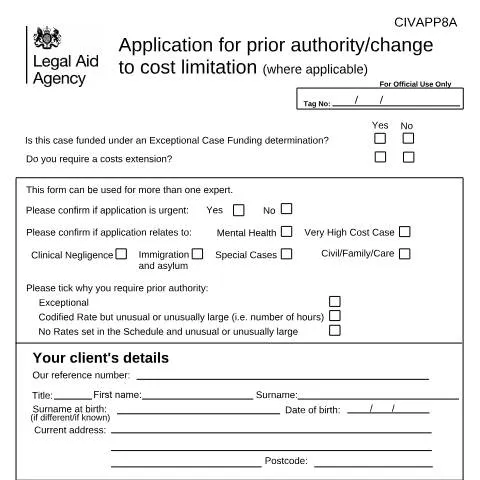
Navigating the Complexities of the CIV APP8A Form
In the realm of legal aid in the United Kingdom, proper funding is crucial for ensuring that individuals can access the justice system. The CIV APP8A form, formally titled the Application for Prior Authority/Change (Cost Limitation), plays an essential role in this process. Understanding its intricacies can make a significant difference for both solicitors and their clients, particularly in cases that require expert testimony or additional resources. This guide will explore the form's function, the necessary steps for completion, and the implications of its submission.
The Context Behind CIV APP8A: Historical and Legal Framework
The origins of the CIV APP8A form are rooted in the broader context of legal aid provision in the UK. Legal aid is governed by the Legal Aid, Sentencing and Punishment of Offenders Act 2012, which aimed to streamline funding and ensure that resources are allocated responsibly. This law established a framework for assessing the merits of a case and the necessity for expert involvement.
Legal professionals often encounter situations where the costs of engaging an expert exceed the typical thresholds established in standard legal aid agreements. In such instances, the CIV APP8A form serves as a mechanism for solicitors to request prior authority from the Legal Aid Agency (LAA) for increased expenditure. This request is essential to maintain transparency and accountability in the use of public funds.
Understanding the Role of the CIV APP8A Form in Legal Proceedings
The CIV APP8A form is not merely a bureaucratic hurdle; it is a vital component in managing the costs associated with legal representation. When a case requires expert testimony—be it in mental health, clinical negligence, or immigration matters—the costs can escalate quickly. The LAA must approve these costs to ensure they are reasonable and necessary for the proper conduct of proceedings.
This form is particularly relevant for cases classified under areas such as:
- Clinical Negligence
- Immigration and Asylum
- Mental Health
- Family Law
- Public Law Children Act Proceedings
Filling out the CIV APP8A form accurately can significantly impact the outcome of a case, as it lays the groundwork for the LAA’s evaluation of the requested costs.
Preparation: Gathering the Necessary Justifications
Before tackling the CIV APP8A form, solicitors must gather all pertinent information that will substantiate their requests. This includes detailed breakdowns of anticipated expenses, justifications for the necessity of expert involvement, and evidence of why the costs exceed standard rates. The following elements are critical in this preparatory phase:
- Details of the Client: Ensure that all information about the client, including their full name, date of birth, and current address, is accurate. Any discrepancies may delay the approval process.
- Case Information: Clearly outline the nature of the case, including the court details and case number. Providing a comprehensive overview of the case's current stage is essential for demonstrating urgency.
- Expert Selection: Choose the right expert carefully. The form requires identification of the expert's name, registered address, and type of work they will undertake. Make sure this expert meets the Ministry of Justice standards, especially in cases involving children.
- Cost Breakdown: A clear outline of expected costs, including hourly rates, travel expenses, and any other relevant fees, is necessary. This should also include a justification for why these costs are reasonable given the case's complexity.
Deciphering the Sections of the CIV APP8A Form
With the necessary information in hand, the next step is to navigate the CIV APP8A form itself. Understanding the structure of the form is key to ensuring all required fields are completed accurately and thoroughly.
Section 1: Basic Information and Justification
This section requires solicitors to provide basic information regarding the client and the nature of the application. It's crucial to confirm whether the application is urgent and specify the reason for requesting prior authority, as this will frame the LAA's perception of the request.
Section 2: Expert Details
Solicitors must provide comprehensive information about the expert in this section. This includes:
- The expert's name and registered address
- The work the expert is required to perform and its necessity
- Any details concerning the apportionment of costs among other parties, if applicable
Be diligent in ensuring that all costs are justified and that evidence is provided for any claims regarding complexity or seniority of the required expert.
Cost Breakdown Table
| Type of Cost | Hours | Expert Rate (£) | Total (£) |
|---|---|---|---|
| Expert Fees | [Input Hours] | [Input Rate] | [Calculate Total] |
| Travel Expenses | [Input Hours] | [Input Rate] | [Calculate Total] |
| Consultations | [Input Hours] | [Input Rate] | [Calculate Total] |
Ensure that all entries in the table are double-checked for accuracy as any miscalculations can lead to delays or rejections of the application.
Submitting the CIV APP8A: Best Practices for Timely Processing
Once the CIV APP8A form is completed, the submission process becomes the next critical step. Submitting the form accurately and promptly can help speed up the decision-making process at the LAA.
Key considerations for submission include:
- Review and Proofread: Before submission, ensure that all information is accurate and complete. Errors can lead to unnecessary delays.
- Follow Submission Guidelines: Adhere to any specific instructions provided by the LAA regarding how and where to submit the form. This may include electronic or postal submissions depending on the case type.
- Maintain Copies: Always keep copies of the submitted form and any accompanying documents for your records. This will be valuable for future reference or follow-up inquiries.
- Track Submission: If applicable, obtain confirmation of receipt from the LAA. Tracking your submission can provide peace of mind and ensure that the application is under review.
Monitoring Progress: Following Up on Your Application
Once the CIV APP8A form is submitted, solicitors may find themselves wondering about the progress of their application. Understanding how to effectively follow up can help alleviate concerns and ensure that the application is considered in a timely manner.
To monitor the progress of your application, consider the following approaches:
- Use Reference Numbers: Always include the reference number provided by the LAA in any correspondence or inquiries regarding the application. This helps expedite inquiries and keeps communications organized.
- Designate a Point of Contact: Regularly contact the assigned caseworker at the LAA. Establishing a rapport can facilitate smoother communications and updates on your application status.
- Understand Processing Times: Be aware of typical processing times for similar applications. If your application exceeds these timelines, it may be reasonable to inquire further.
Adequate Preparation: Anticipating Possible Challenges
Despite thorough preparation, solicitors may still encounter challenges during the application process. Being aware of potential issues can help in addressing them proactively.
Some common challenges include:
- Insufficient Justification: If the LAA finds that the justification for increased costs is inadequate, they may reject the application. This can be addressed by providing more detailed evidence and reasoning in the submission.
- Delays in Decision-Making: External factors, such as increased workloads within the LAA, can lead to delays. Keeping open lines of communication may alleviate concerns in these cases.
- Complexities in Cost Sharing: In cases involving multiple parties, complication in apportioning costs can arise. It is imperative to clearly outline how costs are divided to prevent misunderstandings.
Having a proactive mindset and being prepared for possible setbacks can enhance the likelihood of a smooth process when dealing with the CIV APP8A form.