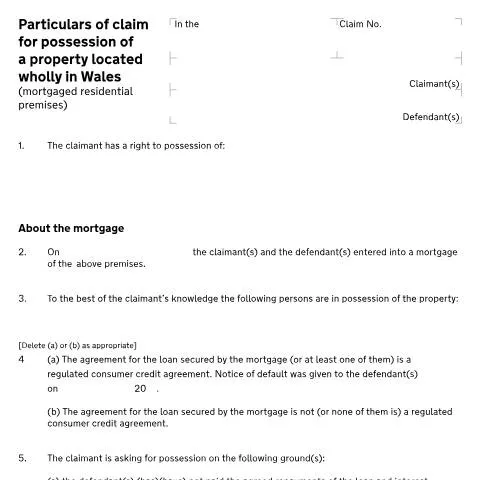
Navigating the Form N120: A Vital Step in Mortgage Possession Claims
When faced with the possibility of mortgage possession actions in Wales, understanding the intricacies of the Particulars of Claim (Mortgaged Residential Premises): Form N120 is crucial. This document serves as the foundation for initiating legal proceedings for possession of a property, specifically when the claim is based on mortgage arrears. Whether you are a claimant (the mortgage lender) or a defendant (the borrower), familiarity with this form can significantly impact the outcome of your case.
Contextualizing the N120 Form Within the Legal Framework
The N120 form falls under the jurisdiction of the HM Courts and Tribunals Service and is specifically tailored for cases related to residential properties located wholly in Wales. This legal document is not merely a formality; it signifies the commencement of a legal claim and outlines the basis upon which possession is sought. It operates within the framework of the Civil Procedure Rules, specifically Part 55, which governs possession claims.
To file this form correctly, the claimant must provide comprehensive details about the mortgage agreement, the outstanding payments, and any prior actions taken towards recovery. The complexity of the form reflects the serious nature of mortgage possession actions, where misunderstanding or incomplete information can lead to delays or unfavorable outcomes.
Who Is Involved in This Process?
Understanding who the key players are in the context of the N120 form is essential:
- Claimants: Often mortgage lenders or banks, claimants seek to reclaim possession of a property due to non-payment of mortgage installments.
- Defendants: Borrowers who have defaulted on their mortgage payments. In specific cases, this could also involve tenants if there are any associated occupation contracts.
- Legal Representatives: Solicitors or other legal advisors who help in navigating the complexities of the form and represent the parties in court.
Each party plays a critical role, and understanding their responsibilities and rights is vital for navigating the legal landscape surrounding mortgage possession claims.
Key Components of the N120 Form: A Detailed Examination
The N120 form is divided into several sections, each requiring distinct information pertinent to the claim. Completing this accurately is essential to avoid complications down the line.
Section 1: Identifying the Claimant and Defendant
At the very beginning of the form, the claimant must provide their details, including full name and address, alongside the details of the defendant. It’s imperative to ensure that all names are spelled correctly and that addresses are current to avoid delays in processing the claim.
Section 2: The Basis of the Claim
This section outlines the fundamental reasons for seeking possession. The claimant must specify whether the mortgage agreement is a regulated consumer credit agreement and mention the date when the notice of default was served to the defendant. Inaccuracies here could invalidate the claim, as the court requires clarity on whether proper notice was given.
Section 3: Financial Details
Claimants must provide detailed financial data, including:
- The original loan amount.
- Current repayment terms, including interest rates.
- A total of all arrears and outstanding amounts.
It's essential to double-check these figures against the mortgage statement to ensure accuracy. The court relies heavily on these details to assess the validity of the claim for possession.
Section 4: Background on Steps Taken
Claimants must outline any prior actions taken to recover the money owed, such as issuing demands for payment, which can bolster the claim’s credibility. Providing a timeline of these events can also show that the claimant has acted reasonably and in good faith before pursuing legal action.
Understanding the Legal Implications of the N120 Submission
The submission of the N120 form is not an isolated action; it triggers a series of legal responses. Upon receipt of the form, the court will schedule a hearing where both parties can present their cases. Understanding what follows can aid individuals in preparing adequately.
The Court’s Role and Schedule
Once the N120 form is filed with the court, important timelines come into play:
- The court will acknowledge receipt and set a hearing date, typically within a few weeks.
- Both parties will receive notifications regarding the court date and any required documentation.
- It's advisable for defendants to prepare their responses and gather any evidence to contest the claim.
The court's decision will hinge on the details provided in the N120 form and any additional evidence presented during the hearing.
What If Issues Arise? Navigating Challenges with the N120
Filing the N120 form can be a daunting task. Mistakes at any stage can lead to significant consequences. Knowing how to address potential pitfalls is essential for both claimants and defendants:
Handling Refusals and Missing Information
If the court finds the N120 form incomplete or unclear, it may reject the claim outright. To mitigate this:
- Double-Check All Entries: Ensure that all required information is filled in accurately.
- Complete Supporting Documentation: Attach any relevant correspondence with the defendant regarding payment arrears.
- Seek Legal Advice: Consulting a solicitor can help clarify complex sections of the form and reinforce your case.
What Happens After the Hearing?
Once the court has made its decision, both parties receive notification. If possession is granted, the defendant is typically given a timeframe to vacate the property, commonly 14 to 28 days. If the claim is denied, the claimant may consider alternative actions, such as negotiating a repayment plan or seeking alternative dispute resolution methods.
Final Thoughts on Completing the N120 Form
Completing the N120 form is a significant step in a legal process that can greatly affect both parties’ financial and living situations. Gathering the necessary information and understanding how to accurately fill out the form are critical aspects that can lead to a favorable outcome. Whether you are a claimant or a defendant, taking the time to prepare thoroughly and seek appropriate guidance is essential.
Fill in your form directly online
No printing: type your details into the boxes of the official form, tick, then download the PDF ready to send.
- 1Type into the form boxes
- 2Tick in one click
- 3Save and download the PDF
As you prepare to engage with this process, remember that the stakes are high. Each detail—every figure and statement—counts. Therefore, approaching this form with diligence and care can make all the difference.
Understanding Form N120: When and Why You Need It
Form N120 is a crucial document used in the context of possession proceedings regarding mortgaged residential premises in Wales. It is designed for lenders (usually banks or financial institutions) who are seeking to recover possession of a property from a borrower who has defaulted on their mortgage payments. This form is part of the process that allows the lender to formally claim the right to take possession of a mortgaged property and is governed by the Civil Procedure Rules.
It is essential to understand the circumstances under which Form N120 should be used. Typically, this form is required when the borrower has fallen significantly behind on their mortgage payments, and the lender has exhausted other avenues for recovery, such as sending reminders or negotiating alternative arrangements. Form N120 initiates the court proceedings for possession and essentially outlines the lender's claim against the borrower.
The form itself includes various sections where the lender must provide detailed information about the mortgage agreement, the default, and any previous communications with the borrower regarding the debt. It is important for lenders to complete this form accurately and comprehensively because any omissions or inaccuracies can result in delays or complications in the court process.
Completing Form N120: Step-by-Step Guidance
Completing Form N120 requires careful attention to detail to ensure that all necessary information is provided. Below is a step-by-step guide to help lenders navigate the completion of this form effectively:
- Section A: Claimant Details - Begin by filling out your details as the claimant (the lender). This includes your name, address, and any necessary contact information. It is essential to ensure that this information is current and corresponds to records held by the court.
- Section B: Defendant Details - Provide accurate details for the defendant (the borrower). This section should include the borrower’s full name, address, and any other identifiers relevant to the claim, such as their National Insurance number or account reference number.
- Section C: Property Information - This section requires detailed information about the mortgaged property, including its address and any relevant registration details. Lenders should ensure that the description of the property is precise to avoid any disputes regarding its identification.
- Section D: Background to the Claim - Here, lenders must outline the circumstances leading to the claim. This should include the mortgage terms, the amount owed, and a timeline of events such as missed payments, attempts at communication, and any other relevant actions taken before resorting to legal proceedings.
- Section E: Supporting Documents - Lenders need to attach all relevant documents that support their claim. This may include the original mortgage agreement, correspondence with the borrower regarding the debt, and evidence of missed payments. It is crucial to ensure all documents are legible and appropriately referenced in the form.
Once Form N120 is completed, it must be submitted to the relevant County Court in which the property is located. It is advisable for lenders to keep a copy of the completed form for their records, along with any attachments.
Common Pitfalls and How to Avoid Them
Filing Form N120 is a significant step in the repossession process, and there are several common pitfalls that lenders should be aware of to avoid complications:
- Incomplete Information - One of the most common issues is failing to complete all sections of the form accurately. Lenders must ensure that every question is answered fully and that supporting documents are provided. Missing information can delay proceedings or result in the court dismissing the claim altogether.
- Incorrect Details - Providing incorrect details about the borrower or the property can lead to serious issues. Lenders should double-check all information for accuracy, especially the spelling of names and the address of the property.
- Failure to Follow Up - After submitting Form N120, it's essential for lenders to monitor the progress of their claim. They should be proactive in checking for any communications from the court and be prepared for any subsequent hearings or requirements.
- Ignoring Pre-Action Protocols - Before issuing a claim, lenders are required to follow pre-action protocols, which include attempting to resolve the matter through communication and providing the borrower with information about their rights. Failure to comply with these protocols may result in sanctions from the court.
By being aware of these common pitfalls and taking steps to avoid them, lenders can streamline the process of claiming possession of mortgaged residential premises and increase their chances of a successful outcome.