Understanding the Official Witness Summons in the High Court under Section 36(1) of the Senior Courts Act 1981
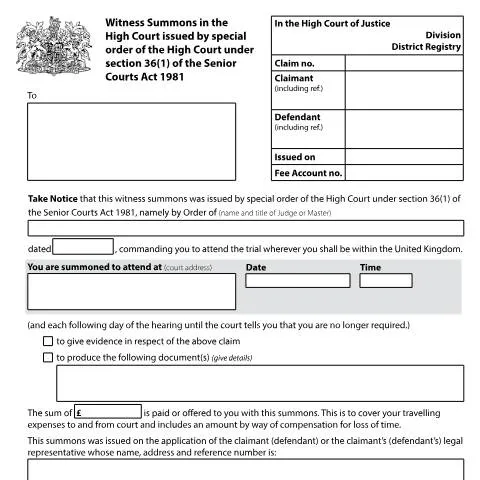
The Form PF120A is an official document issued by the HM Courts & Tribunals Service, specifically a witness summons in the High Court of Justice. This summons is issued under the authority of section 36(1) of the Senior Courts Act 1981, and it serves to legally compel individuals to attend court proceedings as witnesses. This guide aims to clarify the purpose, process, and obligations associated with this official summons, ensuring that recipients understand their rights and responsibilities within the UK legal framework.
Scope and Purpose of the Witness Summons
The primary function of the PF120A witness summons is to ensure the attendance of witnesses in the High Court for specific cases. It is issued by a special order of the High Court, typically at the request of a party involved in a legal dispute, such as the claimant or defendant, or their legal representatives. The summons directs the individual to appear at a designated court location, on a specified date and time, to provide evidence or produce relevant documents related to the case.
This document plays a crucial role in the judicial process, as it guarantees that witnesses contribute to the fair and transparent resolution of legal matters. It is issued under the authority granted by the Senior Courts Act 1981, which empowers the court to summon witnesses necessary for the administration of justice.
Who Is Concerned by This Summons?
The PF120A summons is directed at individuals who have relevant information or documents pertinent to a case being heard in the High Court. Recipients may include:
- Persons with direct knowledge of the case facts
- Individuals holding documents or evidence required by the court
- Potential witnesses whose testimony is deemed necessary for the case
It is important to note that the summons is legally binding. Failure to comply without proper legal justification can lead to proceedings in default, which may result in penalties or contempt of court charges.
Key Elements and Instructions of the Summons
The PF120A document contains several essential components and instructions for the recipient:
- Case Details: Includes the claim number, claimant and defendant references, and the court division.
- Issuance Details: Date of issue, the name and title of the judge or master issuing the summons, and the fee account number if applicable.
- Attendance Requirements: The court address, scheduled date and time of appearance, and the duration of attendance (which may extend over multiple days).
- Document Production: Specific documents the witness is required to produce, with detailed descriptions.
- Expenses and Compensation: An indication that travel expenses and loss of time are covered or compensated, with details about the amount offered.
Obligations and Legal Implications
Recipients of the PF120A are legally obliged to attend court as directed, produce any requested documents, and take an oath or affirmation if required. It is also necessary to accept the travel expenses and compensation offered, which are intended to cover costs and loss of earnings incurred by attending court.
Ignoring a valid summons can lead to serious consequences, including proceedings in default, which may involve penalties or contempt of court proceedings. If a recipient believes there are valid reasons to challenge or vary the summons, they can apply to the court that issued it, following the procedures outlined in the document.
Contact and Service Details
The PF120A provides information about how to contact the court office, including opening hours (typically 10 am to 4 pm, Monday to Friday), and instructions to address correspondence to the Court Manager with the relevant claim number. The document also includes a section for the certificate of service, confirming that the summons was properly served to the individual.
References and Legal Context
This witness summons is issued under the legal authority of the Senior Courts Act 1981, specifically section 36(1), which grants the High Court the power to summon witnesses necessary for the administration of justice. The process adheres to the legal framework established by UK law, ensuring that witnesses' rights are protected while maintaining the integrity of judicial proceedings.
It is essential for recipients to understand that compliance with this summons is a legal obligation, and failure to do so can have significant legal repercussions. If there are uncertainties or issues regarding the summons, individuals are advised to seek legal advice or contact the court directly for clarification.