When Court Bailiffs Become Essential for Legal Document Delivery
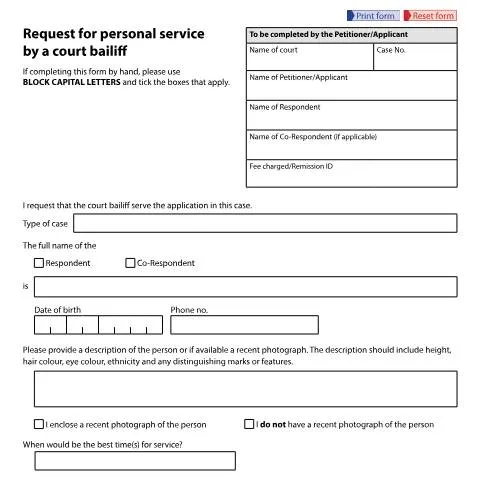
In the intricate world of family law proceedings and civil litigation, ensuring that legal documents reach their intended recipients represents far more than a mere administrative formality. When standard postal delivery fails or proves inadequate, the courts must turn to more robust methods of service. Form D89 emerges as the critical gateway for requesting personal service by court bailiffs, specifically for applications that were issued before April 2022 under the previous procedural framework.
This specialised request form bridges the gap between unsuccessful attempts at conventional service and the court's ultimate responsibility to ensure due process. Whether dealing with evasive respondents, disputed addresses, or circumstances where proof of receipt becomes paramount, the D89 form empowers petitioners and applicants to escalate their service requirements through official channels.
The form's significance extends beyond mere convenience—it represents a fundamental safeguard within the justice system, ensuring that no party can claim ignorance of proceedings simply by avoiding postal delivery or refusing to engage with legal correspondence.
Navigating the Pre-2022 Application Landscape
The temporal restriction embedded within Form D89's scope—applications issued before April 2022—reflects significant procedural reforms that transformed how HM Courts & Tribunals Service handles document service requests. This historical boundary isn't merely administrative; it acknowledges that different fee structures, procedural requirements, and bailiff protocols applied to cases initiated under the previous regime.
Applications falling within this timeframe often involve complex family law matters, including divorce proceedings, financial remedy applications, and children's arrangements that may have been progressing through the system for months or years. The courts recognised that disrupting established service protocols mid-case could create unnecessary complications and potential grounds for appeal.
Cases typically requiring D89 intervention include:
- Divorce petitions where the respondent has relocated without providing forwarding addresses
- Financial remedy applications involving high-value assets where personal service ensures proper notification
- Children Act proceedings where parental responsibility or residence disputes require unambiguous service
- Domestic violence cases where personal service provides additional protection through bailiff presence
The form's design anticipates the reality that many applicants requesting bailiff service have already encountered difficulties with conventional methods, creating a framework that acknowledges these challenges while providing practical solutions.
Decoding the Essential Information Requirements
Form D89's structure reflects the practical realities faced by court bailiffs when attempting personal service in challenging circumstances. Each section builds upon the previous one, creating a comprehensive profile that enables successful document delivery even in complex situations.
Core Identification Details
The form's opening sections establish the fundamental parameters of the service request. Beyond basic case information, the court requires precise identification of all parties involved, including co-respondents where applicable. This multi-party awareness proves crucial in cases involving divorce proceedings where adultery allegations create additional service requirements.
The fee structure embedded within these early sections acknowledges that bailiff service incurs additional costs beyond standard court fees. Remission ID provisions ensure that applicants receiving fee assistance aren't excluded from accessing this enhanced service method, maintaining access to justice regardless of financial circumstances.
Address Verification and Location Intelligence
The address section demands more than simple postal details—it requires verification that the location falls within England and Wales jurisdiction, acknowledging the geographical limitations of court bailiff authority. This territorial awareness prevents administrative delays and ensures that service requests align with enforcement capabilities.
Phone number requirements serve dual purposes: they enable bailiffs to coordinate service timing and provide alternative contact methods should initial service attempts prove unsuccessful. The form's design recognises that effective service often requires flexibility and multiple approaches.
Physical Description and Identification Support
Perhaps the most distinctive aspect of Form D89 lies in its detailed physical description requirements. This section transforms the service process from a simple address-based delivery into a targeted identification exercise, acknowledging that bailiffs may encounter multiple individuals at service locations.
| Description Element | Purpose | Bailiff Benefit |
|---|---|---|
| Height and build | Primary identification | Immediate recognition |
| Hair and eye colour | Secondary confirmation | Verification tool |
| Ethnicity indicators | Cultural sensitivity | Appropriate approach |
| Distinguishing marks | Definitive identification | Conclusive proof |
| Recent photographs | Visual confirmation | Accuracy assurance |
The photograph provision acknowledges practical realities—while ideal, recent photographs aren't always available, particularly in contentious proceedings where parties have ceased communication. The form's flexibility in this regard prevents applicants from being disadvantaged by circumstances beyond their control.
Strategic Timing and Vehicle Intelligence
Effective personal service requires more than accurate addresses and physical descriptions—it demands tactical awareness of target patterns and behaviours. Form D89's timing requirements acknowledge that successful service often depends on understanding when respondents are likely to be available and accessible.
The "best times for service" section enables applicants to share crucial intelligence about employment patterns, domestic routines, and availability windows. This information proves particularly valuable in cases involving shift workers, frequent travellers, or individuals with irregular schedules that complicate conventional service attempts.
Vehicle information serves multiple strategic purposes:
- Confirms presence at service locations when vehicles are visible
- Provides additional identification tools for bailiffs
- Offers alternative service opportunities at different locations
- Creates evidential support for service attempts and completion
Registration details enable bailiffs to verify vehicle ownership through DVLA records, providing independent confirmation of respondent presence and residence. This cross-referencing capability proves particularly valuable when service locations involve multiple occupants or disputed residence claims.
Risk Assessment and Bailiff Safety Protocols
The most comprehensive section of Form D89 addresses the critical issue of bailiff safety and operational risk management. This detailed risk assessment framework reflects HM Courts & Tribunals Service's responsibility to protect its personnel while ensuring effective service delivery.
Violence and Threat Evaluation
The form's systematic approach to violence assessment acknowledges that family law proceedings often occur within emotionally charged environments where previous incidents may indicate future risks. Questions about violent convictions extend beyond immediate physical threats to encompass broader patterns of aggressive behaviour that could endanger bailiff safety.
Verbal and written threats receive specific attention, recognising that intimidation tactics often escalate when legal proceedings advance. The form's distinction between general threats and case-specific intimidation enables bailiffs to prepare appropriately for different risk levels.
Multi-Agency Awareness
Police involvement inquiries serve dual purposes: they identify potential security risks while highlighting cases where law enforcement may provide additional context or support. Social services involvement questions acknowledge that family breakdown often involves multiple agencies, creating complex operational environments that require careful navigation.
The form's recognition of mental health issues, substance abuse, and behavioural concerns reflects a sophisticated understanding of the challenges bailiffs face in serving legal documents within vulnerable or unstable domestic situations.
Environmental and Animal Hazards
Property-specific risks receive detailed attention, with particular focus on animal hazards that could threaten bailiff safety. The distinction between "potentially dangerous animals" and simple pet ownership acknowledges that risk assessment requires nuanced evaluation rather than blanket assumptions.
Firearms licence inquiries reflect the serious nature of potential threats while acknowledging legal firearm ownership. This balanced approach enables appropriate risk management without prejudicing legitimate gun owners.
Processing Pathways and Administrative Handling
Once submitted, Form D89 triggers a specialised processing pathway within HM Courts & Tribunals Service that differs significantly from standard document handling procedures. The court's administrative team must evaluate the request against available bailiff resources, assess risk factors, and coordinate service scheduling within operational constraints.
Internal Risk Review Process
Court administrators conduct systematic risk assessments based on D89 submissions, potentially consulting with local police forces or other agencies where safety concerns arise. This collaborative approach ensures that bailiff deployments occur with appropriate support and preparation.
Complex cases may require additional documentation or clarification before approval, particularly where risk factors suggest potential complications. The courts maintain discretion to modify service approaches or require additional safety measures based on submitted risk assessments.
Fee Processing and Remission Verification
Bailiff service fees undergo separate processing from standard court fees, reflecting the additional resources required for personal service delivery. Remission applications receive careful scrutiny to ensure that fee assistance extends appropriately to enhanced service methods.
The court's fee structure acknowledges that bailiff service represents a premium service option, with costs reflecting the additional time, resources, and potential risks involved in personal document delivery.
Operational Deployment and Service Execution
Approved D89 requests trigger bailiff deployment protocols that transform submitted information into practical service strategies. Court bailiffs utilise provided intelligence to plan approaches that maximise success probability while maintaining appropriate safety standards.
Pre-Service Planning and Coordination
Bailiffs review submitted risk assessments and location intelligence to develop service strategies appropriate to identified circumstances. High-risk cases may require additional personnel, police liaison, or specialised timing to ensure safe and effective service delivery.
Vehicle and timing information enables bailiffs to coordinate service attempts with optimal availability windows, reducing unsuccessful visits and improving overall efficiency. This strategic approach proves particularly valuable in cases involving evasive or uncooperative respondents.
Service Execution and Documentation
Actual service delivery involves careful documentation of circumstances, timing, and recipient identification to ensure legal validity. Bailiffs must confirm recipient identity using provided descriptions and photographs while creating comprehensive records of service completion.
Unsuccessful service attempts require detailed reporting explaining encountered difficulties and recommending alternative approaches. This feedback loop enables courts to refine service strategies or consider additional measures where initial attempts prove ineffective.
The bailiff service process concludes with formal certification of service completion or detailed explanation of unsuccessful attempts, providing courts and applicants with clear documentation of delivery status and any recommended next steps for ensuring effective legal notice.
Understanding the Legal Framework Behind Personal Service Requirements
The requirement for personal service through Form D89 stems from fundamental principles of natural justice embedded in English civil procedure law. When a court bailiff serves documents personally, they're ensuring the defendant receives actual notice of proceedings, rather than relying on substituted service methods that might not guarantee receipt.
Under Civil Procedure Rule 6.5, personal service requires the document to be left with the individual personally. This differs significantly from service at an address under CPR 6.8, where documents can be left at the last known address or pushed through a letterbox. Personal service carries greater legal certainty – once achieved, it's extremely difficult for a defendant to later claim they weren't properly notified of proceedings.
The legal threshold for requiring personal service varies depending on the nature of the claim. High-value debt cases, particularly those involving disputed liability, often warrant personal service to prevent later challenges on procedural grounds. Similarly, cases where the defendant has previously failed to engage with correspondence or has changed address frequently may justify the additional expense and effort of bailiff service.
Fill in your form directly online
No printing: type your details into the boxes of the official form, tick, then download the PDF ready to send.
- 1Type into the form boxes
- 2Tick in one click
- 3Save and download the PDF
For applications issued before April 2022, the court retained discretionary powers under the former Civil Procedure Rules amendments. Judges would consider factors including the defendant's previous conduct, the complexity of the case, and whether alternative service methods had been attempted unsuccessfully. The 2022 procedural changes altered these discretionary boundaries, making Form D89 applications for older cases subject to transitional provisions that require careful legal analysis.
Courts also recognise that personal service can be crucial in cases involving vulnerable defendants. Where mental capacity issues are suspected, or where language barriers exist, personal service allows the bailiff to assess whether the defendant understands the nature of the documents being served. This can prevent later applications to set aside judgments based on lack of proper understanding.
The evidential weight of personal service extends beyond mere proof of delivery. Bailiffs must complete detailed certificates of service, documenting the exact circumstances of service including time, location, and the defendant's response. This creates robust evidence that can withstand scrutiny during any subsequent enforcement proceedings or applications to set aside judgment.
Practical Challenges and Alternative Solutions for Difficult Service Cases
Bailiffs attempting personal service under Form D89 frequently encounter practical obstacles that require tactical adaptation. Defendants who are actively avoiding service may change their routines, use alternative entrances, or simply refuse to answer doors during normal business hours. Professional bailiffs develop strategies to address these challenges while remaining within legal boundaries.
Timing becomes critical in difficult service cases. Bailiffs often conduct preliminary reconnaissance to identify when defendants are most likely to be present. This might involve observing property during different times of day, noting vehicle movements, or identifying patterns in occupancy. However, this surveillance must remain proportionate and avoid harassment or unreasonable intrusion.
Multi-occupancy properties present particular challenges for personal service. Bailiffs must distinguish between the intended defendant and other occupants, which can be complicated in Houses of Multiple Occupation (HMOs) or properties with frequent tenant changes. They're required to make reasonable enquiries to locate the specific individual while respecting other residents' privacy rights.
When defendants refuse to accept service, bailiffs must navigate the legal boundaries carefully. Simply throwing documents at someone who refuses them doesn't constitute valid personal service. The bailiff must ensure the defendant understands the nature of the documents and has a reasonable opportunity to take possession, even if they ultimately refuse.
Geographic challenges also complicate personal service attempts. Rural properties with long access drives, gated communities, or properties in remote locations may require multiple visits and extended travel times. Bailiffs factor these considerations into their service attempts, often scheduling multiple properties in the same area to maximise efficiency.
For cases where repeated personal service attempts fail, courts may consider alternative service methods under CPR 6.15. These applications require detailed evidence of service attempts, including dates, times, and circumstances of each failed attempt. The court will then decide whether alternative methods such as service by advertisement, email, or social media are appropriate.
Technology increasingly plays a role in service strategies. While traditional personal service remains the gold standard, bailiffs may use GPS tracking to document their attendance at properties, photographic evidence to show service attempts, and electronic systems to coordinate multiple service attempts across different time periods.
Post-Service Procedures and Compliance Requirements
Successfully completing personal service through Form D89 triggers specific procedural requirements that extend beyond the moment documents change hands. Bailiffs must complete comprehensive certificates of service that meet court standards and provide sufficient detail for potential later scrutiny.
The certificate of service must document precise details including the exact time and date of service, the specific location where service occurred, and a description of the person served. Courts pay particular attention to how bailiffs verified the defendant's identity, especially in cases where defendants might deny being the correct person or claim mistaken identity.
Bailiffs often photograph the service location and the person served, though this must be done with consent or under specific legal authority. These photographs can provide valuable evidence in disputed service cases, but bailiffs must balance evidential value against privacy considerations and potential claims of harassment.
The timing of filing certificates of service affects subsequent procedural deadlines. Courts typically require certificates to be filed within a specified timeframe after service, and delays can impact the validity of default judgment applications or other time-sensitive procedures. Practitioners must coordinate carefully with bailiff services to ensure prompt filing.
Where service is disputed, the certificate of service becomes crucial evidence. Defendants may claim they weren't personally served, that the documents weren't explained properly, or that the bailiff served the wrong person. Detailed, contemporaneous records in the certificate help courts resolve these disputes definitively.
Follow-up compliance extends to monitoring whether defendants respond to served documents. If no acknowledgment of service is filed within the prescribed timeframe, claimants can proceed with default judgment applications. However, they must ensure all procedural requirements have been met, including proper completion of Form D89 procedures.
Cost recovery procedures also require careful documentation. While successful claimants can typically recover bailiff service costs from defendants, courts scrutinise these costs for reasonableness. Detailed invoices showing hourly rates, travel time, and multiple service attempts help justify cost recovery applications.
Data protection compliance becomes increasingly important in post-service procedures. Bailiffs and court staff must handle personal information in accordance with UK GDPR requirements, ensuring that service records are stored securely and only retained for legitimate legal purposes. This includes managing photographic evidence and personal details collected during service attempts.