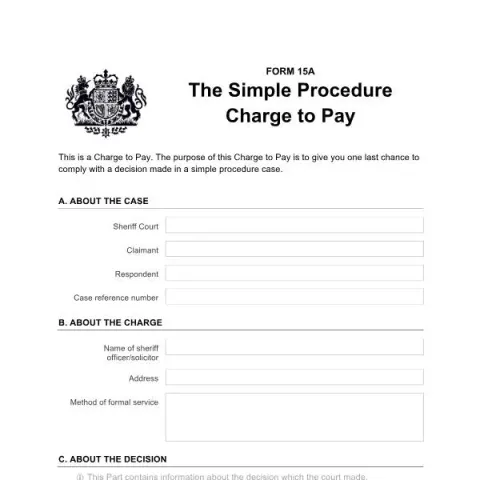
Understanding the Form 15A: Charge to Pay in the Scottish Courts and Tribunals Service
The Form 15A, titled Charge to Pay, is an official document issued by the Scottish Courts and Tribunals Service (SCTS). It serves as a formal notification to individuals involved in a simple procedure case, providing a final opportunity to comply with a court decision. This article explains the purpose of the form, who should complete it, and the steps involved in responding to it.
Purpose and Significance of the Charge to Pay
The primary function of the Form 15A is to inform the recipient that they are required to settle a sum determined by the court following a simple procedure case. It acts as a last chance for the individual to comply with the court’s decision before enforcement actions are initiated. Failure to respond or comply within the specified period may lead to serious consequences, including enforcement measures such as bank account freezes, earnings arrests, or even sequestration (bankruptcy) if debts exceed a certain threshold.
It is important to note that the form emphasizes the ongoing accrual of interest on the amount owed until full payment is made. The document also highlights the legal obligations and potential enforcement actions, reinforcing the importance of timely compliance.
Key Sections of the Form 15A
A. About the Case
This section gathers essential details about the legal case, including:
- Sheriff Court: The court handling the case.
- Claimant: The party who initiated the claim.
- Respondent: The individual or entity required to pay.
- Case reference number: The unique identifier for the case.
B. About the Charge
This part contains information about the authority responsible for issuing the charge, including:
- Name of sheriff
- Officer or solicitor who issued the charge
- Address of the issuing authority
- Method of formal service: How the charge was delivered to the respondent
C. About the Decision
This section explains the court decision that the respondent must comply with. It includes:
- Date of decision
- Details of the decision: The specific order or ruling requiring payment
- Legal warnings: The possible enforcement actions if the respondent fails to comply, such as freezing bank accounts or arresting earnings
- Interest accrual: The note that interest continues to accumulate until the debt is paid
How to Respond to the Charge to Pay
Timeframe for Compliance
The form specifies that the respondent must comply within either 14 or 28 days from the date of the decision, depending on the details provided. It is crucial to adhere to this deadline to avoid enforcement actions.
Fill in your form directly online
No printing: type your details into the boxes of the official form, tick, then download the PDF ready to send.
- 1Type into the form boxes
- 2Tick in one click
- 3Save and download the PDF
Steps for Responding
- Review the details carefully: Ensure you understand the amount owed and the court’s decision.
- Seek legal advice if unsure: If you are uncertain about the implications or how to proceed, consult a solicitor, Citizens Advice Bureau, or another local advice agency.
- Make the payment or comply: Arrange to settle the amount within the specified period. If you believe there is an error or dispute, contact the relevant court or authority listed on the form.
- Keep records: Maintain copies of any correspondence or payments related to this charge.
After Responding to the Charge
Once you have complied or responded appropriately, the court or issuing authority will process your case. If you have paid the amount, ensure you obtain confirmation of settlement. If you have contested the charge or require further clarification, follow the instructions provided on the form or contact the court directly.
Ignoring the Form 15A can result in enforcement actions that may impact your financial standing and property. Therefore, it is essential to act promptly and seek professional advice if needed.