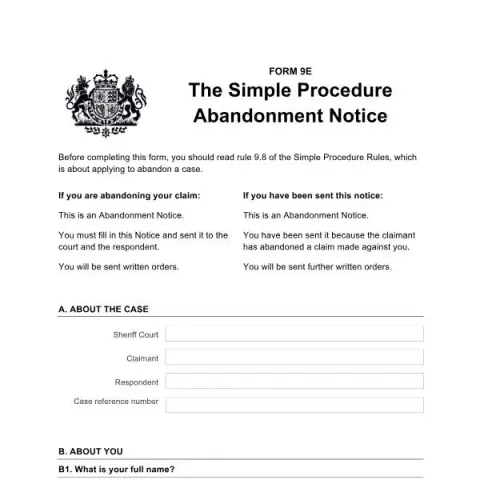
Understanding the Scottish Courts and Tribunals Service Form 9E: The Abandonment Notice
The Scottish Courts and Tribunals Service (SCTS) provides a specific legal form known as Form 9E, titled the Abandonment Notice. This official document plays a crucial role within the Simple Procedure, a streamlined process designed to resolve minor civil disputes efficiently. Whether you are a claimant wishing to withdraw your claim or a respondent notified of an abandonment, understanding the purpose, process, and implications of this form is essential for navigating the legal landscape effectively.
What Is the Purpose of the Abandonment Notice?
The primary function of the Abandonment Notice (Form 9E) is to formally notify the court and the other party involved that a claimant has decided to withdraw their claim against a respondent. This action effectively ends the legal proceedings related to that specific case. It is a necessary step when a claimant no longer wishes to pursue the claim, perhaps due to settlement, lack of evidence, or changed circumstances.
For respondents, receiving an Abandonment Notice indicates that the claimant has chosen to abandon the case. This often results in the case being dismissed, and the respondent will receive further written orders from the court confirming the abandonment and any associated costs or expenses that may be payable.
When Should You Use Form 9E?
This form should be used in situations where a claimant wishes to abandon their claim within the Simple Procedure framework. It is also applicable if a respondent receives a notice indicating that the claimant has abandoned their case. The form is part of the formal legal process and must be completed accurately to ensure the abandonment is valid and legally binding.
Before completing the form, it is recommended to read rule 9.8 of the Simple Procedure Rules, which provides guidance on applying to abandon a case. This ensures that the abandonment is carried out correctly and in accordance with the law.
How to Complete the Abandonment Notice
Step 1: Identify the Case Details
- Case reference number: Enter the unique identifier for the case, which can be found on previous court documents.
- Claimant and respondent details: Provide full names and any trading or representative capacity if applicable.
Step 2: Confirm the Abandonment
- Respondent: Specify the respondent against whom the claim is being abandoned.
- Confirmation: Check the box to confirm that you are abandoning your claim against this respondent. Be aware that this may result in an order to pay expenses to the respondent.
Step 3: Sending the Notice
Once completed, the form must be sent to both the court and the respondent. It is advisable to keep proof of submission, such as postal receipts or electronic confirmation, to ensure the process is properly documented.
Fill in your form directly online
No printing: type your details into the boxes of the official form, tick, then download the PDF ready to send.
- 1Type into the form boxes
- 2Tick in one click
- 3Save and download the PDF
Points of Attention and Practical Tips
- Accuracy: Ensure all details, especially case reference numbers and names, are correct to avoid delays or invalid submissions.
- Legal implications: Understand that abandoning a claim may have financial consequences, such as being ordered to pay the respondent's expenses.
- Timing: Be aware of deadlines; submitting the abandonment notice too late may affect its validity or the court’s ability to act on it.
- Communication: Always notify the respondent and the court in writing, and retain copies of all correspondence for your records.
Conclusion
The Abandonment Notice (Form 9E) is a vital document within the Scottish Simple Procedure, allowing claimants to withdraw their claims formally and efficiently. Proper completion and timely submission can prevent unnecessary court proceedings and facilitate a clear resolution. If you are considering abandoning a claim or have been notified of an abandonment, understanding the process and your responsibilities will help ensure that your legal rights and obligations are appropriately managed.