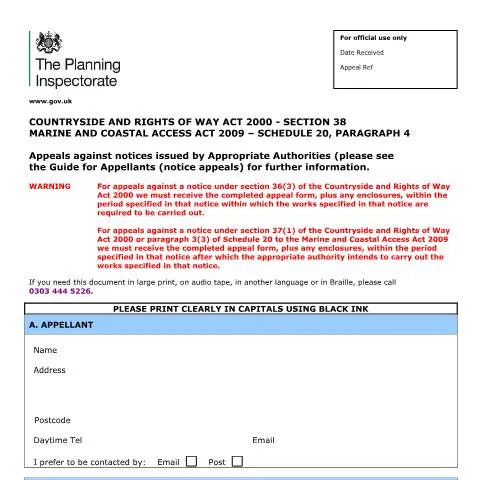
Navigating the Appeal Process with the Planning Inspectorate: A Comprehensive Guide
When faced with a notice from an Appropriate Authority under the Countryside and Rights of Way Act 2000 or the Marine and Coastal Access Act 2009, understanding your rights and options is crucial. The Planning Inspectorate provides essential guidance through its document titled Notice Appeals: Appeal Form and Guidance. This guide is more than just a form; it serves as a roadmap for individuals and entities looking to challenge decisions regarding land use, access rights, and coastal management.
Who Needs to Refer to This Guidance?
This document is intended for a diverse audience, including:
- Landowners: Individuals who own land affected by a notice.
- Occupiers: Those who have a legal interest or possessory rights over the land, even if they do not own it outright.
- Agents: Professionals acting on behalf of appellants, such as legal representatives or planning consultants.
- Community Groups: Entities involved in local planning matters who wish to challenge decisions impacting public access or environmental concerns.
Each of these groups may find themselves in situations where responding to a notice is not just beneficial but necessary to protect their rights and interests.
Understanding the Scope of the Document
The Notice Appeals: Appeal Form and Guidance outlines the procedural requirements for lodging an appeal against a notice issued under specific sections of the aforementioned acts. Key aspects include:
- Types of Notices: The document clarifies which notices can be appealed, focusing primarily on sections related to access land and coastal duties.
- Time Limits: Appeals must be submitted within strict deadlines specified in the notices, making timely action imperative.
- Grounds for Appeal: It delineates various acceptable grounds for appeal, such as the necessity of works or the appropriateness of the notice issued.
Importantly, the guidance also sets clear limitations regarding the appeals process. For instance, the grounds for appeal are tied closely to specific legal terms and definitions found within the acts, emphasizing the need for appellants to be well-informed about their situation.
Key Procedural Questions Addressed
In the realm of planning appeals, clarity around procedures can often make the difference between success and failure. Here are some pivotal procedural questions answered:
- What are the possible procedures for appeal? The document outlines three potential pathways: written representations, hearings, and inquiries—each with varying levels of formality and requirements.
- How is the procedure chosen? The Secretary of State will determine the appropriate procedure based on the appeal's nature, though the appellant’s preferences and input from the Relevant Authority will also be considered.
- What happens after an appeal is lodged? After submission, the Inspectorate may conduct site visits and request additional documentation or statements from parties involved.
Understanding these procedural elements allows appellants to better prepare and strategize their responses throughout the appeal process.
Step-by-Step: Using the Document in Your Appeal
Preparing an appeal using the Notice Appeals: Appeal Form and Guidance can be streamlined through a systematic approach. Below is a suggested step-by-step process:
- Review the Notice: Begin by carefully reading the notice you received. Pay attention to the requirements and timelines specified.
- Gather Evidence: Collect any supporting documents, photographs, or other evidence that substantiate your grounds for appeal.
- Complete the Appeal Form: Fill out the appeal form thoroughly, ensuring that you provide accurate details regarding your appeal grounds and any additional comments.
- Choose Your Procedure: Decide whether you prefer your appeal to be heard through written representations, a hearing, or an inquiry, and indicate this on your form.
- Submit Your Appeal: Send your completed appeal form and all supporting documents to the Planning Inspectorate within the deadline set out in your notice.
- Await Further Instructions: After submission, keep an eye on communications from the Inspectorate regarding next steps or requests for additional information.
This structured approach can demystify the appeal process, enabling appellants to focus on critical aspects that influence the outcome of their appeals.
Crucial Terminology to Grasp
Understanding key terms in the appeal process can significantly enhance your ability to navigate the complexities of the system. Here are some essential terms clarified:
| Term | Definition |
|---|---|
| Appellant | The individual or entity submitting the appeal against a notice. |
| Relevant Authority | The agency or body that issued the notice being appealed. |
| Grounds for Appeal | The specific reasons cited to contest the validity of the notice. |
| Inspector | A designated official who reviews the appeal and makes determinations. |
| Written Representations | A procedure where appeals are resolved based solely on submitted written statements. |
Familiarity with these terms will not only assist you in completing the appeal form but will also empower you during any hearings or discussions related to your case.
Avoiding Common Misinterpretations
As with any official document, misinterpretations can lead to setbacks. Here are some common misunderstandings to be aware of:
- Assuming All Notices Can Be Appealed: Not all notices are open to appeal; it’s essential to verify that the notice received falls within the defined criteria.
- Overlooking Deadlines: The timing of your appeal is crucial; missing the specified deadline can permanently bar your appeal.
- Misunderstanding Grounds for Appeal: Grounding your appeal in incorrect or insufficient reasoning may lead to dismissal. Ensure your arguments are well-founded in the relevant legislation.
By proactively addressing these potential pitfalls, appellants can strengthen their cases and improve their chances of a favourable outcome.
Interconnections with Other Procedural Documents
The Notice Appeals: Appeal Form and Guidance is part of a larger framework of documents that govern planning appeals. Understanding how these documents interrelate can enhance your overall strategy:
- Guide for Appellants: This provides an overview and additional context surrounding the appeals process and is an important companion to the appeal form.
- Appeal Decision Letters: Issued by the Inspectorate, these letters detail the outcome of decisions and provide insight into reasoning that may guide future appeals.
- Relevant Authority Notices: Familiarity with notices from the authority can inform your understanding of the context and legal basis for the appeal.
Engaging with these interconnected documents can provide deeper insights and foster a more comprehensive approach to handling appeals.
Final Thoughts on Engaging with the Planning Inspectorate
Successfully navigating the appeals process requires diligence, an understanding of legal terminology, and a strategic approach to documentation and support. The Notice Appeals: Appeal Form and Guidance serves as a vital resource in this journey, providing clarity and direction amidst the complexities of land use and access rights.
Engaging with this document not only empowers individuals and entities to assert their rights but also fosters a more nuanced understanding of the legal landscape surrounding land management in the UK. By following the steps outlined and avoiding common misinterpretations, appellants can enhance their engagement with the Planning Inspectorate and work towards achieving fair and just outcomes in their specific cases.
Understanding the Appeals Process: Key Stages and Tips
Understanding the appeals process can empower you to navigate it more effectively. Whether you are appealing a local planning decision, a tax assessment, or a decision regarding benefits, knowing the stages involved is crucial.
When you submit your appeal, you can expect the following key stages:
- Submission of Notice of Appeal: This is where you formally lodge your appeal using the appropriate form (e.g., Planning Inspectorate's appeal form for planning decisions). Ensure all necessary information is included, such as your contact details and the grounds for appeal.
- Initial Review: The relevant authority will conduct an initial review to check if your appeal is valid. If there are any deficiencies, they may request further information or reject your appeal outright.
- Notification: All parties involved, including any opposing parties (e.g., local councils in planning cases), will be notified of your appeal. This is critical for transparency and allows for any objections to be raised.
- Further Evidence Submission: Depending on the nature of the appeal, you may be invited to submit additional evidence or documents. This could include expert reports, witness statements, or photographs, particularly in planning appeals where visual evidence can be pivotal.
- Hearing or Inspection: For many appeals, especially in planning and certain tax cases, there may be a hearing or site inspection. This is an opportunity for you to present your case in person and for the inspector or judge to gather first-hand evidence.
- Decision: After weighing all evidence, a decision will be made and communicated to you in writing. If you are dissatisfied with the outcome, you may have the option to challenge the decision further, depending on the specifics of your case.
To enhance your chances of success, consider the following tips:
Fill in your form directly online
No printing: type your details into the boxes of the official form, tick, then download the PDF ready to send.
- 1Type into the form boxes
- 2Tick in one click
- 3Save and download the PDF
- Be Thorough: Ensure that your appeal is complete and well-documented. Missing information can lead to delays or rejection.
- Follow Deadlines: Pay close attention to all deadlines associated with your appeal process to avoid any pitfalls.
- Seek Expert Advice: Depending on the nature of your appeal, consulting with a professional—such as a planning consultant or tax adviser—can provide valuable insights.
Common Reasons for Appeal: Exploring Grounds and Justifications
When preparing your appeal, it is pivotal to understand the common grounds upon which appeals are made, as this will help you frame your arguments effectively. Different types of appeals, such as tax disputes or planning objections, have varying criteria, but there are some universally recognized grounds of appeal.
In the context of planning appeals, common grounds include:
- Inconsistent with Local Policy: You may argue that the decision conflicts with the local development plan or specific planning policies.
- Insufficient Consideration of Benefits: If you believe that the benefits of your proposed development outweigh the concerns raised, this is a strong basis for appeal.
- Procedural Errors: If the local planning authority failed to follow proper procedures, including inadequate consultation or failure to provide reasons for refusal, this can be grounds for your appeal.
For tax-related appeals, you might consider the following grounds:
- Incorrect Calculation: Disputing the accuracy of the HMRC calculation of your tax owed is a common reason for appeal. Ensure you meticulously check figures and calculations.
- Unfamiliarity with Tax Regulations: Sometimes, taxpayers are not fully aware of their entitlements, such as allowable deductions. Clearly stating your justifications can provide a strong basis for your appeal.
Understanding these grounds not only aids in framing your appeal but also helps in anticipating the arguments that the opposing party might raise, allowing you to prepare counterarguments effectively.
Appealing a Decision During the COVID-19 Pandemic: Special Considerations
The COVID-19 pandemic has brought about unique challenges for many individuals navigating the appeals process. Various authorities have adapted their processes to account for restrictions and disruptions caused by the pandemic. If you find yourself needing to appeal a decision during this period, be aware of these special considerations.
Firstly, timelines may have been extended in many cases due to the backlog of appeals and changes in working practices. For example, the Planning Inspectorate has issued guidance on their website about how they are handling appeals during the pandemic, including changes to inspection methods and the possibility of virtual hearings.
Second, keep an eye on any temporary amendments to legislation or procedures that could affect your appeal. For example, certain provisions may allow for more flexibility in the types of evidence that can be submitted or the formats of hearings. It is essential to stay informed through official channels, such as the websites of the relevant authorities.
Moreover, consider the impact of COVID-19 on your circumstances specifically—this may include financial hardship affecting your ability to pay taxes or the direct impact of the pandemic on your health and wellbeing. Documenting these impacts can be valuable in your appeal, particularly in cases involving benefits, as the DWP has shown a willingness to consider exceptional circumstances during this period.
In conclusion, while the appeals process can be complicated, understanding the stages, common grounds, and adapting to current challenges can help streamline your experience. Ensure you remain updated on any changes due to the ongoing pandemic and utilize available resources, including official guidelines and expert advice.