Understanding Extra Care Costs During Jury Service: When Additional Expenses Qualify
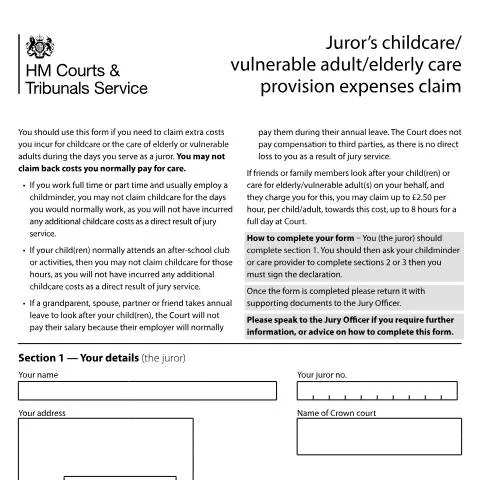
Serving on a jury represents a fundamental civic duty in England and Wales, yet it can create unexpected financial pressures for those with caring responsibilities. Form 5223B addresses a specific scenario: claiming reimbursement for additional care costs that arise directly from jury service attendance. The emphasis on "additional" proves crucial—HM Courts & Tribunals Service will not reimburse expenses you would normally incur regardless of jury duty.
The distinction between regular and additional care costs shapes every aspect of this claim process. If you typically employ a registered childminder during working hours, those costs remain your responsibility even during jury service, as you're not incurring extra expenses. Similarly, if your elderly parent usually attends a day centre three days weekly, you cannot claim for that existing arrangement. However, when jury service extends beyond your normal working pattern—perhaps into evenings for deliberations, or on days you wouldn't typically work—genuine additional costs may arise.
This form serves jurors across Crown Courts in England and Wales who find themselves needing extra care provision for children, elderly relatives, or vulnerable adults. The system recognises that jury service can be unpredictable in duration and timing, potentially disrupting established care arrangements and creating financial hardship for conscientious citizens fulfilling their legal obligations.
Navigating the £2.50 Per Hour Cap and Eight-Hour Daily Limit
The compensation framework operates within strict financial boundaries designed to provide reasonable support whilst preventing abuse. For informal care arrangements—where friends, family members, or unregistered providers step in to help—the court caps reimbursement at £2.50 per hour, per person requiring care, with a maximum of eight hours claimable per full court day.
This rate applies specifically to situations where you're paying someone who wouldn't normally charge for their services. If your sister usually looks after your children for free but agrees to formal childminding during your jury service for payment, you can claim up to £2.50 per hour for each child. The eight-hour limit acknowledges that court days, including potential evening deliberations, can extend significantly beyond standard working hours.
For registered care providers, the reimbursement structure differs. OFSTED-registered childminders and professional care agencies can claim their actual rates, provided these represent genuinely additional costs. The form requires registered providers to supply their OFSTED registration number, creating an audit trail and ensuring professional standards.
| Care Provider Type | Maximum Rate | Documentation Required | Daily Hour Limit |
|---|---|---|---|
| Friend/Family Member | £2.50 per hour, per person | Receipt/invoice from carer | 8 hours |
| OFSTED Registered | Actual professional rate | Registration number + invoice | 8 hours |
| Professional Care Agency | Actual agency rate | Company invoice + credentials | 8 hours |
Scenarios Where Claims Will Be Rejected: Common Misconceptions
Understanding what doesn't qualify proves as important as knowing valid claims. The guidance explicitly excludes several scenarios that jurors frequently attempt to claim, often leading to disappointment and delayed reimbursement processes.
Annual leave compensation represents a key exclusion. When grandparents, spouses, or friends take annual leave from their employment to provide care during your jury service, the court will not compensate their lost earnings or reimburse their employer. The rationale centres on the absence of direct financial loss to you—their employer continues paying their salary during annual leave, meaning no additional cost burden falls on your household.
Similarly, existing routine care arrangements cannot be claimed. If your children normally attend after-school clubs, holiday programmes, or regular childminder sessions during your typical working hours, these costs remain ineligible even during jury service. The system only recognises expenses that arise specifically because of jury attendance, not pre-existing care requirements that would occur regardless.
Part-time workers face particular scrutiny regarding existing arrangements. If you work Monday, Wednesday, and Friday, employing a childminder on those days, you cannot claim childminder costs for jury service falling on your regular working days. However, if jury service extends to Tuesday or Thursday—days when you wouldn't normally require childcare—additional costs for those days become claimable.
Completing Section 1: Establishing Your Juror Profile and Care Requirements
The form opens with Section 1, requiring detailed information about your identity as a juror and the individuals requiring care. Your juror number, assigned during the jury selection process, creates the essential link between your expense claim and your service record. This unique identifier enables court administrators to verify your attendance dates and cross-reference your claim against actual jury service periods.
When listing individuals requiring care, provide complete details including full names and ages. The age information helps court officials understand the type of care involved and assess the reasonableness of claimed expenses. Caring for a three-year-old involves different requirements and costs compared to supervising a teenager or supporting an elderly adult with mobility limitations.
If you care for more than four individuals, the form instructs continuation on separate sheets. This accommodation recognises complex family situations—perhaps kinship carers supporting multiple grandchildren, or adults managing care responsibilities for several elderly relatives simultaneously. Ensure each additional person receives the same detailed treatment as those listed in the main section.
The provider identification checkbox—distinguishing between friends/family members and registered care providers—determines which subsequent section applies. This early classification prevents confusion and ensures appropriate documentation requirements are met from the outset.
Professional Childcare Claims: Section 2 Requirements and Documentation
Section 2 addresses registered childcare providers, requiring comprehensive details about the professional delivering additional care services. OFSTED registration numbers provide crucial verification, enabling court officials to confirm the provider's legitimacy and professional standing. This requirement helps prevent fraudulent claims whilst ensuring children receive appropriate standards of care.
The weekly breakdown format accommodates the unpredictable nature of jury service. Trials can extend across multiple weeks, with varying daily requirements depending on case complexity and deliberation needs. The grid structure—covering Monday through Friday across two weeks—provides sufficient scope for most jury service periods whilst maintaining detailed cost tracking.
When completing hourly and cost information, precision proves essential. Round hours to the nearest quarter-hour and ensure costs align with the provider's standard rates. Inflated charges or unrealistic hourly claims can trigger detailed scrutiny and potential rejection. Professional childminders should provide their standard rate cards or fee schedules to support claimed amounts.
The childminder's signature and date create a formal declaration, making false information subject to potential prosecution. This legal weight encourages honest reporting whilst providing courts with recourse against fraudulent claims. Ensure your childcare provider understands this responsibility before completing their section.
Supporting Documentation for Childcare Claims
Beyond the completed form, childcare claims require substantial supporting evidence. Identity verification for children typically involves child benefit letters, birth certificates, or child passports—documents proving the claimed individuals exist and fall under your care responsibility.
Financial evidence through invoices or receipts demonstrates actual costs incurred. Professional childminders should provide detailed invoices showing dates, hours, rates, and total charges. These documents must clearly indicate the additional nature of the service—perhaps through annotations highlighting jury service periods or separate invoicing for extra hours beyond regular arrangements.
Adult Care Provision: Section 3 and Vulnerable Adult Considerations
Section 3 mirrors the childcare structure but addresses care for elderly or vulnerable adults—a growing concern as the population ages and families increasingly manage complex care responsibilities. The terminology "vulnerable adults" encompasses individuals with disabilities, mental health conditions, or other circumstances requiring supervised care during your absence for jury service.
Adult care rates often exceed the £2.50 hourly cap for informal arrangements, reflecting the increased responsibility and potential specialist knowledge required. Professional care agencies typically charge substantially more than informal childcare, making the distinction between registered and unregistered providers financially significant.
The weekly grid format accommodates the reality that adult care needs can be less predictable than childcare. An elderly parent with dementia might require constant supervision, whilst a vulnerable adult might need periodic check-ins or assistance with specific daily activities. The flexible hour recording enables accurate reflection of actual care requirements.
Documentation requirements for adult care include identity verification through birth certificates, passports, or carer's benefit letters. The latter option recognises situations where you're already receiving Carer's Allowance or other benefits related to your care responsibilities, providing convenient proof of your caring role.
Distinguishing Vulnerable Adult Care from Personal Care Services
The form specifically addresses care provision, not general household support or personal care services. Eligible care activities include supervision, companionship, assistance with meals, medication reminders, and safety monitoring. However, cleaning services, gardening, or other household maintenance tasks fall outside the scope of claimable care provision.
For adults with specific medical needs, ensure care providers possess appropriate qualifications or experience. Whilst formal registration isn't required for family members or friends, they should feel confident managing any potential situations that might arise during your jury service absence.
Submission Process and Court Administration Procedures
Completed forms return to the Jury Officer at your Crown Court, who serves as the primary point of contact for all jury-related administrative matters. These officers possess detailed knowledge of local procedures and can provide guidance on complex situations or unusual circumstances affecting your claim.
Submit your claim promptly after completing jury service, whilst details remain fresh and supporting documentation is readily available. Delayed submissions can complicate verification processes and potentially affect reimbursement timescales. Most courts prefer receiving claims within one month of service completion, though this isn't a strict legal deadline.
The processing timeline varies depending on court workload and claim complexity. Simple claims with complete documentation typically process within 2-4 weeks, whilst complex cases requiring additional verification may take longer. The Jury Officer can provide estimated processing times and update you on claim progress.
Payment methods usually involve bank transfers or cheques, requiring you to provide banking details or confirm postal addresses during the submission process. Some courts offer faster electronic payments, whilst others rely on traditional cheque systems that may take additional days to clear.
Appeals and Dispute Resolution
If your claim faces rejection or partial approval, the Jury Officer should provide clear explanations of the decision rationale. Common rejection reasons include insufficient documentation, claims for existing care arrangements, or charges exceeding reasonable rates for the type of care provided.
You can request reconsideration by providing additional evidence or clarifying misunderstood circumstances. The appeals process remains informal at court level, typically involving discussions with senior administrative staff rather than formal hearings. However, persistent disputes may require escalation to HM Courts & Tribunals Service regional management.
Strategic Preparation: Maximising Your Claim Success While Serving Justice
Successful expense recovery begins before jury service commences. Once you receive your jury summons, immediately assess your care responsibilities and identify potential additional costs. This forward planning enables you to arrange appropriate care provision and establish clear documentation trails from the outset.
Communicate early with potential care providers about the unpredictable nature of jury service. Trials can extend unexpectedly, deliberations may continue into evenings, and sequestration (though rare) remains possible in exceptional cases. Ensure your care arrangements possess sufficient flexibility to accommodate these uncertainties.
Maintain detailed records throughout your jury service period. Note actual attendance times, any extended hours due to deliberations, and precise care arrangements for each day. These contemporaneous records prove invaluable when completing Form 5223B weeks later, after case details have faded from memory.
Consider establishing relationships with registered childcare providers or professional care agencies before jury service begins. Their higher reimbursement rates and streamlined documentation processes often provide better value than informal arrangements, particularly for extended jury service periods.
The expense claim process, whilst sometimes bureaucratic, recognises the genuine financial impact jury service can impose on citizens with care responsibilities. By understanding the system's requirements and preparing accordingly, you can fulfil your civic duty without bearing unfair financial hardship, ensuring justice remains accessible to all members of society regardless of their personal circumstances.