Understanding the Official Form D80C: Statement in Support of Divorce or Separation Due to Desertion
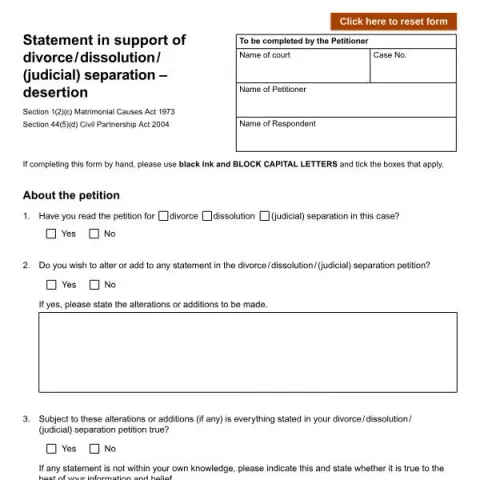
The Statement in support of divorce, dissolution, or judicial separation – desertion (Form D80C) is an official legal document used within the UK family justice system. Managed by the HM Courts and Tribunals Service, this form is essential for individuals seeking to legally confirm that their spouse or civil partner has deserted them, which can be a ground for divorce or dissolution of a marriage or civil partnership.
When to Use Form D80C
This form is specifically designed for cases where the petitioner (the person initiating the divorce or separation proceedings) alleges that their partner has deserted them. Desertion, in legal terms, involves one partner leaving the shared household without consent and with no intention of returning, often for a continuous period of at least two years. If you believe your partner has deserted you and wish to rely on this fact in your legal proceedings, completing Form D80C is a crucial step.
It is important to note that this form is used in conjunction with the main divorce or separation petition. It provides detailed information about the circumstances of the desertion, addresses the timeline, and supports the legal claim based on this ground.
Key Sections and Information Required
Details of the Court and Parties
- Name of the court: The court where the divorce or separation case is being filed.
- Case number: The unique identifier assigned to your case.
- Name of petitioner and respondent: The person filing the petition and the partner against whom the claim is made.
Separation and Desertion Dates
The form requires the petitioner to specify the date when they and their partner separated, as well as the date when the desertion began, if different. Accurate dates are crucial as they underpin the legal claim and are used to establish the duration of desertion.
Addresses and Residence History
Petitioners must provide a detailed record of addresses at which they and their partner have lived since the desertion began, including the periods of residence. This information helps establish the continuity of the desertion and the shared household's history.
Facts Supporting Desertion Allegation
The form prompts the petitioner to briefly state the facts that support their claim of desertion. This includes describing the circumstances leading to the partner's departure and why the desertion is considered to have continued up to the date of the petition.
Additional Questions
- Whether the petitioner agreed to the separation.
- If the respondent has ever offered to resume cohabitation, and the reasons for refusal.
- Whether the petitioner and respondent have ever lived together since the desertion began, including addresses and dates.
Legal Declarations and Signatures
At the end of the form, the petitioner must declare under oath that the facts stated are true to the best of their knowledge and belief. This is done by signing and dating the statement of truth. Making a false declaration can lead to contempt of court proceedings.
Transmission and Submission of the Form
Once completed, the form should be submitted along with the main divorce or separation petition to the relevant court. If the respondent has personally signed an acknowledgement of service, a copy must be attached to the statement. Alternatively, if a solicitor has signed on behalf of the respondent, this does not need to be attached.
Fill in your form directly online
No printing: type your details into the boxes of the official form, tick, then download the PDF ready to send.
- 1Type into the form boxes
- 2Tick in one click
- 3Save and download the PDF
Points of Attention and Practical Advice
When filling out Form D80C, accuracy and honesty are paramount. Ensure all dates, addresses, and facts are correct and supported by evidence where possible. Misstatements or inaccuracies can delay proceedings or affect the outcome.
It is advisable to seek legal advice or assistance if you are unsure about any section of the form or the process involved. Family law can be complex, and professional guidance can help ensure your case is properly prepared and presented.
Conclusion
Form D80C plays a vital role in establishing desertion as a ground for divorce or separation under UK law. By carefully completing this document, petitioners provide the court with the necessary evidence to support their claim, moving forward with the legal process to resolve their marital or civil partnership status.